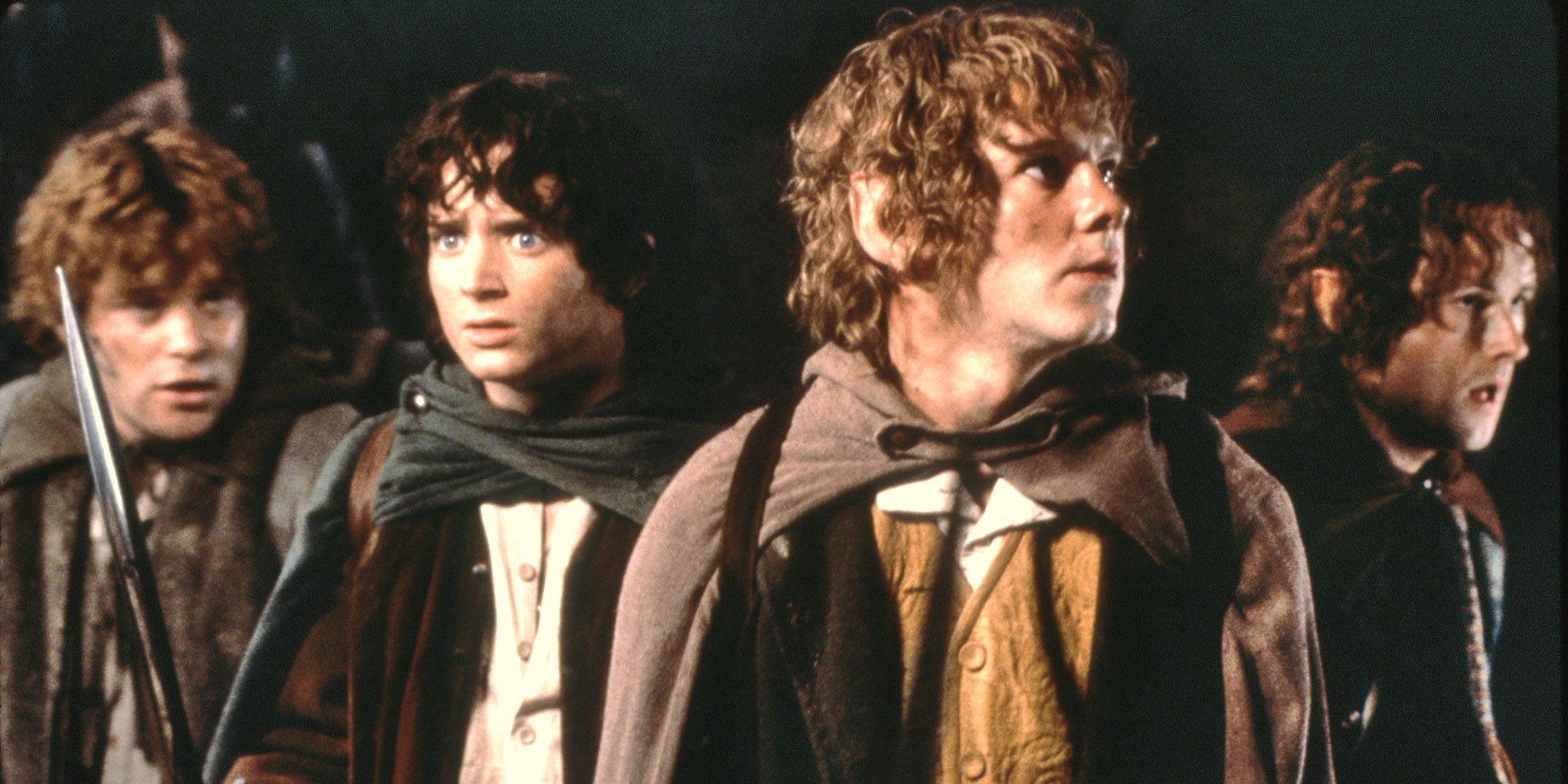
You know that feeling when you watch a movie and literally cannot imagine anyone else in the role? That’s the lightning in a bottle Peter Jackson caught with the actors for Lord of the Rings. But honestly, if you look at the production history, it’s a miracle the cast didn’t end up looking completely different. It was messy.
Stuart Townsend was actually on set in New Zealand. He’d trained for months to play Aragorn. Then, one day before filming started, Jackson realized he looked way too young. He needed a man, not a boy. Enter Viggo Mortensen, who didn't even want the part until his son Henry begged him to do it. Imagine a world where we didn't have Viggo’s weathered, kingly presence. It feels wrong, right?
The casting process for the Fellowship was this weird, desperate puzzle. They needed people who could handle the physical toll of a shoot that lasted over a year, but they also needed actors who wouldn't get "bored" playing the same character in the middle of the woods for months on end.
The Aragorn Problem and the Viggo Effect
The search for the right actors for Lord of the Rings started years before the cameras actually rolled. For the role of Aragorn, the studio originally wanted a massive name. They went to Daniel Day-Lewis. Multiple times. He turned it down every single time. Russell Crowe was also in the mix, but he reportedly felt it was too similar to the "vibe" of Gladiator.
Viggo Mortensen brought something nobody else could: genuine, lived-in grit. He stayed in character. He slept in his costume. He repaired his own clothes with a needle and thread. When he broke two toes kicking an Uruk-hai helmet in The Two Towers, that scream wasn't just acting; it was real pain. Jackson kept the take because it was perfect. That’s the kind of intensity that defined this cast. They weren't just showing up for a paycheck; they were basically living in Middle-earth.
Sean Connery was the first choice for Gandalf. Can you imagine? "You shall not pass, laddie." The producers offered him a percentage of the film’s profits that would have made him the highest-paid actor in history—we're talking hundreds of millions of dollars. But he didn't "get" the script. He passed. Ian McKellen, who eventually took the staff, brought a Shakespearean gravitas mixed with a grandfatherly twinkle that Connery probably wouldn't have leaned into as much. McKellen’s Gandalf felt like a real person, not just a wizard archetype.
The Hobbits: A Mix of Comedy and Real Heart
Casting the four hobbits was a nightmare of scale. They needed actors who had chemistry but also fit the physical requirements for the "big-rig" and "small-scale" body double shots. Elijah Wood actually sent in a videotape of himself running around the woods in a homemade hobbit outfit. It was a bold move. It worked. Jackson saw the tape and knew he’d found his Frodo Baggins.
Sean Astin had to gain about 30 pounds to play Samwise Gamgee. Think about that commitment. He went from being a lean actor to carrying the literal and metaphorical weight of the journey. And the bond between the four—Wood, Astin, Dominic Monaghan, and Billy Boyd—wasn't just for the cameras. They got matching tattoos. They hung out constantly. That genuine friendship is why the ending of The Return of the King hits so hard. You can’t fake that kind of history.
The Villains and the Supporting Heavyweights
Christopher Lee was the only person on the entire set who had actually met J.R.R. Tolkien. He was a superfan. He originally wanted to play Gandalf, but his age made the physical demands of that role impossible. Instead, he became Saruman. His voice alone did half the work. Lee brought a terrifying elegance to the role that made the fall of Isengard feel like a Shakespearean tragedy.
Then you have Cate Blanchett and Hugo Weaving. They brought a sort of "otherness" to the Elves. Jackson didn't want the Elves to just look like humans with pointy ears; he wanted them to seem ancient and slightly detached.
- Cate Blanchett as Galadriel: She actually kept her prosthetic ear tips as a souvenir.
- Hugo Weaving as Elrond: Fans of The Matrix were worried he'd just be "Agent Smith in a wig," but he leaned into the weary, protective father figure role instead.
- Orlando Bloom as Legolas: This was basically his first big gig. He was fresh out of drama school. He fell off a horse and broke a rib during filming, but he kept going.
The Gollum Revolution
We can't talk about actors for Lord of the Rings without mentioning Andy Serkis. Before The Fellowship of the Ring, "motion capture" was mostly a clunky tool for video games. Serkis changed everything. He didn't just provide the voice; he provided the soul of Smeagol.
He stayed on all fours. He drank "Gollum juice" (a mix of honey, lemon, and ginger) to keep his throat raw for the iconic coughing sound. He was on set, in the mud, acting opposite Elijah Wood. This allowed the other actors to react to a real human being instead of a tennis ball on a stick. It changed the industry. Every mo-cap performance you see today, from Avatar to The Avengers, owes a debt to what Serkis did in New Zealand.
Why the Casting Still Works Today
The reason this cast remains the gold standard for fantasy isn't just because they’re good actors. It’s because they were cast for their spirit rather than their box office draw. At the time, none of them were massive "A-list" superstars, except maybe Liv Tyler or Sean Bean. This allowed the audience to see the characters, not the celebrities.
Sean Bean’s Boromir is perhaps one of the most misunderstood characters in the trilogy. In the books, he can come across as a bit of a jerk. But Bean gave him a vulnerability. You saw the pressure he was under to save his people. When he dies protecting Merry and Pippin, it’s a redemption that feels earned.
Actionable Insights for the Ultimate Rewatch
If you’re planning a marathon, keep an eye out for these specific details that highlight the actors' work:
- Watch the eyes: In the scene where Frodo offers the Ring to Gandalf in Bag End, look at Ian McKellen’s micro-expressions. He’s terrified.
- The physical acting: Notice how John Rhys-Davies (Gimli) moves. He was actually the tallest actor among the Fellowship (6'1"), but he played the dwarf. He had to deal with horrific skin reactions to the prosthetic makeup every single day.
- The background cameos: Peter Jackson, his kids, and various crew members are scattered throughout the films. It shows the "family" vibe of the production.
- Listen to the accents: The actors worked with dialect coaches to ensure the different regions of Middle-earth had distinct sounds. The Shire is more West Country English, while the nobility of Gondor sounds more "Received Pronunciation."
The actors for Lord of the Rings didn't just play roles; they became the definitive versions of those characters for an entire generation. Whether it's Ian Holm’s heartbreaking portrayal of Bilbo’s descent or Miranda Otto’s fierce "I am no man" moment as Éowyn, the casting was the heartbeat of the trilogy. It’s why, twenty-plus years later, we’re still talking about them.
The next step is to watch the "Appendices" on the Extended Edition Blu-rays. They offer hundreds of hours of raw footage showing these actors in the trenches. You'll see Viggo training with swordmaster Bob Anderson and the hobbit actors complaining about their prosthetic feet in the freezing rain. It’s the best way to truly appreciate the sheer scale of what they pulled off.