When you look at a biography on Adolf Hitler, it's easy to get lost in the sheer scale of the horror. It's massive. It's overwhelming. We’re talking about a man who wasn't just a politician, but a catalyst for a global catastrophe that claimed tens of millions of lives. But if you strip away the propaganda and the post-war myth-making, you find a story that is oddly mundane in its beginnings and terrifying in its progression. It wasn't some inevitable destiny. It was a series of failures—by individuals, by institutions, and by a society that was looking for a shortcut to greatness.
Honestly, most people think they know the story. Failed artist, jail time, the mustache, the yelling. But the actual timeline? It’s weirder than that.
From Linz to the Trenches: The Early Years
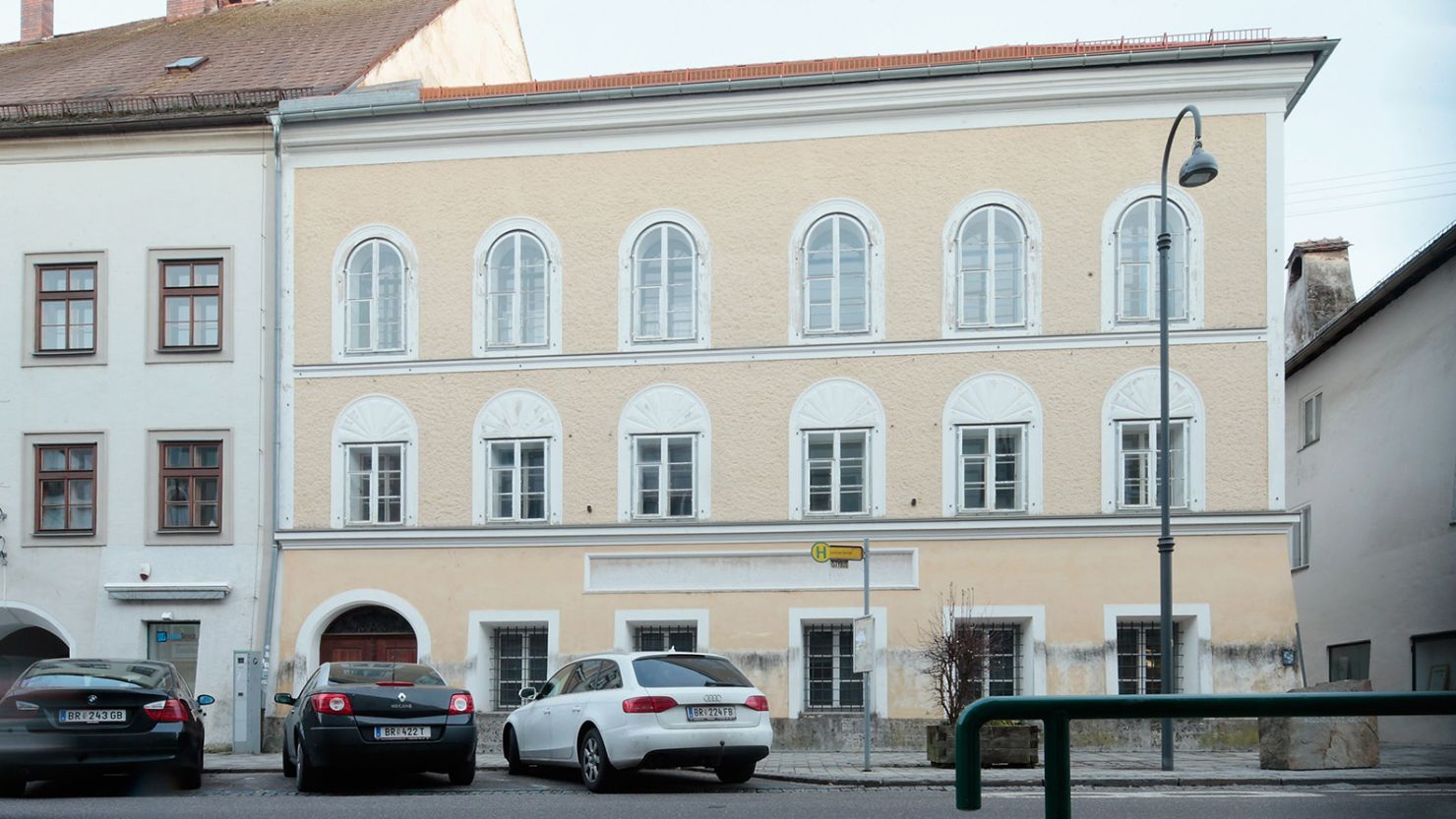
Hitler wasn't born a monster. He was born in Braunau am Inn, Austria, in 1889. His father, Alois, was a customs official—stern, distant, and frequently at odds with his son. His mother, Klara, was the opposite. She doted on him. When she died of breast cancer in 1907, treated by a Jewish doctor named Eduard Bloch (whom Hitler later protected, calling him a "noble Jew"), it broke him. That’s a detail people often miss. It doesn't humanize him in a way that excuses his later actions, but it shows the complexity of his early psyche.
He moved to Vienna. He wanted to be an artist. He failed. Twice.
The Academy of Fine Arts Vienna told him he lacked talent for painting but might have a knack for architecture. He didn't listen. Instead, he drifted. He lived in homeless shelters. He sold postcards. This is where the seeds were sown. Vienna at the turn of the century was a boiling pot of pan-German nationalism and virulent antisemitism. He soaked it up. He read the tabloids. He watched the mayor, Karl Lueger, use populism to control the masses.
Then came 1914.
The Great War was his "out." He joined the Bavarian Army. He wasn't a leader; he was a dispatch runner. He was brave, sure—he won the Iron Cross First Class, which was rare for a corporal—but his comrades thought he was a bit of a weirdo. He didn't smoke. He didn't chase women. He just sat and talked about politics or drew. When Germany surrendered in 1918, he was in a hospital, temporarily blinded by a gas attack. He felt betrayed. This "Stab in the Back" myth—the idea that the army was winning but betrayed by Jews and communists at home—became his entire personality.
The Rise of a Radical
After the war, he stayed in the army as an informant. His job was to spy on political parties. He walked into a meeting of the German Workers' Party (DAP) and realized he didn't want to spy on them—he wanted to lead them.
He was a natural at the podium.
It’s hard to watch the grainy footage now and understand the appeal, but in a room full of smoke and angry, unemployed veterans, his energy was infectious. He changed the party name to the National Socialist German Workers' Party (NSDAP). The Nazis.
By 1923, he thought he could pull off a coup. The Beer Hall Putsch. It was a disaster. He marched into Munich, the police opened fire, and he ended up in Landsberg Prison. Most people thought his career was over. Instead, it was a branding opportunity. He wrote Mein Kampf. It’s a rambling, nearly unreadable mess of a book, but it laid out the roadmap: Lebensraum (living space) in the East and the systematic removal of Jews from Europe.
The Path to Power wasn't a Straight Line
People often ask: How did he get elected? The short answer is: He didn't. Not exactly.
The Nazis never won a majority in a free election. In 1932, they were the largest party, but they were actually losing steam. The economy was slightly improving, and people were getting tired of the constant street brawls between the Nazi SA (Brownshirts) and the Communists. Hitler was broke. The party was fractured.
Then, the conservatives messed up.
They thought they could "tame" him. Franz von Papen convinced President Hindenburg to appoint Hitler as Chancellor in January 1933, believing they could use his popularity while keeping the real power for themselves. They were wrong. Within months, using the Reichstag Fire as a pretext, Hitler dismantled the democracy. The Enabling Act gave him dictatorial powers. The "Night of the Long Knives" saw him murder his internal rivals, like Ernst Röhm. By the time Hindenburg died in 1934, Hitler merged the offices of Chancellor and President. He was the Führer.
Total War and the Final Solution
Any biography on Adolf Hitler eventually has to confront the darkest reality: the Holocaust. This wasn't just a byproduct of war; it was the goal.
As the 1930s progressed, Hitler rebuilt the military in defiance of the Treaty of Versailles. He marched into the Rhineland. He took Austria. He took the Sudetenland. The West, led by Neville Chamberlain, tried "appeasement." It failed because you can't appease someone whose entire ideology is based on infinite expansion.
When he invaded Poland on September 1, 1939, the world caught fire.
The early victories were staggering. France fell in six weeks. The "Blitzkrieg" seemed unstoppable. But Hitler made the same mistake every conqueror makes: he overextended. He invaded the Soviet Union in 1941 (Operation Barbarossa). He declared war on the United States after Pearl Harbor. He was fighting the world's largest land power and the world's largest industrial power at the same time.
While the war raged, the "Final Solution" began. At the Wannsee Conference in 1942, the Nazi leadership coordinated the industrial-scale murder of 6 million Jews, along with millions of Romani, Slavs, LGBTQ+ individuals, and political dissidents. It wasn't just hatred; it was a bureaucratic process. Death camps like Auschwitz-Birkenau weren't just prisons—they were factories for killing.
The End in the Bunker
By 1945, the "Thousand Year Reich" was reduced to a few blocks in Berlin.
Hitler was a shell of himself. He was likely suffering from Parkinson's disease, and he was being pumped full of a cocktail of drugs—including opiates and amphetamines—by his personal physician, Theodor Morell. He was delusional, ordering non-existent armies to launch counter-attacks.
On April 30, 1945, as Soviet troops were literally blocks away, he committed suicide in his underground bunker. He married his long-time companion, Eva Braun, the day before. They both took cyanide, and he shot himself. Their bodies were burned in the garden above.
No grand finale. Just a cowardly exit in the dirt.
Why the Details Matter Today
Studying this isn't just about memorizing dates. It's about recognizing the patterns. Hitler didn't seize power in a vacuum. He took advantage of a polarized society, a failing middle class, and a political system that thought it could control a radical for its own ends.
Historians like Ian Kershaw and Richard J. Evans have spent decades deconstructing how "ordinary" people became complicit. It wasn't just one man; it was a structure of "working towards the Führer," where officials competed to see who could be the most radical to please the leader.
Key Takeaways for Research
If you are digging deeper into this period, don't just look at the military history. Look at the social conditions.
- Primary Sources: Look at the Nuremberg Trial transcripts. They are chilling because of how matter-of-fact the testimony is.
- The Economy: Research the hyperinflation of 1923 versus the Great Depression of 1929. The latter is what actually gave Hitler his opening.
- Propaganda: Study Joseph Goebbels. The way the Nazis controlled the narrative is a masterclass in psychological manipulation that still has echoes in modern media.
- Resistance: Remember that there was resistance. From the White Rose student movement to the July 20 plot (Operation Valkyrie), not every German was a silent observer, though the opposition was brutally suppressed.
Understanding the life of Hitler requires looking at the vacuum of leadership that allowed him to rise. It requires acknowledging that democracy is fragile and that rhetoric, when left unchecked, has physical consequences. The history is uncomfortable, but it's the only way to ensure the phrase "Never Again" actually means something.
To further your understanding, start by reading Hubris and Nemesis by Ian Kershaw. These are widely considered the definitive scholarly biographies. From there, visit the United States Holocaust Memorial Museum’s digital archives to see the personal stories of those affected by the regime’s policies. Seeing the human cost makes the political history impossible to ignore.