Groovy.
That one word basically sums up the entire personality of Army of Darkness Ash, but honestly, it barely scratches the surface of why this character is a cultural titan. When Sam Raimi dropped the third installment of the Evil Dead franchise in 1992, he didn't just give us a sequel. He gave us a transformation. We watched Ashley J. Williams go from a terrified survivor in a cabin to a loudmouthed, boomstick-toting action hero trapped in 1300 AD. It’s a weird, jarring shift that shouldn't work. On paper, a retail clerk fighting skeletal armies with a chainsaw hand sounds like a fever dream or a bad B-movie that fades into obscurity. Yet, decades later, Bruce Campbell's portrayal of Ash is the blueprint for the "lovable jerk" archetype that modern cinema is still trying to replicate.
He’s a mess. Let’s be real about that. Ash isn't Captain America. He’s not even Indiana Jones. He’s a guy who worked in the housewares department and just happens to be really good at killing Deadites, even if he’s the one who accidentally summoned them half the time. That’s the magic.
The Evolution of the Chin
To understand why Army of Darkness Ash is so distinct, you have to look at the trajectory. In the original 1981 The Evil Dead, Ash is almost sensitive. He’s the "final boy" who survives by pure luck and a little bit of desperation. By Evil Dead II, he’s losing his mind—literally fighting his own possessed hand in a sequence that redefined physical comedy in horror. But by the time he lands in the Middle Ages in Army of Darkness, the trauma has hardened him into something entirely different: a cynical, arrogant, and surprisingly capable blowhard.
Sam Raimi and his brother Ivan Raimi wrote a character who is fundamentally flawed. Ash is lazy. He’s vain. He tries to take the easy way out, which is exactly why he forgets the words "Klaatu Barada Nikto."
Think about that for a second. The entire conflict of the movie—the literal rising of the Army of the Dead—happens because the hero was too lazy to memorize three words. Most "chosen ones" in fantasy are noble or destined for greatness. Ash is just the guy who was there. He represents the American consumerist ego dropped into a feudal nightmare. He brings a 1973 Oldsmobile Delta 88 and a chemistry textbook to a sword fight.
The Boomstick and the Chainsaw: A Masterclass in Iconography
Visuals matter in SEO, but they matter more in character design. You can see a silhouette of Army of Darkness Ash and know exactly who it is. The ripped blue shirt, the leather harness (the "chest rig" before it was cool), the gauntlet, and the holster for the Remington 12-gauge.
It's a look.
The "Boomstick" speech is perhaps the most quoted bit of dialogue in 90s cult cinema. "Shop smart. Shop S-Mart." It’s an odd blend of corporate branding and medieval bravado. When Ash stands on that wooden platform, surrounded by primitive "screwheads," he isn't trying to be a savior. He’s trying to be the boss. Bruce Campbell plays this with a level of "smarm" that is impossible to hate. He’s the guy who brings a gun to a sword fight and then complains that the locals don't have indoor plumbing.
Interestingly, the production design by Anthony Tremblay and the prosthetic work by KNB EFX Group turned the "Evil Ash" into a literal mirror of the hero's own insecurities and malice. The "Bad Ash" sequence in the windmill is a masterpiece of practical effects and split-screen acting. It shows us that Ash's greatest enemy isn't the Necronomicon; it's his own jerk-ish nature personified.
Why the Two Endings Change Everything
If you watched the theatrical cut, you saw Ash return to the present day, back at S-Mart, blowing away a Deadite in the aisles and kissing the girl. It’s the "hero" ending. It’s what most people think of when they recall Army of Darkness Ash.
But the original ending—the "S-Mart clerk forgets how to count" ending—is much more in line with the character’s DNA. In that version, Ash drinks too much of the sleeping potion, sleeps for centuries, and wakes up in a post-apocalyptic future. He screams in despair because he messed up. Again.
This duality is why the character has such staying power. He is the king of the "pyrrhic victory." He wins, but he usually loses something essential in the process, or he wins despite his own staggering incompetence. It makes him human. We’ve all felt like Ash. We’ve all felt like we’re doing our best while everything around us is literally rotting and screaming, and we just want to get back to our boring jobs.
The Legacy Beyond the Film
You can't talk about this character without mentioning Ash vs Evil Dead, the Starz series that ran from 2015 to 2018. It took the Army of Darkness Ash template and aged it. We see what happens to a "chosen one" when he spends 30 years living in a trailer park, drinking cheap beer, and lying about how he lost his hand.
The show proved the character wasn't a fluke.
It also highlighted the importance of Bruce Campbell’s physical performance. He’s essentially a silent film star trapped in a talkie. His facial expressions, the way he takes a hit, the way he fumbles with his gear—it’s Buster Keaton with a chainsaw. Modern horror-comedy often misses this. They focus on the jokes but forget the "slapstick of the soul" that makes Ash work.
Actionable Takeaways for Fans and Collectors
If you're looking to dive deeper into the world of Ash Williams, there are a few specific paths to take that offer more than just a re-watch of the film.
- Hunt down the Director's Cut: If you’ve only seen the version where he returns to the store, the "International" or "Director's" cut offers a darker, more Sam Raimi-esque conclusion that recontextualizes his entire journey.
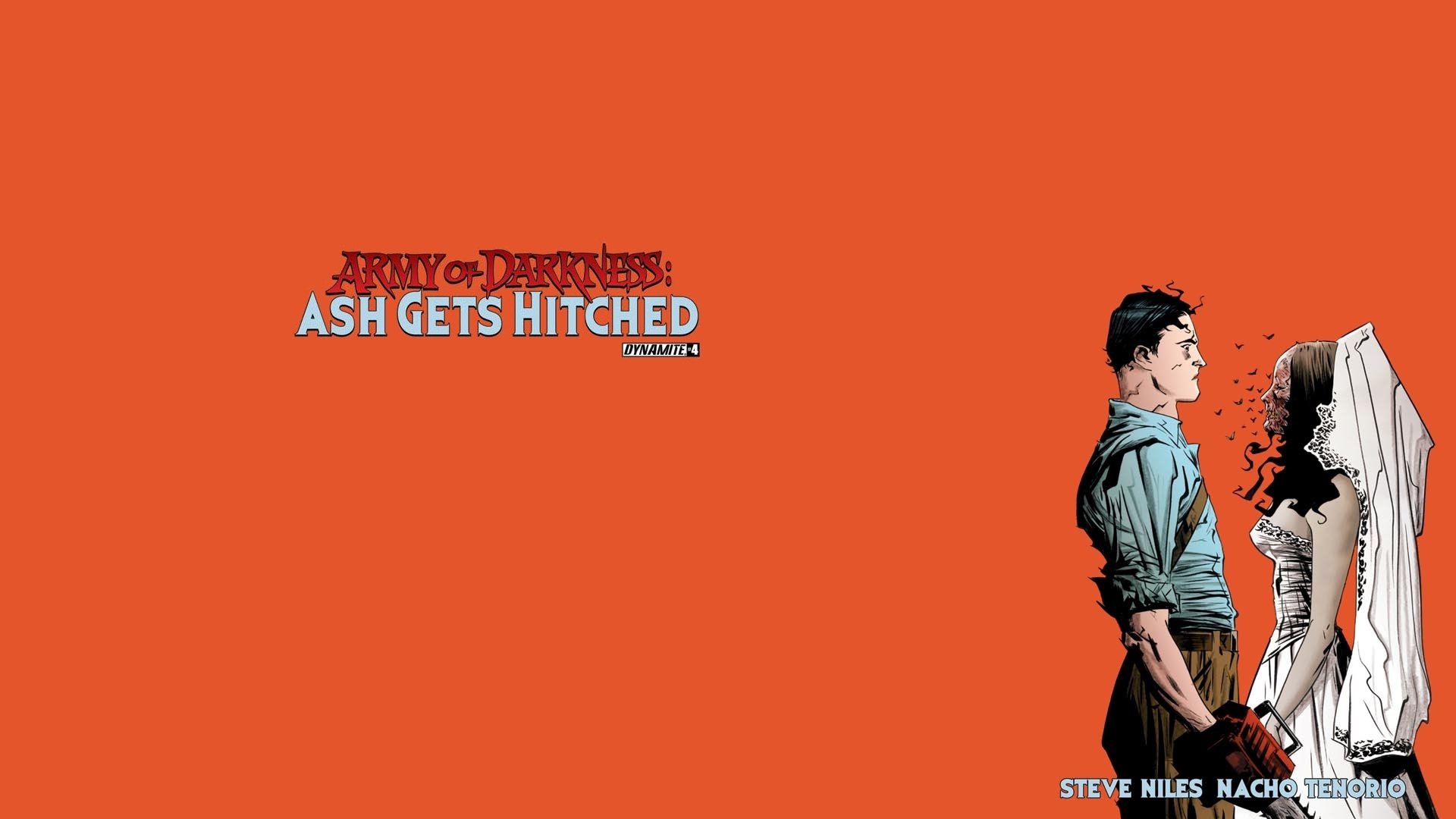
- Explore the Dynamite Entertainment Comics: The Army of Darkness comic runs are actually quite expansive. They explore crossovers you wouldn't expect—Ash vs. Marvel Zombies, Ash vs. Freddy vs. Jason, and even Ash meeting Xena: Warrior Princess. They lean heavily into the "Army of Darkness" era persona.
- The Gaming Angle: For a long time, the Evil Dead: Regeneration game was the best way to "be" Ash, but the 2022 Evil Dead: The Game featured high-fidelity models of the Army of Darkness Ash (specifically the "Knight" and "S-Mart" versions) with Bruce Campbell providing the voice. It's a deep dive into the lore.
- Study the Practical Effects: For filmmakers, Army of Darkness is a textbook on how to use miniatures, stop-motion (homage to Ray Harryhausen), and forced perspective. The "Skeleton Army" sequences are a lost art form in the age of CGI.
The reality is that we won't get another character like this. The modern industry is too focused on "likability" or "gritty realism." Ash Williams is neither. He’s a loud, arrogant, slightly dim-witted guy from Michigan who happened to be the only thing standing between us and total darkness. He’s our guy.
The best way to honor the legacy of this character is to recognize the nuance in the nonsense. He isn't a hero because he's brave; he's a hero because he's too stubborn to stay dead. That’s a lesson anyone can take to heart.
To fully appreciate the craftsmanship, watch the film again but ignore the dialogue. Just watch Campbell's body language. Every stumble, every cocky smirk, and every look of sheer terror is choreographed. It’s a masterclass in genre acting that rarely gets the credit it deserves from mainstream critics. Stop looking for a perfect hero and embrace the guy who forgot the words.
Next Steps for Enthusiasts:
Search for the "Making of Army of Darkness" documentary titled The Men Behind the Army. It features extensive interviews with the KNB EFX team and Sam Raimi, detailing the grueling shoot in the California desert and the creative friction with the studio that led to the multiple endings. This provides the necessary context for why the film feels so delightfully chaotic.