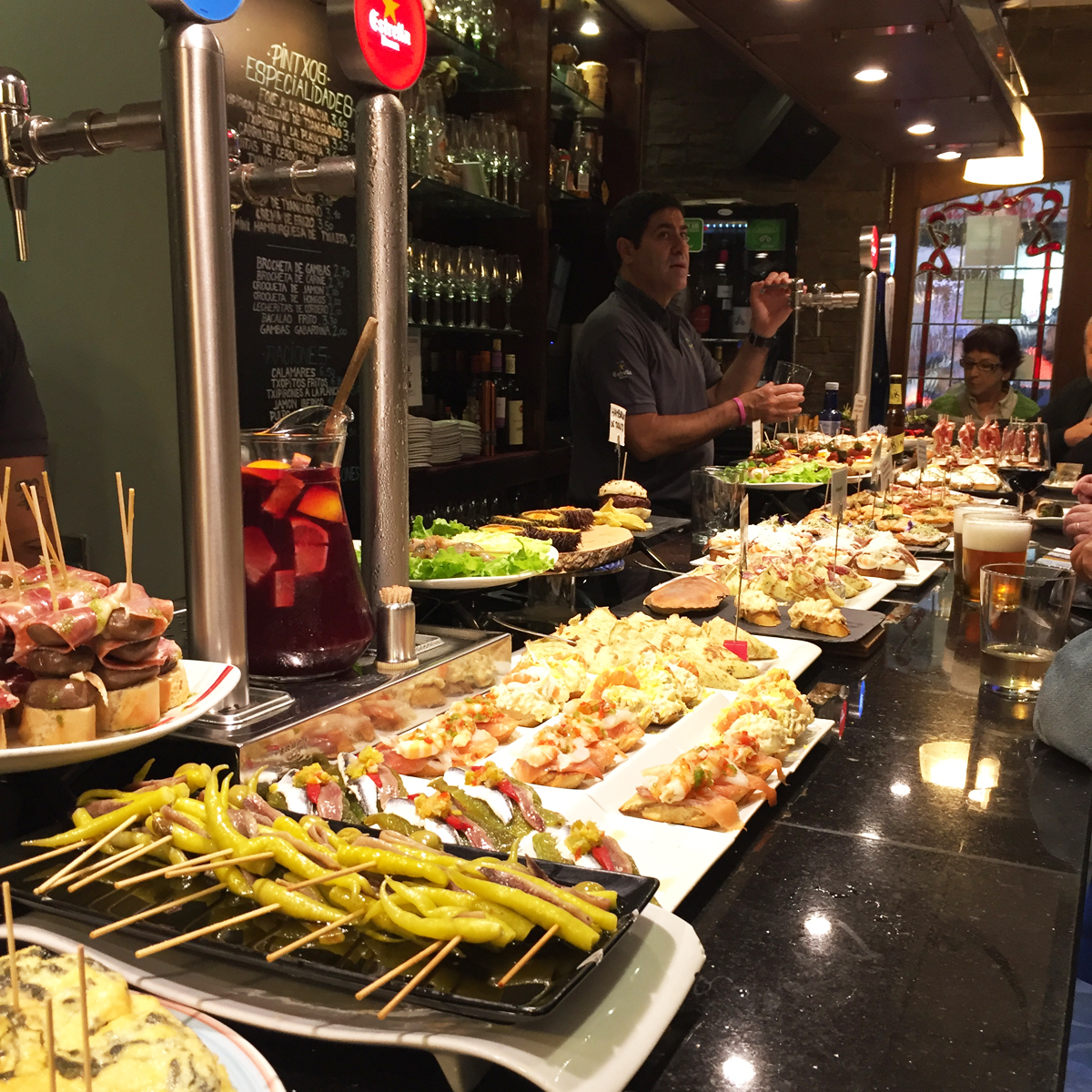
You’re standing on the corner of Calle Fermín Calbetón in the heart of Donostia's Old Town. The air smells like salt air, scorched olive oil, and wood smoke. People are spilling out of doorways, holding small glasses of cider or Txakoli, leaning against stone walls. If you’ve done even five minutes of research on the San Sebastian food scene, you know the Drill. You go to Ganbara for the mushrooms, La Viña for the cheesecake, and Nestor for the tortilla. But there is one place that somehow acts as the gravitational center for the whole Parte Vieja. Bar Sport San Sebastian isn't just a place to eat; it’s a masterclass in how a single bar can survive decades of hype without losing its soul.
It’s loud. It’s crowded. Honestly, it’s a bit chaotic. But the moment you see the tray of Mini Burgers or the legendary Crema de Nécoras (crab soup), the noise fades. Most tourists wander in because of the name, thinking it's just a place to watch a Real Sociedad match. Local regulars know better. It’s a powerhouse of traditional Basque flavors served with zero pretension.
The Identity Crisis That Actually Works
The name is a bit of a trick. When you hear "Bar Sport," you probably think of sticky floors, lukewarm wings, and twenty screens showing the Premier League. That’s not what’s happening here. Sure, they might have a game on a small TV in the corner, but the "sport" in Bar Sport is basically the high-speed consumption of high-end snacks.
It has been around for over 30 years. In a city where trendy "molecular" pintxo bars pop up and disappear every season, Bar Sport stays remarkably consistent. The owner, Txema, and his team have created an atmosphere that feels like a neighborhood living room. You’ll see a group of older Basque men arguing about politics standing right next to a couple from Brooklyn who are frantically checking their Google Maps. Everyone gets treated the same.
The service is legendary for being fast. You make eye contact, you point, you get your plate. It's a dance. If you hesitate too long, the crowd will swallow you. It’s better to just dive in.
What You Should Actually Order (And Why)
Don't just grab whatever is on the counter. While the cold pintxos laid out on the bar look beautiful, the real magic happens on the "caliente" (hot) menu.
The Foie Gras is arguably their most famous dish. It’s a thick, buttery slab of duck liver seared on the plancha until the edges are crispy and the center is basically liquid. They serve it on a small slice of toasted bread with a sprinkle of Maldon sea salt and a touch of balsamic reduction. It’s rich. It’s heavy. It’s perfect. If you’re worried about the price, don't be—compared to what you’d pay for this quality in London or Paris, it’s a total steal.
Then there is the Txangurro. Baked spider crab. It’s served in a tiny ramekin or sometimes a tartlet. The meat is sweet, briny, and mixed with a bit of tomato and onion. It tastes like the Bay of Biscay.
- Mini Hamburguesa: It sounds basic. It isn't. It’s wagyu-style beef, juicy as hell, and served with a tiny bit of caramelized onion.
- Urchin (Erizos de Mar): Not always available, but if they have the sea urchin cream, get it.
- Crepe de Bacalao: A thin pancake stuffed with salt cod and topped with a creamy sauce.
You’ve gotta try the Montadito de Solomillo. It’s a small beef tenderloin steak. Just meat, bread, and maybe a green pepper. Simple. Effective. No fluff.
The Unspoken Rules of the Bar Sport Experience
Look, if you show up at 8:00 PM on a Saturday, you’re going to have a bad time if you hate crowds. The place gets packed. Like, "can't move your elbows" packed.
Don't wait for a table. There are a few in the back, but the real experience is at the bar. Sidle up. Find a tiny gap between two people. Put your drink on the ledge. This is how San Sebastian eats. You aren't meant to stay for three hours. You have two pintxos, a small beer (zurito), and you move to the next spot.
Waiters here have photographic memories. They don't write your order down. They just know. When it’s time to pay, they’ll look at your empty plates and give you the total. Be honest. They’re trusting you, and that trust is part of the local culture.
Also, a quick tip on the wine: ask for the house Txakoli. It’s a slightly sparkling, very dry white wine produced locally. They pour it from a height to aerate it. It cuts through the richness of the foie gras like a knife.
Dealing With the "Tourist Trap" Accusations
Because Bar Sport is so popular and has a generic name, some "foodies" try to claim it's a tourist trap. They’re wrong.
A tourist trap serves frozen food at high prices to people who don't know better. Bar Sport serves high-turnover, fresh ingredients to a mix of locals and visitors. The reason it’s crowded with tourists isn't because it's a trap; it's because it's actually good. Locals still go there for their Sunday poteo (aperitif hour).
The complexity of the flavors at Bar Sport San Sebastian comes from the quality of the raw product. In the Basque Country, you don't hide bad fish under heavy sauces. You grill it. You salt it. You eat it. This bar follows that philosophy to the letter.
Navigating the San Sebastian Food Map
San Sebastian has more Michelin stars per square meter than almost anywhere else on Earth, but the pintxo bars are the real heart of the city. Bar Sport sits right in the middle of a "Golden Triangle" of eating.
If you start at Bar Sport, you can easily hit Borda Berri for their risotto or La Cuchara de San Telmo for pig's ears within a three-minute walk. But many people find themselves circling back to Sport. There’s a warmth there that some of the more "modern" bars lack. It feels lived-in. The walls are covered in photos and sports memorabilia, and the lighting is just bright enough to see the glistening fat on your ham.
One thing to keep in mind is the timing. San Sebastian lunch starts at 1:00 PM and ends at 3:30 PM. Dinner starts around 8:00 PM. If you show up at 6:00 PM, the kitchen might be closed or they’ll only have cold items. Plan your life around the kitchen hours.
Actionable Strategy for Your Visit
Don't go to Bar Sport with a group of ten people and expect to sit down. It won't happen. Go in pairs or trios.
- Arrive early: 12:30 PM for lunch or 7:30 PM for dinner. You’ll get your pick of the bar real estate.
- Order the Foie first: It takes a few minutes to sear, and it sets the tone for the meal.
- Ask for "Sugerencias": Sometimes they have seasonal specials like mushrooms (boletus) or white asparagus that aren't on the main chalkboard.
- Keep your glass: If you’re staying for a second round, keep your glass to save the bartenders a bit of work. They’ll appreciate the gesture.
- Cash or Card: They take both, but having small bills makes the quick-fire transaction easier when the bar is ten people deep.
The beauty of Bar Sport San Sebastian is that it doesn't try to be anything other than a bar. It’s not a museum. It’s not a fine-dining temple. It’s a loud, sweaty, delicious corner of the world where you can eat some of the best food of your life for the price of a movie ticket. Go there. Get the crab soup. Forget about your personal space for an hour. It’s worth it.
Next Step: Head to Calle Fermín Calbetón, 10. Don't look at your phone. Just look for the crowd and the red awning. Order the brocheta de gambas (shrimp skewer) and let the chaos wash over you. If you're feeling adventurous, ask the bartender what he’s eating today—that’s usually the best thing on the menu.