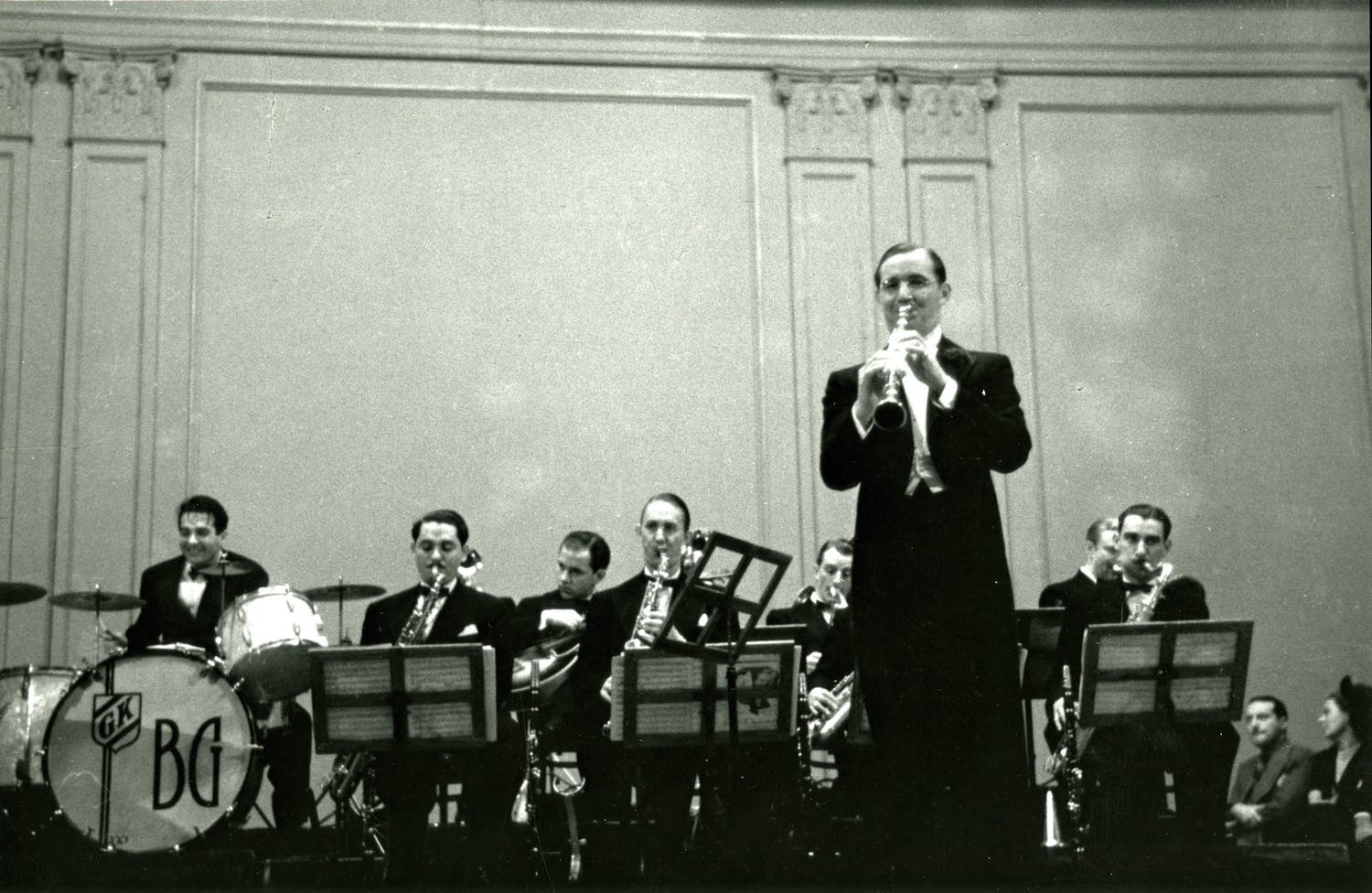
Honestly, walking into Carnegie Hall in 1938 wasn't like going to a concert today. It was more like a cultural collision. On January 16, 1938, Benny Goodman didn't just play a gig; he basically forced the high-brow gatekeepers of New York to look jazz in the eye and call it art. Before that night, jazz was for dance halls and basement clubs. It was "low" music.
Then came the "King of Swing" in his formal tails.
The atmosphere was thick. People were nervous. Goodman himself was reportedly so anxious he asked how long of an intermission he should take, jokingly comparing himself to the legendary conductor Toscanini. His trumpeter, Harry James, famously whispered that he felt "like a whore in church" just being there. But when the first notes of "Don’t Be That Way" hit those velvet seats, the world of music shifted on its axis.
What Really Happened with Benny Goodman at Carnegie Hall
The 1938 show wasn't just a band playing their hits. It was a calculated, brilliant, and slightly chaotic statement. For one thing, Benny Goodman at Carnegie Hall represented the first time a jazz bandleader had ever headlined that hallowed stage.
You've got to understand the social stakes here.
This wasn't just about music; it was about the color of the people playing it. Goodman insisted on bringing an integrated group to the stage. This was a decade before Jackie Robinson broke the color barrier in baseball. Seeing Teddy Wilson (piano) and Lionel Hampton (vibraphone) standing alongside white musicians in the most prestigious venue in America was a silent, powerful revolution.
The setlist was a journey.
They started with contemporary swing, then moved into a section called "Twenty Years of Jazz." They literally taught the audience where the music came from, paying tribute to the Original Dixieland Jazz Band and Louis Armstrong.
The Jam Session and the "Lost" Recording
One of the wildest parts of the night was the jam session on "Honeysuckle Rose." Goodman invited legends from the Count Basie and Duke Ellington bands to sit in. We’re talking Lester Young and Buck Clayton just riffing in a space that usually heard Tchaikovsky.
Kinda crazy to think about, right?
The most famous moment, though, is tucked away in the climax of "Sing, Sing, Sing (With a Swing)." Usually, the song is a showcase for Gene Krupa’s thundering drums. But that night, Goodman suddenly pointed to pianist Jess Stacy. Stacy, who usually just kept the rhythm, launched into an improvised, hauntingly beautiful solo. It was a "lightning in a bottle" moment that shouldn't have worked, but it became the emotional peak of the entire night.
Why the Recording Almost Never Existed
The most famous jazz album in history almost didn't happen.
Benny didn't set out to record a live album for the public. A friend of his, Albert Marx, wanted a recording as a gift for his wife. They stuck a single mic overhead and ran phone lines to a nearby studio. Two sets of acetate discs were cut—one for Marx and one for Goodman.
And then? Benny tossed his copy into a closet.
It sat there, gathering dust for twelve years. It wasn't until 1950 that his daughter Rachel found the discs while cleaning. When Columbia Records finally released it as a double LP, it became the first jazz record to sell a million copies. It basically invented the "live album" as we know it today.
Facts Most People Get Wrong
People often think the audience was swinging from the chandeliers from the first note. Actually, the beginning was a bit stiff. The crowd was polite but reserved, probably because they weren't sure if they were allowed to clap or tap their feet in such a "serious" place.
- The Ticket Prices: The best seats went for $2.75. That’s about $60 in today’s money. A steal for history, but expensive for a Depression-era kid.
- The Attendance: It was a total sell-out. They actually had to put extra chairs on the stage behind the band to fit everyone.
- The Encores: Martha Tilton’s "Loch Lomond" got five curtain calls. People were obsessed.
Actionable Insights for Jazz Fans Today
If you want to truly appreciate the impact of Benny Goodman at Carnegie Hall, you can't just read about it. You have to hear it.
- Listen to the 1998 Remaster: The original 1950 LP had a lot of the "rough edges" edited out. The 1998 Phil Schaap restoration puts back the mistakes, the missed cues, and the raw energy. It sounds like you're actually in the room.
- Focus on the Jess Stacy Solo: When you listen to "Sing, Sing, Sing," wait for the 10-minute mark. Listen to how the drums drop away and Stacy’s piano starts to shimmer. It’s the definition of a "flow state."
- Visit the Rose Museum: If you’re ever in New York, Carnegie Hall’s Rose Museum often has Goodman’s clarinet or original programs on display. Seeing the physical history makes the 1938 date feel a lot more real.
The 1938 concert proved that jazz wasn't just "fad" music for kids; it was a sophisticated, complex, and deeply American art form. It made the concert hall safe for everyone from Miles Davis to Wynton Marsalis. Goodman didn't just play a concert; he opened a door that never closed again.