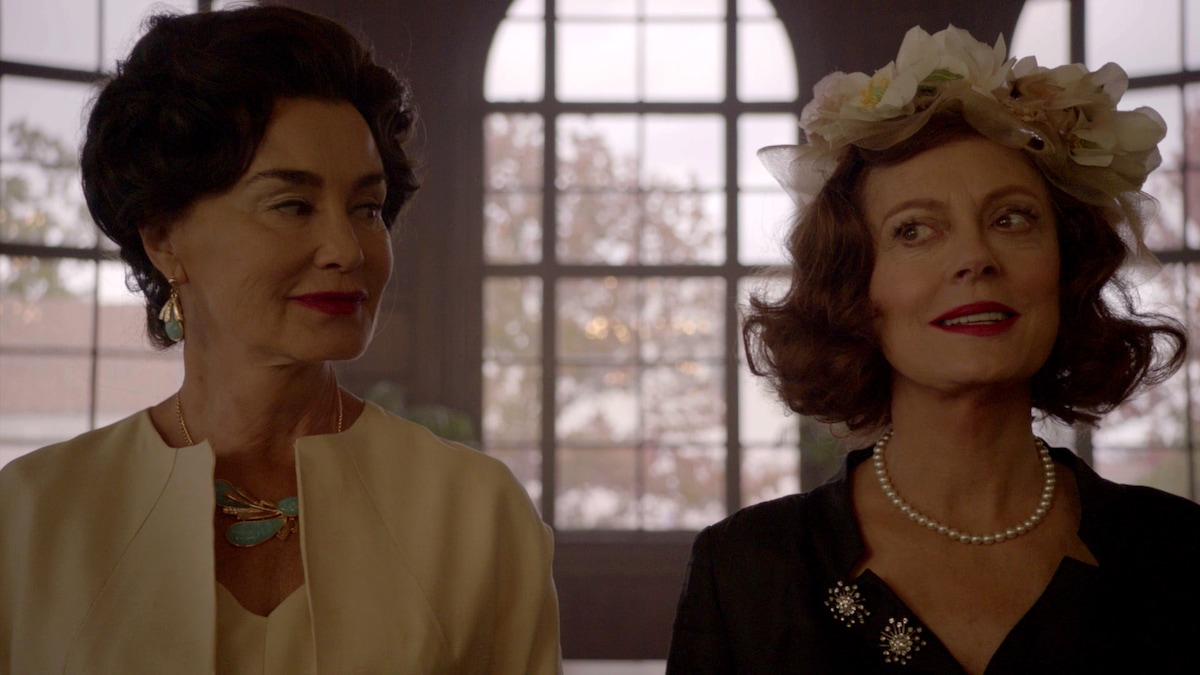
Hollywood thrives on myths. We love the idea of two legendary titans—Bette Davis and Joan Crawford—spending decades sharpening their claws just to tear each other apart. It makes for great television. It makes for even better gossip. But if you look past the campy dialogue and the "Pepsi vs. Coke" headlines, the reality of the Bette and Joan rivalry is a lot more complicated than just two women who hated each other’s guts. Honestly, it was a tragedy disguised as a cage match.
For years, the story was simple: Bette was the "serious" actress, the two-time Oscar winner who didn’t care if she looked like a hag on screen as long as the performance was real. Joan was the "movie star," a creation of the MGM machine who wouldn’t be caught dead without her eyebrows perfectly arched and a Pepsi in her hand. They were opposites. Naturally, they had to be enemies. Right?
The truth is, their "feud" was a weaponized marketing tool. It was a survival tactic in an industry that was already trying to bury them both by the time they hit fifty.
The Franchot Tone Incident: Where it Actually Began
Most people think the drama started on the set of What Ever Happened to Baby Jane? in 1962. Nope. You have to go all the way back to 1935 to find the first real blood.
Bette Davis was filming Dangerous with a handsome actor named Franchot Tone. She fell for him. Hard. But Joan Crawford, already a massive star at MGM, decided she wanted him too. While Bette was busy acting, Joan was busy winning. She invited Tone over for "dinner," and shortly after, they were engaged.
Bette never forgot it. She famously said that Tone would show up to the Dangerous set every morning covered in Joan’s lipstick. It wasn't just about a man, though. It was about power. Joan had the glamour and the husband; Bette had the critical acclaim. Neither was satisfied with just one.
The Baby Jane War: Rocks, Kicks, and Coca-Cola
By 1962, both women were "washed up" by Hollywood standards. No studio wanted to touch them. They were "old broads"—a term Davis used and Crawford loathed. When they finally teamed up for What Ever Happened to Baby Jane?, the air on set was thick.
Everyone talks about the physical stuff. During the scene where Jane (Bette) beats Blanche (Joan), Joan was terrified Bette would actually hurt her. She asked for a body double. Director Robert Aldrich refused for the close-ups. Bette ended up "clipping" Joan’s head. Some accounts say Joan needed stitches; others say it was just a bruise. Either way, the message was sent.
Joan got her revenge, though. She knew Bette had a bad back. In the scene where Jane has to drag Blanche across the floor, Joan allegedly wore a heavy weightlifter’s belt under her costume. She made herself a literal dead weight. Bette was screaming in pain by the time they finished the take.
Then there was the soda. Joan was on the board of directors for Pepsi-Cola (her late husband had been the CEO). Bette, just to be petty, had a Coca-Cola machine installed in her dressing room. It was high-school level drama played out by two of the most powerful women in the world.
The 1963 Oscars: The Ultimate Betrayal
If there is one moment that defines the Bette and Joan feud, it’s the night of the 35th Academy Awards. This is where "petty" becomes "legendary."
Bette was nominated for Best Actress for Baby Jane. Joan was not.
Joan didn't just sit home and pout. She campaigned against Bette. She contacted the other nominees who couldn't attend—Anne Bancroft and Geraldine Page—and offered to accept the Oscar on their behalf if they won.
When Anne Bancroft’s name was called for The Miracle Worker, Bette Davis felt a hand on her shoulder. It was Joan. "Excuse me," Joan whispered, "I have an Oscar to collect."
Imagine the scene. Bette is standing there, crushed, watching her rival—who wasn't even nominated—glide onto the stage to take the trophy. It was a masterclass in psychological warfare. Bette later claimed that if she had won that night, the movie would have made another million dollars. She blamed Joan for hitting her in the wallet, which, for Bette, was the ultimate sin.
Why the Feud Still Matters Today
It’s easy to laugh at the "Mommy Dearest" energy of it all, but there’s a darker layer here. The industry loved their fighting. The press loved it. The studios fueled it because it sold tickets.
- Ageism was the real villain. Hollywood didn't know what to do with women over 40 then, and arguably, it still struggles now.
- The "Hag Horror" Genre. Their rivalry birthed an entire genre where older actresses were cast as grotesques.
- A Lack of Solidarity. If Bette and Joan had teamed up instead of fighting, they might have owned the town. But the system was designed to keep them competing for a single seat at the table.
The Last Word (Literally)
Joan Crawford died in 1977. When a reporter asked Bette Davis for a comment, she gave one of the most famous, backhanded quotes in history:
"You should never say bad things about the dead, only good. Joan Crawford is dead. Good."
It’s a brutal line. But even in her later years, Bette admitted she respected Joan’s professionalism. They were two workhorses who didn't know how to stop.
The feud wasn't just about jealousy. It was about two women who refused to disappear. They fought each other because the world told them there wasn't enough room for both of them to stay stars.
Next Steps for Classic Film Fans:
To really understand the nuance of this rivalry, you have to watch the work, not just the memes. Start by watching What Ever Happened to Baby Jane? with a critical eye—look for the moments where the line between the character and the actress disappears. Then, compare Bette's performance in All About Eve with Joan's in Mildred Pierce. You'll see two different versions of the same burning ambition. If you want the modern dramatization, the 2017 series Feud gets the emotional beats right, even if it takes some creative liberties with the dialogue. Focus on the history of the "women's pictures" era to see how these two actually built the foundation for every female lead that followed them.