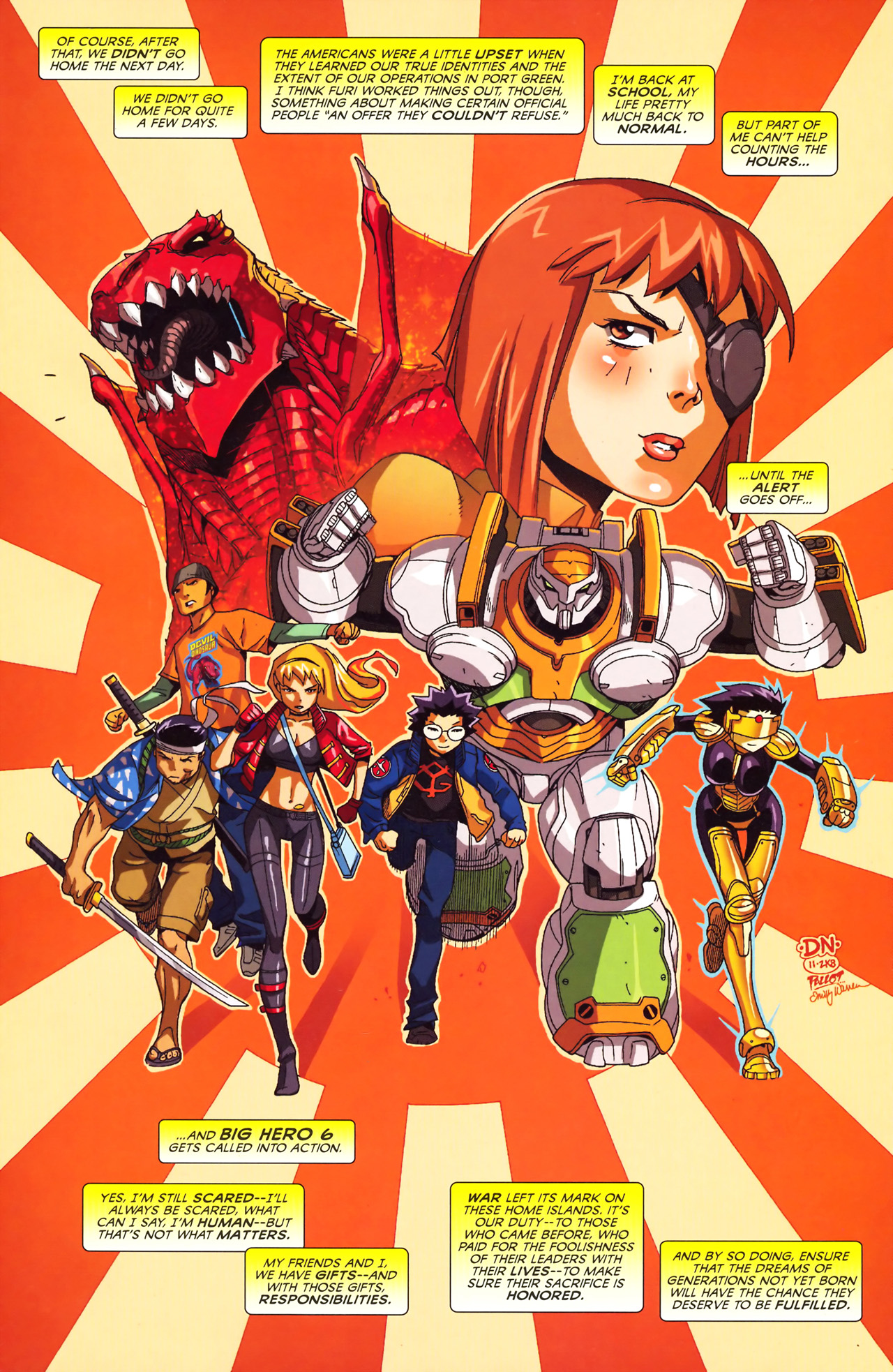
Most people think they know Baymax. They picture the huggable, inflatable marshmallow man who just wants to provide healthcare. But if you cracked open the original Big Hero 6 comic from 1998, you’d find something else entirely. You’d find a hulking, green synthetic bodyguard that can transform into a terrifying dragon.
Honestly, the distance between the Disney movie and the Marvel source material is staggering. It isn't just a few small changes. It’s a total ground-up rebuild.
The Secret Origins of Japan’s Premiere Team
Back in the late 90s, Marvel wanted to tap into the growing manga craze. They tapped Steven T. Seagle and Duncan Rouleau—the guys who eventually formed the Man of Action collective—to cook up a Japanese super-team.
The result was a group of state-sanctioned operatives working for a secret consortium called the Giri. Forget San Fransokyo; these stories were rooted in a very real, grittier version of Tokyo. The team wasn't a bunch of college kids hanging out in a tech lab. They were government assets.
Interestingly, the team’s first appearance is a bit of a trivia trap. While they were meant to debut in Alpha Flight #17 in December 1998, a scheduling quirk meant their own miniseries, Sunfire & Big Hero 6, actually hit stands a few months earlier in September.
Forget Everything You Know About the Roster
If you look at the cover of that 1998 series, you'll see two faces that Disney couldn't touch because of licensing red tape: Sunfire and Silver Samurai.
At the time, both were heavily associated with the X-Men and Wolverine. Since Fox held the film rights to those characters, Disney had to scrub them. In the comics, Silver Samurai actually led the team. He was a seasoned, stern warrior, a far cry from the "found family" vibe of the movie.
And the characters you do recognize? They are almost unrecognizable.
- Hiro Takachiho: In the comics, his name is Hiro Takachiho, not Hamada. He lives in a Tokyo suburb with his mother. He isn't an orphan, and he doesn't have a brother named Tadashi.
- Baymax: This is the big one. Hiro didn't find Baymax; he built him. But here’s the kicker: he used the brain engrams of his deceased father to program the robot's AI. It's way more "Frankenstein" and way less "Florence Nightingale."
- Honey Lemon: Aiko Miyazaki was a secret agent, not a bubbly chemist. Her "Power Purse" didn't make chemical balls—it was a portal to another dimension from which she could pull literally anything.
- GoGo Tomago: Leiko Tanaka was a tough-as-nails ex-con. She didn't just have fancy skates; she could transform her entire body into a ball of kinetic energy.
- Fred: In the 2008 series by Chris Claremont, we meet Fredzilla. He wasn't a rich kid in a mascot suit. He was of Ainu descent and could literally manifest a giant, Godzilla-like astral projection.
Why the Comics Still Matter
You might wonder why anyone should care about an obscure 90s comic that the movie basically ignored. The truth is, the Big Hero 6 comic is a fascinating time capsule. It shows Marvel’s early attempts to move beyond the US-centric "Avengers" model.
The stories dealt with heavy themes. The first villain they fought was Everwraith, a literal ghost made of the lingering souls from the Hiroshima and Nagasaki bombings. That’s a level of historical weight and darkness you just don't get in a Disney "PG" flick.
Eventually, the team became more integrated into the wider Marvel Universe. They popped up to help Spider-Man during the "Ends of the Earth" storyline, proving they weren't just a one-off gimmick. They are part of the 616 continuity. They’ve fought alongside Alpha Flight and even stood their ground during the Civil War event.
Actionable Next Steps for Fans
If you're a fan of the movie and want to explore this weird, wonderful history, here is how you can actually dive in:
- Track down the 2008 Miniseries: This five-issue run by Chris Claremont is the closest bridge between the original weirdness and the modern versions of Wasabi and Fred. It’s available on most digital comic platforms.
- Hunt for Alpha Flight #17: If you’re a collector, this is the "official" first appearance of the team in the main Marvel continuity. It’s a great piece of history for any shelf.
- Look for the Spider-Man Crossover: Check out The Amazing Spider-Man #685. Seeing Hiro and Baymax interact with Peter Parker gives you a sense of how they actually fit into the world of the Avengers.
The Big Hero 6 comic is a reminder that even the most polished Disney hits often have messy, experimental, and deeply creative roots. It’s a world of dragon-robots and dimension-hopping purses that deserves a second look.