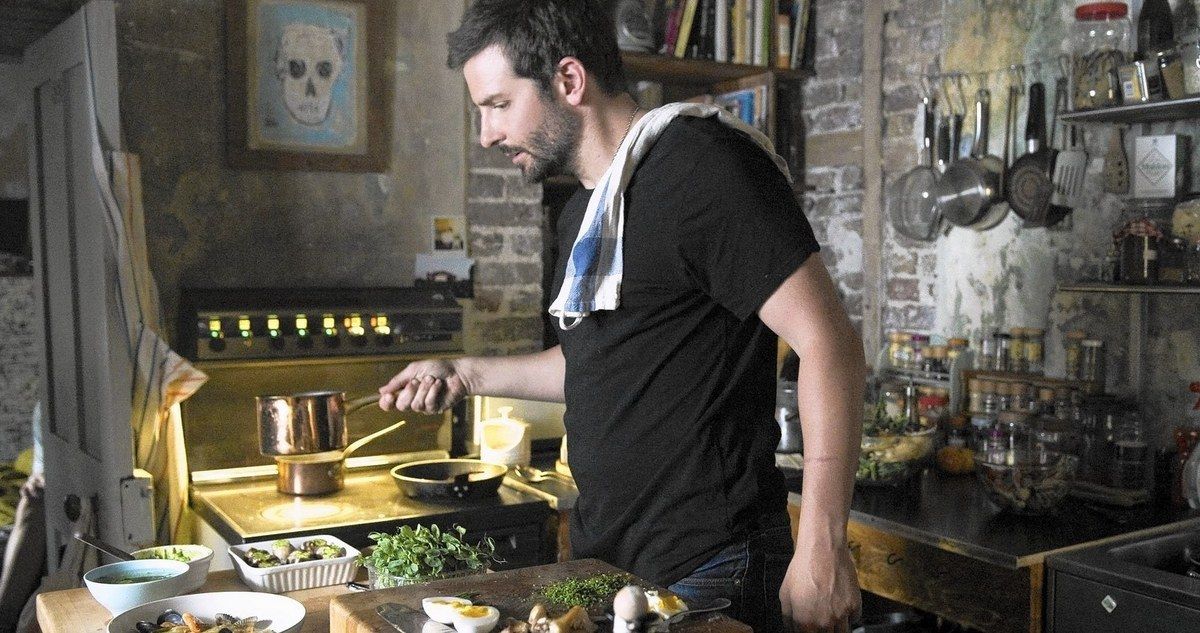
Ever watched a movie and thought, "Man, they really got that right," even when the critics are busy tearing it to shreds? That’s basically the legacy of the Bradley Cooper Burnt movie. If you look at Rotten Tomatoes, it’s sitting at a pretty dismal 28%. Critics called it cliched. They called it shouty. They said Adam Jones—Cooper’s character—was an unlikable "Gary Stu."
But then you talk to actual chefs.
You talk to people who have spent sixteen hours a day in a windowless basement sweating over a sauté station, and the vibe changes. Suddenly, the Bradley Cooper Burnt movie isn’t just a mid-tier drama from 2015. It’s one of the most technically accurate depictions of high-end kitchen culture ever put on film.
The Gordon Ramsay Connection (and Beyond)
There’s a reason Bradley Cooper looks like he knows what he’s doing. He actually does.
Before he was an Oscar-nominated actor, Cooper was a busboy at a Greek spot and a prep cook at an Italian place in New Jersey. He spent years in the weeds before he ever saw a red carpet. For Burnt, he didn't just shadow a chef for a weekend. He worked with Marcus Wareing, a two-Michelin-star legend, and even spent time in the kitchen with Gordon Ramsay.
In fact, the character of Adam Jones is a bit of a Frankenstein’s monster of the culinary world. Cooper has said he modeled Jones on a mix of Wareing, Ramsay, and Marco Pierre White. You see it in the way he carries himself. The "shouty chef" trope might feel like a tired movie cliche to a film critic in an air-conditioned office, but to anyone who worked in the 90s or 2000s London food scene, it was Tuesday.
No Stunt Doubles for the Risotto
One thing that always kills the immersion in food movies is the "hand double." You know the shot: a wide of the actor looking intense, then a tight cut to a professional chef’s hands doing some surgical knife work that the actor clearly couldn't handle.
That doesn't happen here.
Cooper insisted on doing all the cooking himself. When you see him shucking oysters or plating a dish under extreme pressure, that’s him. Wareing actually turned the movie set into a functioning kitchen. The heat was real. The steam was real. The "pissed off" energy of the background extras? Mostly real, because they were often actual cooks standing around for hours in the heat.
Why the "Burnt" Kitchen Hits So Hard
There’s a specific scene where Adam Jones loses it over a plate of turbot. He’s screaming. He’s throwing things. It looks like a tantrum. To most people, it’s just a guy being a jerk. But look closer at the technique.
Michelin-starred chef Paul Liebrandt famously gave this movie a 9/10 for accuracy. He pointed out that the way Jones checks the temperature, the way the kitchen "expeditor" calls out the tickets, and the sheer claustrophobia of the line are spot-on.
The Bradley Cooper Burnt movie understands that at this level, food isn't just "cooking." It's high-stakes performance art where one degree of temperature or one misplaced micro-green can ruin a $500 dinner and a decade-long reputation.
- The Michelin Obsession: The movie nails the paranoia of the "Michelin inspectors." The idea that two guys in suits could walk in at any moment and decide your fate is a very real phantom that haunts every high-end head chef.
- The Addiction Element: While some critics thought the drug-addict-backstory was "too much," the industry has a notorious history with substance abuse. The high-pressure, late-night lifestyle of the culinary world and addiction often go hand-in-hand.
- The Rivalries: The pettiness between Adam and Reece (played by Matthew Rhys) feels authentic. It’s not just about who cooks better; it’s about who has the better gear, the better location, and the bigger ego.
What Most People Get Wrong About Adam Jones
The biggest complaint about the Bradley Cooper Burnt movie is that Adam Jones is "irredeemable." He sabotages people. He’s a nightmare to work for. He treats Sienna Miller’s character, Helene, pretty terribly for most of the runtime.
But honestly? That’s the point.
The movie isn't trying to tell you he's a "good guy." It’s trying to show you a guy who is so "burnt" by the pursuit of perfection that he’s lost his humanity. He starts the movie shucking a million oysters as penance—a self-imposed exile to prove he can endure the grind again.
The arc isn't just about getting a third star. It’s about him realizing that he can't do it alone. The "family meal" scene toward the end—where the whole staff sits down together—is arguably more important than the actual Michelin review. It’s the first time he treats his team like people instead of tools.
The Cast: Not Just a One-Man Show
While Bradley Cooper is the engine, the supporting cast is what keeps the movie from stalling.
Sienna Miller is fantastic as Helene. She isn't just a "love interest." She’s a talented chef who actually challenges Adam’s outdated, "screaming-is-passion" philosophy. Then you have Daniel Brühl as Tony, the maître d' who is clearly in love with Adam and puts up with way too much of his nonsense.
The cameo list is actually wild:
- Alicia Vikander as the ex-girlfriend.
- Uma Thurman as a powerful food critic.
- Emma Thompson as the psychiatrist trying to keep Adam from imploding.
- Omar Sy as the former friend who has every reason to hate Adam (and eventually gets his revenge in a way that is both hilarious and devastating).
The "The Bear" Connection
If you’re a fan of the hit show The Bear, you might find some familiar DNA here. In fact, if you look closely at the photo collage in The Bear, there’s actually a photo of Bradley Cooper’s character, Adam Jones.
The creators of The Bear clearly respected what the Bradley Cooper Burnt movie was trying to do. Both projects tackle the same themes: the toxicity of "genius," the physical toll of the kitchen, and the desperate search for redemption through service.
Actionable Takeaways for Movie Lovers and Foodies
If you’re planning to revisit Burnt or watch it for the first time, here’s how to get the most out of it:
- Watch the Background: Don't just focus on Cooper. Watch the "commis" and "sous chefs" in the back. The way they move is choreographed like a dance. That’s all real kitchen movement coached by Marcus Wareing.
- Look at the Plating: The food in this movie was designed to be "New Nordic" / modern French. It’s light, artistic, and incredibly difficult to execute. It’s a far cry from the comfort food you see in movies like Chef.
- Understand the Michelin Star System: Before you watch, look up what it actually takes to get three stars. It’s not just about the food. It’s about "immortal" consistency. Knowing the stakes makes Adam’s panic attacks feel a lot more grounded.
- Note the Sous Vide Argument: There’s a plot point about "sous vide" cooking (cooking in bags in a water bath). In 2015, this was a massive debate in the culinary world—old-school fire vs. new-school technology. Adam’s resistance to it is a classic "old guard" move.
Basically, Burnt is a better movie than its reviews suggest. It’s a specialized film. It’s for the people who care about the "how" as much as the "why." It’s loud, it’s stressful, and it’s greasy—just like a real Saturday night service.
Next time you’re at a high-end restaurant and your steak is perfect, just remember: there’s probably a guy in the back who is exactly as stressed as Adam Jones was.
If you want to see the real-world inspiration behind the drama, look up Marcus Wareing’s "Petrus" era or Gordon Ramsay’s early "Boiling Point" documentary. You’ll see that Bradley Cooper wasn't exaggerating—he was actually being a bit restrained.