You've probably seen him. If you spend any time on X (formerly Twitter), you’ve definitely seen him. Brian Krassenstein is one of those figures who seems to exist in the very center of every political firestorm on the internet. He’s fast. He’s loud. He’s basically everywhere at once.
But who is he, really?
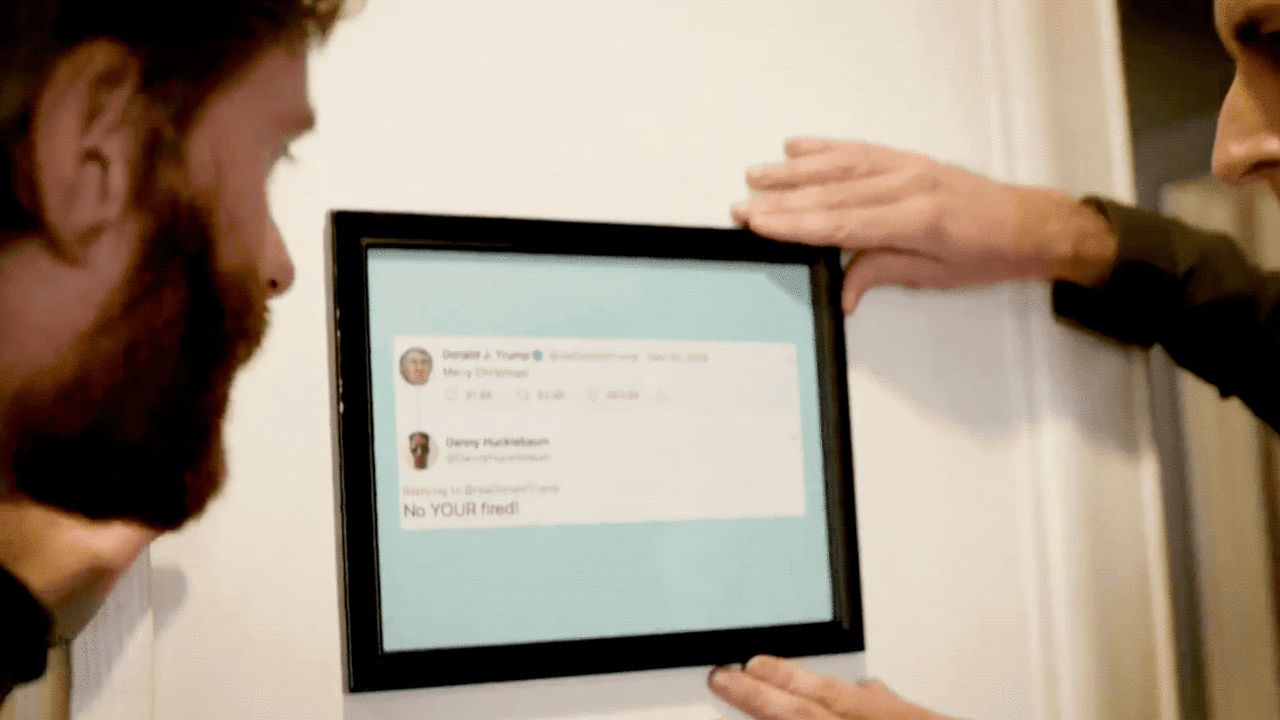
People often lump him in with his twin brother, Ed. They’re like a package deal. For years, they were the faces of the "Resistance" movement during the Trump administration. They’d reply to a presidential tweet within seconds. Literally seconds. It was impressive, honestly, even if it drove half the internet crazy.
The Backstory: Before the Viral Tweets
Brian didn't just spawn from a blue checkmark. He’s a Jersey guy, born and raised in a Jewish household in Somers Point. He graduated from Rutgers University in 2004 with a degree in economics. He’s always been an entrepreneur. Sorta.
By age 15, he and Ed were selling baseball cards online. They were early adopters of the internet economy before most people knew what a browser was. In the early 2000s, they moved into running web forums. These weren't just hobby sites; they were businesses.
One of their first big swings involved sites like TalkGold and MoneyMakerGroup. These were investment forums where people talked about "high-yield investment programs" (HYIPs). It wasn't all sunshine and rainbows, though. In 2017, the Department of Justice raided their homes in Fort Myers, Florida.
Feds seized phones, computers, even property. They were looking into wire fraud and Ponzi schemes. Brian and Ed were never actually charged with a crime, but they did settle. They had to give up about $450,000 from the sale of a rental property. Brian’s defense? They just sold ad space. They claimed they didn't know the advertisers were scammers.
Brian Krassenstein and the Twitter Rollercoaster
The "Resistance" years were peak Krassenstein. They built a massive following—hundreds of thousands of people—just by being the first to criticize Donald Trump. They even wrote a children’s book called How the People Trumped Ronald Plump. It featured a very muscular Robert Mueller.
Then came the ban.
In May 2019, Twitter permanently suspended both brothers. The platform claimed they were operating fake accounts and buying engagement. Basically, they were accused of "gaming" the system to stay at the top of the feed. Brian denied it. He said he had multiple accounts, but only to see people who had blocked him.
He stayed in the "digital wilderness" for a while. Then Elon Musk bought the platform.
In December 2022, Brian was reinstated. He didn't waste any time. He went right back to the same high-frequency posting style, though he’s pivoted a bit. Now, he’s often seen debating figures like Elon Musk himself or appearing on podcasts like Chris Cuomo’s to talk about the "outrage economy."
More Than Just Political Fights
If you look past the political bickering, Brian has a weirdly diverse business portfolio.
- 3D Printing: He co-founded 3DPrint.com in 2013 and sold it a couple of years later.
- Digital News: He helped start Hill Reporter, which was an anti-Trump news portal.
- Crypto and NFTs: He co-founded NFTz.me, a marketplace on the DeSo blockchain.
It’s an odd mix. He’s an economist by education, a forum moderator by trade, and a professional arguer by choice.
What People Get Wrong About Him
Most people think Brian is just a bot or a paid operative. Honestly, he’s probably just very, very good at the attention economy. He understands that on social media, being first is often more important than being deep.
He’s moved into a space where he’s more of a centrist-leaning commentator now, at least compared to his 2017 persona. He still gets fact-checked—like in 2023 when PolitiFact flagged a post about U.S. evacuation policies—but he keeps pushing.
Actionable Insights for Navigating the "Krassenstein" Internet
The way Brian operates tells us a lot about how the internet works in 2026. If you want to understand the modern media landscape, look at his trajectory.
1. Verification is Your Responsibility Because Brian (and others like him) posts so quickly, the information isn't always fully vetted. When you see a "breaking" update from a high-frequency account, wait 20 minutes before sharing. Check sources like the Associated Press or Reuters to see if the facts hold up.
2. Understand the Outrage Economy Engagement is currency. Every time you reply to Brian—whether you love him or hate him—you are helping him rank higher in the algorithm. If you find his content exhausting, the best tool isn't a "snarky" reply; it's the mute button.
3. Diversify Your Feed Don't let one or two high-volume accounts dictate your worldview. Brian represents a very specific "online-first" perspective. Balance your intake with long-form journalism and local news to get a clearer picture of what's happening offline.
4. Follow the Money, Not Just the Tweets The Krassenstein story is a story of business ventures—from baseball cards to 3D printing to crypto. Understanding that these accounts are often part of a larger business model helps you see their content with a more critical, objective eye.