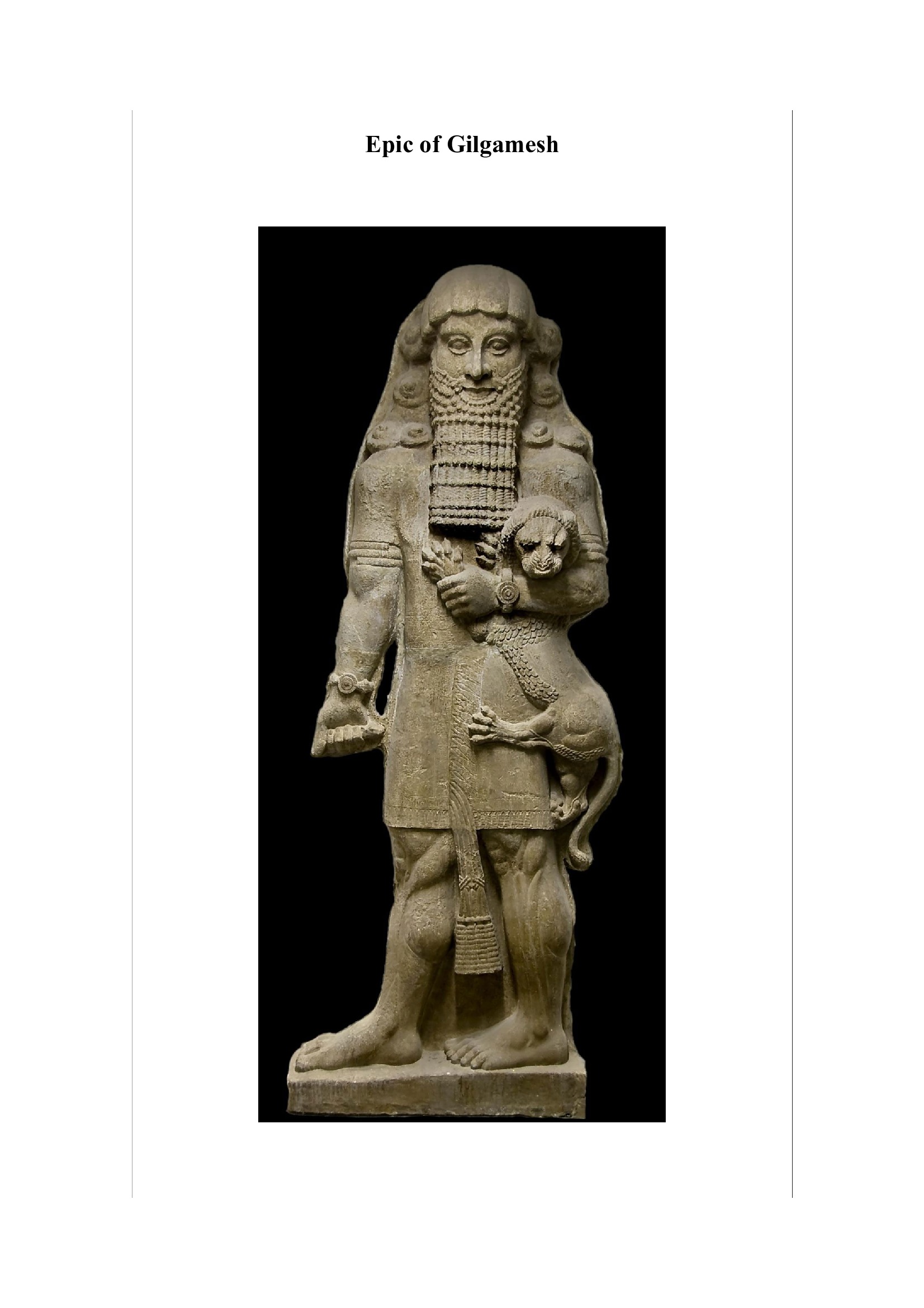
When you look at the characters in the Epic of Gilgamesh, you aren't just looking at dusty museum relics or dry Mesopotamian history. You’re looking at us. It’s wild that a story carved into clay tablets nearly 4,000 years ago captures the messy, terrifying, and beautiful reality of being alive better than most modern blockbusters. Honestly, it’s the original "buddy cop" movie, but with way more existential dread and hair.
Gilgamesh: The King Who Had Too Much
Gilgamesh is a piece of work. He starts the story as a total nightmare for his people in Uruk. Imagine a guy who is two-thirds divine and one-third human—basically, he’s got all the power of a god but the ego and mortality of a man. It’s a bad combo. He’s oppressive. He overworks his subjects. He’s that guy who thinks the world exists purely for his entertainment.
Scholars like Andrew George, who did the definitive translation for Penguin Classics, point out that Gilgamesh represents the raw, unbridled energy of civilization before it learns empathy. He is built like a bull. He’s restless. He’s lonely in a way he doesn't even understand yet. The people of Uruk eventually get so fed up they pray to the gods for a distraction, which is how we get the most famous friendship in literary history.
Enkidu: From Wild Man to Urban Legend
Then there’s Enkidu. If Gilgamesh is the city, Enkidu is the wilderness. He starts off living with gazelles and eating grass, which sounds kind of peaceful until you realize he’s also sabotaging hunter's traps and scaring the locals. He’s hairy. He’s pure. He’s what we were before we started building walls and writing laws.
The transition Enkidu makes is fascinating. He doesn't just "become human" by magic; he’s tamed by Shamhat, a temple priestess. It takes six days and seven nights. Afterward, the animals reject him. He can’t run as fast. But—and this is the kicker—he gains "understanding." He trades his physical speed for a soul. When he finally meets Gilgamesh, they don't start as friends. They have a massive wrestling match that shakes the doorposts of the city. Only after they realize they are equals do they embrace.
It’s a specific kind of bromance. They need each other to be whole. Enkidu gives Gilgamesh a conscience, and Gilgamesh gives Enkidu a purpose, even if that purpose eventually leads to their undoing.
Shamhat: The Power of the "Lesser" Characters
We need to talk about Shamhat. People often overlook her because she only appears early on, but she’s arguably the most important of the characters in the Epic of Gilgamesh. Without her, Enkidu stays a beast and Gilgamesh stays a tyrant.
She isn't just a "prostitute" in the modern sense; she represents the civilizing force of culture, intimacy, and food. She teaches Enkidu how to wear clothes. She shows him how to drink beer and eat bread. In the world of the Epic, these aren't just chores—they are the markers of humanity. Shamhat uses her agency to bridge the gap between the wild and the domestic. She’s the catalyst for everything that follows.
The Gods: Petty, Powerful, and Very Stressed
The gods in this story are kind of a mess. They aren't the distant, perfect beings you see in some later religions. They get hungry. They get scared during the Great Flood. They bicker like a family at a holiday dinner that’s gone off the rails.
- Anu: The sky god, sort of the distant grandfather figure.
- Ishtar: The goddess of love and war. She’s the one who kicks the plot into high gear when Gilgamesh rejects her advances. She’s furious, and frankly, you can see why, given how Gilgamesh insults her.
- Enlil: The one who decided to wipe out humanity with a flood because we were "too noisy." We’ve all had neighbors like that, but Enlil takes it to a genocidal extreme.
- Shamash: The sun god who actually likes Gilgamesh and helps the duo kill the forest monster, Humbaba.
Humbaba and the Bull of Heaven: The Monsters
Every hero needs a foil. Humbaba is the guardian of the Cedar Forest, appointed by Enlil. He’s terrifying, with "teeth like a dragon's" and "breath like fire." But if you read closely, there’s a moment of real pathos when Gilgamesh and Enkidu corner him. He begs for his life. He offers to be Gilgamesh’s servant. Enkidu, fearing Gilgamesh will go soft, pushes for the kill. It’s a dark turn. It shows that our "heroes" aren't always the "good guys."
The Bull of Heaven is more of a supernatural force of nature. Ishtar brings it down to earth to punish Gilgamesh. It causes sinkholes that swallow hundreds of men. When Enkidu and Gilgamesh kill it, they’re basically spitting in the face of the gods. That’s the turning point. You can't just kill a divine pet and expect to get away with it.
The Death of Enkidu and the Shift in Tone
This is where the story gets heavy. Enkidu dies as punishment for their hubris. His death scene is brutal. He doesn't die in battle; he wastes away from a curse, feeling ashamed that he’s dying in a bed like a "coward" rather than on the field.
Gilgamesh’s reaction is raw. He refuses to bury the body for days, until—and the text is very graphic here—a maggot falls out of Enkidu’s nose. That’s the moment the "hero" realizes he’s going to die too. The rest of the epic is Gilgamesh wandering the wilderness, wearing animal skins, looking like a madman, searching for the secret to eternal life. He goes from a king in silk to a beggar in pelts.
Utnapishtim: The Man Who Survived the End of the World
Gilgamesh eventually finds Utnapishtim, the Mesopotamian Noah. Utnapishtim is the only human granted immortality by the gods after he survived the Great Flood. He’s old. He’s tired. He lives at the edge of the world.
He doesn't give Gilgamesh what he wants. Instead, he gives him a reality check. He tells him the story of the flood, basically explaining that his immortality was a one-time deal, a "gift" born out of a specific catastrophe. He challenges Gilgamesh to stay awake for six days and seven nights—the same amount of time Enkidu spent with Shamhat. Gilgamesh fails instantly. He can't even defeat sleep, the "little death," so how is he going to defeat actual death?
Why These Characters Still Matter
The beauty of the characters in the Epic of Gilgamesh lies in their failure. Gilgamesh doesn't get the plant of immortality. He finds it, but a snake steals it while he’s bathing. He ends up right back where he started: at the walls of Uruk.
But he’s changed. He looks at those walls—the work of human hands—and realizes that this is his immortality. Not living forever, but building something that lasts. The characters show us that grief is universal, friendship is transformative, and coming to terms with our limits is the ultimate heroic act.
Practical Insights from the Epic
If you’re looking to apply the wisdom of these characters to your own life, consider these three takeaways:
- The Power of Connection: Gilgamesh was a tyrant until he found a peer. Seek out people who challenge you and hold you accountable, rather than those who just say "yes" to your worst impulses.
- Acceptance of Mortality: The central theme is that death is inevitable. Instead of chasing "immortality" through fame or legacy, focus on the quality of your "walls"—the things you build and the people you impact today.
- The Role of Mentors: Characters like Shamhat and Utnapishtim provide the necessary friction for growth. Look for mentors who offer hard truths rather than easy comforts.
The story ends not with a victory over a monster, but with a king showing a stranger his city. It’s a quiet, grounded ending for a story that started with cosmic battles. It reminds us that at the end of the day, we are all just humans living within our own walls, trying to make sense of the time we have.
To truly understand the depth of these characters, your next step should be to read the tablet XI of the standard Babylonian version. It contains the most vivid description of the flood and the interaction between Gilgamesh and Utnapishtim, offering the clearest look at the epic’s philosophy on life and death. You can also explore the archaeological context of the Library of Ashurbanipal, where the most complete versions of these tablets were discovered in the 19th century.