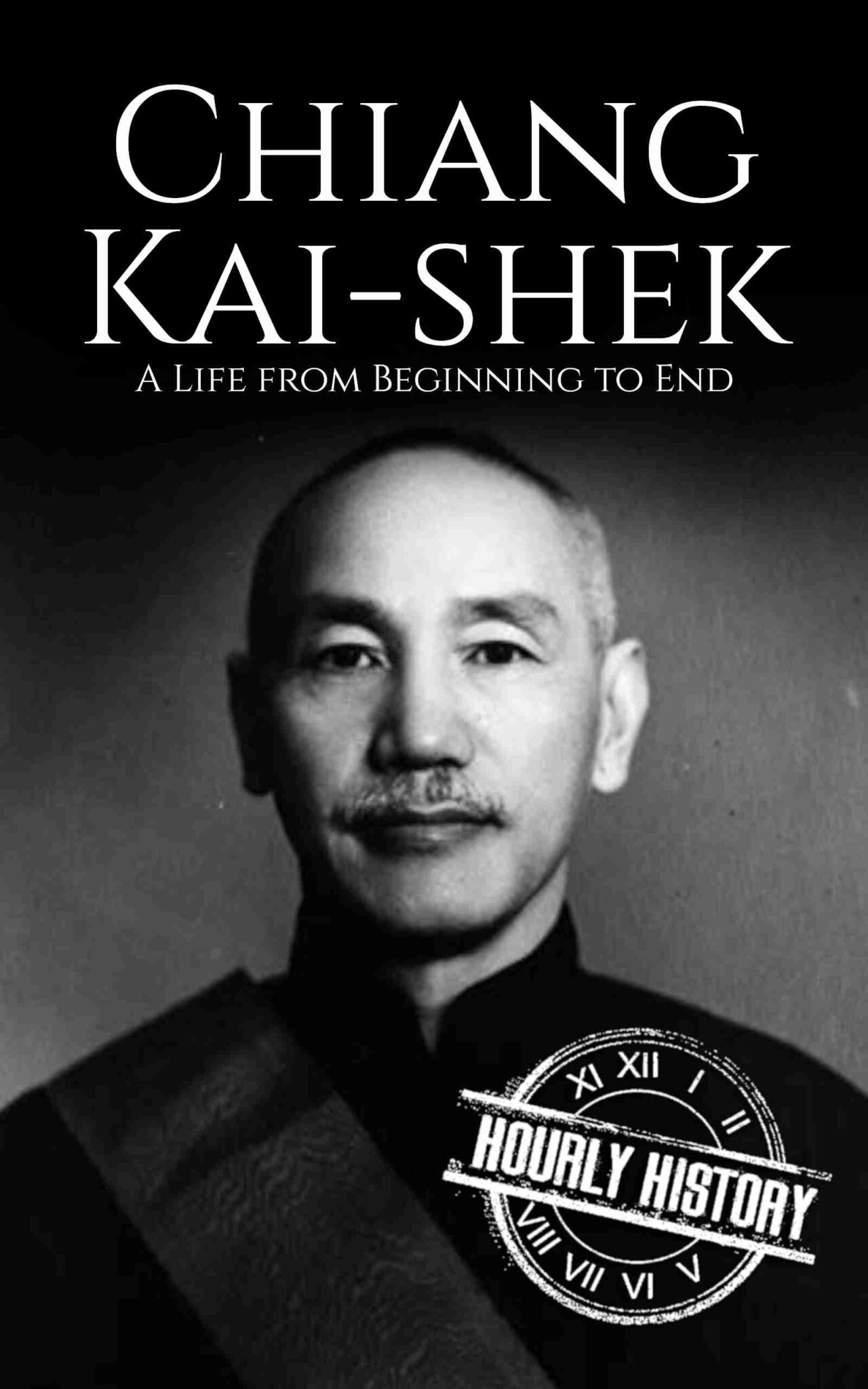
If you walk into a classroom in Taipei today, you might see a kid wearing a trendy t-shirt with a stylized portrait of a stern-looking man in a military uniform. Walk a few blocks further to the Chiang Kai-shek Memorial Hall, and you’ll find a massive bronze statue of that same man, guarded by soldiers who don't move a muscle. But ask a local what they think of him, and you’ll get anything from "he saved us from communism" to "he was a brutal dictator who should be erased from history."
So, who was Chiang Kai-shek? Basically, he was the man who tried to own the 20th century in China and ended up losing almost all of it, only to build a completely different legacy on a small island called Taiwan. He was a revolutionary, a Christian convert, a "Generalissimo," and a man who spent decades obsessed with a "Return to the Mainland" that never happened.
The Soldier Who Would Be King (or President)
Chiang wasn’t born into royalty. He was born in 1887 in Zhejiang province to a family that sold salt. Not exactly the stuff of legends, right? But he was restless. He headed to Japan for military school, where he cut off his traditional Manchu ponytail—a huge "screw you" to the ruling Qing Dynasty—and joined the underground revolutionary circles.
By the time the 1911 Revolution rolled around, Chiang was ready. He became the right-hand man to Sun Yat-sen, the "Father of Modern China." When Sun died in 1925, Chiang didn't just step into the power vacuum; he kicked the door down. He launched the Northern Expedition, a massive military campaign to grab China back from the local warlords who were tearing the place apart.
Honestly, he was pretty successful at first. By 1928, he had nominally unified China. But there was a catch. To do it, he turned on his former allies, the Communists, in a bloody 1927 purge in Shanghai that basically started a civil war that would last for the next 22 years.
The Impossible Balancing Act
You’ve gotta feel for the guy just a little bit, even if you hate his methods. During the 1930s, Chiang was trying to juggle three flaming chainsaws at once:
- The Warlords: They said they followed him, but they mostly did whatever they wanted.
- The Communists: Led by a then-obscure guy named Mao Zedong, they were hiding in the mountains and gaining fans among the peasants.
- The Japanese: They had already snatched Manchuria and were looking at the rest of China like it was an all-you-can-eat buffet.
Chiang’s strategy was "internal pacification before external resistance." Basically, he wanted to wipe out the Communists before fighting Japan. This didn't go over well. In 1936, his own generals literally kidnapped him in the Xi’an Incident and forced him to stop fighting Mao and start fighting the Japanese.
When World War II (the Second Sino-Japanese War) fully broke out in 1937, Chiang became a global celebrity. Time Magazine put him and his wife, Soong Mei-ling, on the cover as "Man and Wife of the Year." He was the "Generalissimo," the leader of one of the "Big Four" Allied powers alongside Roosevelt, Churchill, and Stalin. But behind the scenes, his government was rotting. Corruption was rampant. Inflation was so bad people needed a wheelbarrow of cash to buy a loaf of bread.
The Great Retreat of 1949
After Japan surrendered in 1945, the civil war with Mao’s Red Army went into overdrive. Most people expected Chiang to win. He had the tanks, the planes, and the US backing. But Mao had the momentum—and the peasants.
By 1949, it was over. Chiang Kai-shek fled to Taiwan with about two million refugees, soldiers, and—interestingly—the entire contents of the Forbidden City’s art collection. If you want to see the best Chinese art today, you don't go to Beijing; you go to the National Palace Museum in Taipei because Chiang took it all with him.
He spent the rest of his life in Taiwan, ruling as a dictator under "Martial Law." This period is known as the White Terror. If you spoke out against him, you disappeared. Simple as that. Thousands were executed or imprisoned. He kept telling the world he was the "rightful leader of all China" until his death in 1975.
The Diary Revelations: A Human Side?
For a long time, Chiang was seen as a wooden, hyper-disciplined figure. But in early 2026, the full release of his personal diaries by the National History Museum of Taiwan changed the vibe. These aren't just dry political notes.
The diaries reveal a man who was deeply insecure and struggled with his "sins." He wrote about his temper, his struggles with lust (he reportedly had gonorrhea in his youth), and his constant self-loathing. He’d write things like, "I am too impulsive," or "I have failed my mentors." It doesn’t excuse the political violence, but it paints a picture of a guy who was way more conflicted than the "Generalissimo" persona suggested.
Why Should You Care About Him Now?
You might think, "Okay, he's been dead for fifty years, who cares?" But Chiang is the reason the "Two Chinas" problem exists. The tension between Beijing and Taipei today is the direct sequel to the fight between Chiang and Mao.
In Taiwan, his legacy is being dismantled. Statues are being moved to a "statue park" in Cihu, and there are constant debates about whether to rename the roads that bear his name. Yet, you can't ignore the fact that he oversaw the land reforms and economic policies that turned Taiwan into a high-tech powerhouse. Without Chiang's brutal "stability," would Taiwan be the world's semiconductor capital today? It's a question that keeps historians up at night.
Actionable Insights: How to Understand the "Chiang Legacy" Today
If you're trying to make sense of East Asian politics or just want to sound smart at a dinner party, keep these points in mind:
- Look past the "Dictator" vs. "Hero" labels. He was both. He saved China from total Japanese occupation but also oversaw the deaths of thousands of his own people.
- Visit the "Statue Park" in Cihu if you’re ever in Taiwan. It’s surreal. Seeing hundreds of discarded statues of the same man in one place tells you everything you need to know about how Taiwan is trying to move on.
- Research the "New Life Movement." This was Chiang’s attempt to combine Confucianism with modern hygiene and discipline. It shows how he tried to "fix" the Chinese soul, not just the borders.
- Check out the 228 Memorial Museum. To understand why many Taiwanese people still resent him, you have to understand the February 28 Incident of 1947, which was the bloody crackdown that defined his early rule on the island.
Chiang Kai-shek was a man who tried to hold back the tide of history with a sword. He failed to keep the mainland, but he accidentally created a new nation-state that continues to defy the odds. Whether you view him as a visionary or a villain, you can't look at modern Asia without seeing his fingerprints everywhere.
To dig deeper into the actual documents that have recently come to light, you can explore the digital archives of the Academia Historica, which has been leading the charge in making his private records public for the first time.