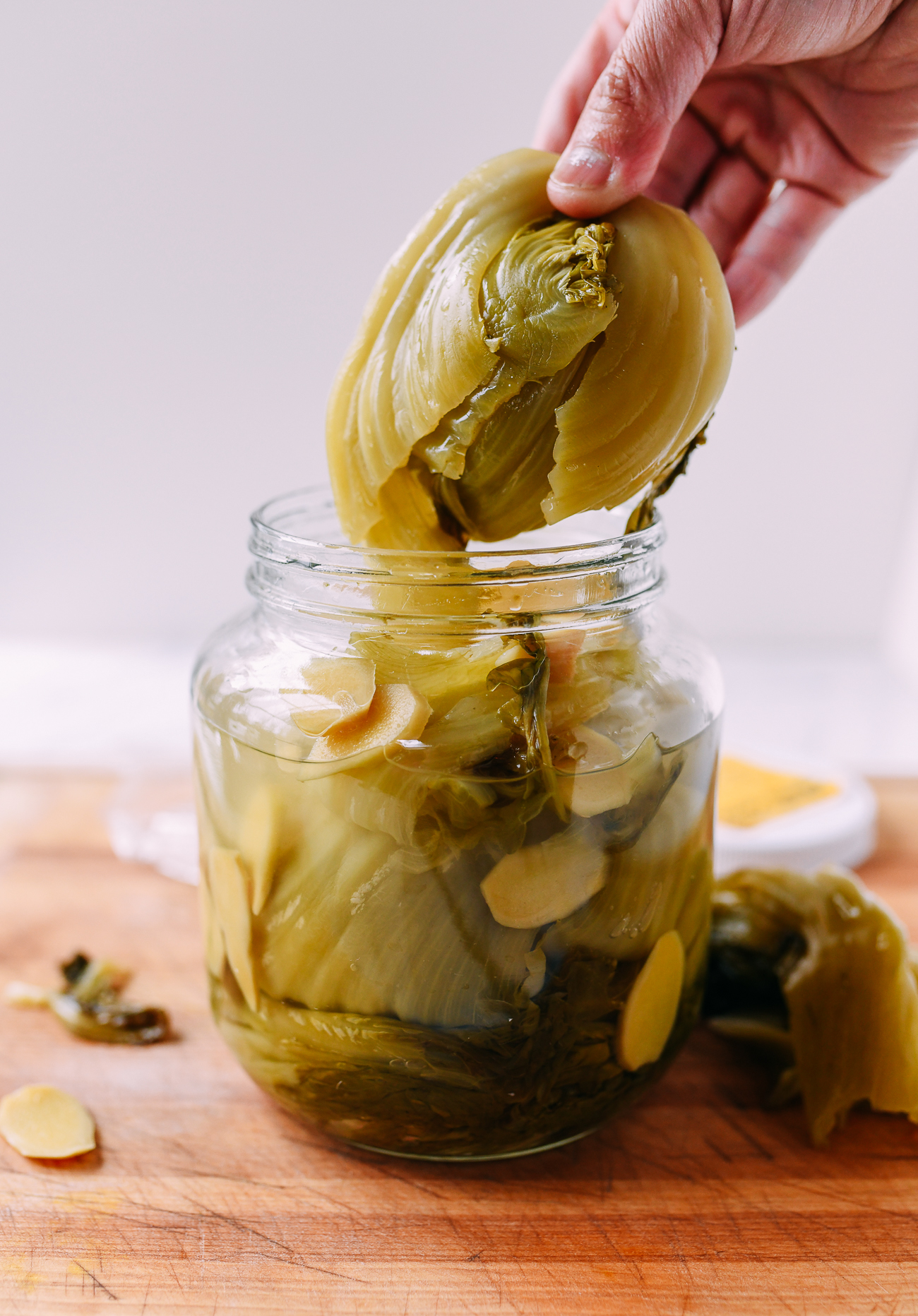
Ever walked into a specialized Asian grocer and wondered what those vacuum-sealed bags of murky, greenish-yellow stalks actually are? That’s suan cai. Or maybe haimui. Or zha cai. Honestly, the naming conventions for Chinese pickled mustard greens are a bit of a mess because China is massive and every province has its own way of turning a bitter brassica into a salty, sour flavor bomb. It’s the secret weapon of the Sichuanese kitchen and the backbone of a proper Cantonese breakfast.
If you’ve ever had a bowl of beef noodle soup that felt "complete," it was probably because of the little pile of crunchy, fermented bits on top. Without them, the broth is just meat water. With them? It's a masterpiece.
What Are Chinese Pickled Mustard Greens Anyway?
Basically, we’re talking about Brassica juncea. This isn't your garden-variety salad green. Raw mustard greens are peppery, almost like horseradish, and can be pretty tough. But when you hit them with salt and let the microbes do their thing, they transform.
The most common version you’ll find is suan cai (literally "sour vegetable"). In the north of China, people often use napa cabbage for this, but in the south—think Sichuan, Guangdong, and Fujian—it’s almost always mustard greens. The process is ancient. You dry the greens in the sun until they’re limp, rub them with sea salt, and pack them into earthenware jars. Some people add Sichuan peppercorns or ginger. Some add rice water to kickstart the fermentation. Then you wait.
Lactic acid fermentation is the magic here. It's the same process that gives us sauerkraut or kimchi. It strips away the raw bitterness and replaces it with a complex, mouth-watering acidity. It's funky. It's salty. It's intensely savory.
The Different Styles You’ll Encounter
Don't get confused by the labels. You might see "Salted Mustard Green," "Sour Mustard Green," or "Pickled Snow Cabbage."
Zha cai is a specific beast. It’s made from the knobby, overgrown stem of a particular mustard variety. It’s usually rubbed with chili paste and has a distinct "crunch" that’s more like a water chestnut than a leaf. Then there’s mei gan cai, which is salted and sun-dried until it’s dark, shriveled, and tastes almost like chocolatey, earthy soil. It’s incredible with fatty pork belly.
The Nutritional Reality
People love to talk about probiotics. And yeah, traditionally fermented Chinese pickled mustard greens are loaded with Lactobacillus. This is great for your gut biome. However, you’ve gotta be careful with the store-bought stuff. A lot of mass-produced brands use vinegar and preservatives to mimic the sourness rather than a long fermentation process. If it’s pasteurized, the "live" benefits are gone.
Also, the salt. There is so much salt.
If you have high blood pressure, these are a "sprinkle, don't scoop" situation. A study published in the Journal of Food Composition and Analysis highlights that while fermented vegetables provide antioxidants and minerals like Vitamin K, the sodium content in commercial Chinese pickles can be off the charts. You should always rinse them. Seriously. Take them out of the bag, soak them in cold water for ten minutes, and squeeze them dry. You’ll save your kidneys and actually be able to taste the vegetable.
Why Your Stir-fry Tastes Flat
Most people treat pickles as a side dish. Like a condiment. Big mistake.
In Chinese cooking, Chinese pickled mustard greens are often treated as a primary seasoning or a "flavor base." Think of them like anchovies in Italian cooking or pancetta. You mince them up and toss them into the hot oil at the very beginning of a stir-fry. The salt and acid leach into the oil, creating a foundation that makes everything else taste better.
Take the classic "Sichuan Fish with Pickled Greens" (Suancai Yu). The broth isn't just sour because of vinegar; it's sour because the greens have been simmered until their soul is in the soup. The lactic acid cuts right through the richness of the fish. It’s a perfect balance.
If you're cooking at home, try this: chop up some suan cai and fry it with ground pork, garlic, and a little sugar. Toss that over plain white noodles. It’s a five-minute meal that tastes like you spent hours on it. The sugar is key. It balances the fermented funk and brings out the umami.
Common Misconceptions About Safety
There's an old wives' tale—and some legitimate concern—about nitrites in pickled vegetables. When vegetables are first salted, nitrite levels spike during the first week. If you eat "young" pickles, it's not great. But after about 20 to 30 days of fermentation, those levels drop significantly as the bacteria stabilize. Traditional producers know this. They won't crack a jar early. If you're buying commercial bags, they’re regulated, so you don't need to worry about the "nitrite monster" as much as the salt content.
How to Buy the Good Stuff
Stop looking for the prettiest packaging. Honestly, some of the best Chinese pickled mustard greens come in humble, clear plastic bags where you can actually see the product.
- Check the color. You want a dull, olive green or a mustard yellow. If it’s neon green, someone added dye. Avoid that.
- Feel the texture. Give the bag a gentle squeeze (don't pop it). It should feel firm, not mushy. Mushy greens mean they were over-processed or sat in the brine for way too long at high temperatures.
- Read the ingredients. Ideally, it’s just mustard greens, water, salt, and maybe some spices. If the list is a mile long with yellow dye #5 and four different preservatives, keep moving.
Brands like Wujiang are the gold standard for zha cai, but for leafy suan cai, look for products from Taiwan or the Chaoshan region of China. Chaoshan (Teochew) people are the absolute masters of pickling. Their "Salty Vegetable" is legendary for being crisp and clean-tasting.
Cooking Tips from a Pro
Rinse them. I mentioned it before, but I'm saying it again. If you don't rinse, the dish will be inedibly salty.
After rinsing, squeeze the water out. Like, really get in there. You want the greens to be as dry as possible before they hit the pan. If they’re soaking wet, they’ll steam instead of fry. You want them to hit the hot oil and "blossom."
Also, don't be afraid of the stems. A lot of people throw them away and only use the leaves. That’s a tragedy. The stems have the best crunch. Slice them thin, on a bias, and they’ll provide a textural contrast that makes the whole dish pop.
The DIY Route: Is it Worth It?
Should you make your own Chinese pickled mustard greens? If you have a cool, dark place and a glass fermentation jar, yeah. It’s rewarding.
You just need:
- Fresh mustard greens (look for the "head" variety with big stalks).
- Non-iodized salt (iodine can mess with the bacteria).
- A bit of ginger and some dried chilis.
Wilt the greens in the sun for a day until they feel like leather. Rub them with salt until they start to release a bit of moisture. Pack them into a jar, weight them down so they’re fully submerged in their own brine (or a 3% salt brine), and wait two weeks. The flavor you get from home fermentation is "brighter" than anything you'll find in a store. It's more floral.
Moving Beyond the Basics
Once you've mastered the pork stir-fry and the noodle soup topping, try using these greens in unexpected ways.
- In burgers: Chop them fine and mix them into a mayo or aioli. The acidity acts like a relish but with more depth.
- With eggs: A classic Teochew breakfast is an omelet with pickled radish or mustard greens. It’s salty-sweet perfection.
- In stews: If you’re making a heavy beef stew, toss in a handful of pickled greens in the last 20 minutes. It brightens the whole pot.
Actionable Steps for Your Next Meal
If you're ready to integrate this into your kitchen, start here. Go to the nearest Asian market and buy one bag of "Sour Mustard Greens" and one small tin of "Zha Cai."
Open the bag, rinse a portion, and chop it up. Sauté it with a little garlic and chili flakes. Taste it. Notice how the acidity isn't sharp like lemon, but "round" and savory.
Keep the leftovers in a glass jar in your fridge. They last basically forever because, well, they're already fermented. Next time you're making a simple soup or a bowl of rice, throw a spoonful on top. Your palate will thank you for the complexity, and you'll finally understand why these funky, fermented greens are a staple for over a billion people.