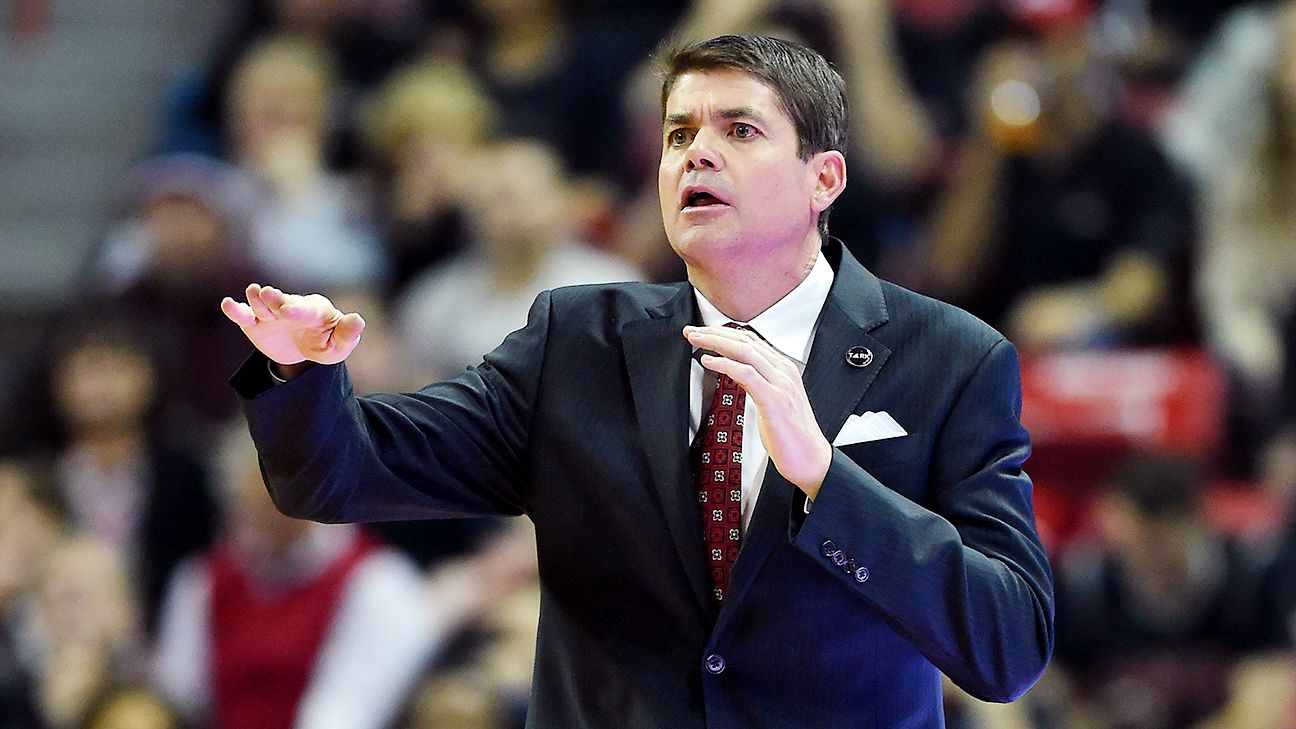
If you followed West Coast hoops in the early 2010s, you remember the hype. It was a whole thing. People in Las Vegas weren't just hopeful; they were certain that Dave Rice basketball coach and hometown hero was the guy to finally bring the Runnin' Rebels back to the glory days of Jerry Tarkanian.
It makes sense why. Rice wasn't some outsider coming in to "fix" things with a corporate playbook. He was a guy who sat on the bench for the 1990 National Championship team. He understood the DNA of Vegas basketball. He knew that at UNLV, you don't just win—you win with a specific kind of swagger.
But then, things got complicated.
The story of Rice’s tenure is often flattened into a simple "he recruited well but couldn't coach the X's and O's" narrative. That’s lazy. Honestly, it misses the nuances of how high-major college basketball actually functions. It ignores the pressure of a fan base that views 1990 not as a memory, but as a standard.
The Recruiting Juggernaut and the Burden of Talent
When Dave Rice took the job in 2011, he hit the ground sprinting. Seriously. He didn't just recruit; he landed the kind of players that usually only look at Kentucky or Duke. We’re talking about Anthony Bennett, who went on to be the number one overall pick in the NBA Draft. Rashad Vaughn. Christian Wood. Stephen Zimmerman.
The talent was undeniable.
Because of that talent, the expectations became astronomical. UNLV fans didn't want a Top 25 ranking; they wanted a Final Four. Rice managed to beat North Carolina when they were ranked No. 1 in the country during his first season. The Thomas & Mack Center was literally shaking. It felt like the Tarkanian era had been resurrected overnight.
But here is the thing about high-level recruiting: it’s a double-edged sword. When you bring in five-star guys, the clock starts ticking immediately. You don't get three years to develop a system. You have about six months before they start looking at draft boards.
Why the "Underachiever" Label is Kinda Unfair
People love to point out that despite all that talent, Rice only made the NCAA Tournament twice. And yeah, they got bounced in the first round both times. That hurts.
But look at the Mountain West during those years. It wasn't a mid-major cakewalk. You had Steve Fisher at San Diego State building a defensive wall. You had New Mexico being consistently dangerous. Rice was winning 25 or 26 games a year at the start, but because they didn't make a "Run" in March, the narrative started to sour.
It’s a tough business. You've got to realize that Rice was often coaching teams with massive turnover. It’s hard to build a cohesive defensive identity when your best players are "one-and-done."
Dave Rice Basketball Coach: Life After the Thomas & Mack
The way it ended was messy. Getting fired in the middle of the season in 2016 felt like a gut punch to a lot of people in the community. It felt reactionary. But coaches like Rice don't just disappear.
He didn't go off to some island to pout. He went back to work.
Rice transitioned into being one of the most respected assistant coaches and "basketball minds" in the country. He went to Washington. He went to Arizona. He’s the guy head coaches call when they need someone who can evaluate talent and understand the grind of the West Coast recruiting circuit.
The Arizona and Washington Years
At Washington, he was instrumental in helping Mike Hopkins build those early successful teams. Rice has this reputation for being a "player's coach," but not in the soft way people usually mean. He’s just someone players actually trust.
When he moved to Arizona to work under Tommy Lloyd, it was a match made in heaven. Lloyd is a tactical genius, and Rice brought that veteran perspective of having sat in the big chair. They won the Pac-12. They were a No. 1 seed.
It’s interesting to watch. Sometimes a guy who struggles as a head coach becomes the ultimate "secret weapon" as an assistant. He’s seen the pitfalls. He knows what the hot seat feels like. That kind of experience is literally priceless for a program trying to maintain elite status.
Lessons for Modern Programs
Looking back at the Rice era at UNLV, there are some pretty clear takeaways for anyone following the sport today.
- Recruiting isn't everything. You can have the best roster on paper, but if the chemistry doesn't click by February, it doesn't matter.
- The "Homecoming" trap. Hiring a former player creates a level of emotional investment that makes objective evaluation impossible.
- Patience is dead. In the NIL and Transfer Portal era, Rice’s five-year tenure almost looks long. Today, he might not have even gotten four.
What Really Happened with the Defense?
If you talk to the stat nerds, they'll tell you the real issue wasn't the recruiting. It was the defensive efficiency. Rice wanted to play fast. He wanted to run. That was the UNLV brand.
But the "Run" part of Runnin' Rebels only works if you get stops. Under Rice, the offensive numbers were often great, but the defensive rotations could be... let’s say, inconsistent. Against disciplined teams like San Diego State, that speed often turned into turnovers and bad shots.
It’s a cautionary tale about identity. You have to be able to win games when the shots aren't falling. Rice’s teams sometimes felt like they were trying to out-talent the opponent rather than out-execute them.
The Resilience of a Vegas Legend
Regardless of how you feel about his win-loss record at UNLV, you have to respect the guy’s longevity. He’s stayed relevant in a sport that eats people alive.
He’s still a fixture at high school showcases. He’s still the guy people stop in the airport to talk about the 1990 championship.
There’s a certain grace in how he handled the exit from his dream job. He didn't trash the program. He didn't go on a media tour to defend his record. He just kept coaching.
In a way, Dave Rice basketball coach represents the bridge between the old-school loyalty of the Tarkanian years and the hyper-fluid, professionalized world of modern college hoops. He lived through the transition.
Actionable Insights for Fans and Analysts
If you're evaluating a coach's "success" or "failure," you have to look beyond the win-loss column. Here is how to actually judge the impact of someone like Rice:
- Player Development: Look at where his players ended up. Rice has a massive "tree" of pros. That counts for something in the eyes of recruits.
- Contextualize the Conference: Don't just look at the seed in the tournament. Look at the strength of the Mountain West during that specific window.
- The "After" Effect: Notice how the program performed after he left. UNLV hasn't exactly returned to the Top 10 since Rice's departure, which suggests the problems were deeper than just the guy in the suit.
To really understand the current state of college basketball, you need to study the "Rice era" as a case study in expectation vs. reality. The next time your team hires a "hometown hero," remember that the love for the school doesn't automatically translate to a defensive stop on a Tuesday night in Laramie.
If you want to track where Rice goes next or how his influence is still being felt in the Pac-12 (or whatever is left of it) and the Big 12, keep a close eye on the coaching carousels this spring. High-level assistants with head coaching experience are currently the most sought-after "free agents" in the game. Rice is right at the top of that list.
Check the official NCAA coaching databases or follow beat writers from Arizona and Washington to see how his defensive schemes have evolved since his time in Vegas. Understanding his journey gives you a much better perspective on why some "failed" head coaches are actually the most valuable people on a bench.