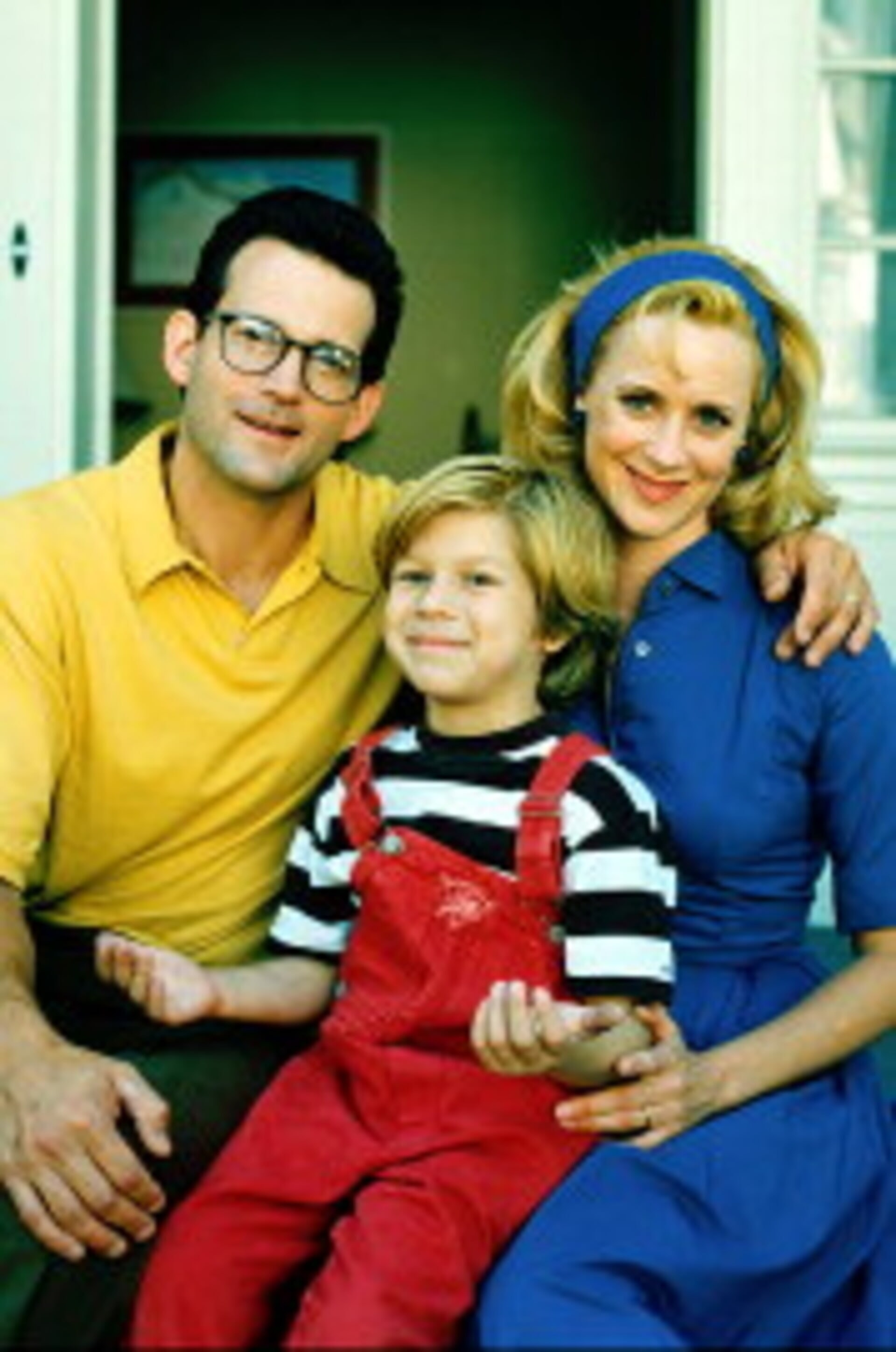
Jay North was only seven years old when he first put on those iconic striped overalls. It was 1959. Television was transitioning from the grainy, experimental stage into a true domestic powerhouse. Families sat together. They watched the same three channels. And for four seasons on CBS, they watched a tow-headed kid named Dennis Mitchell absolutely dismantle the sanity of his neighbor, George Wilson. The Dennis the Menace sitcom wasn't just a hit; it was a cultural phenomenon that somehow managed to be both incredibly charming and deeply stressful to watch.
Most people remember the slingshot in the back pocket. They remember the cowlick. But if you actually sit down and watch an episode of the show today, you’ll notice something kind of weird. Dennis isn’t actually a "bad" kid. Unlike modern TV tropes where children are often depicted as snarky or borderline sociopathic for laughs, Dennis was written with a pure, unfiltered sincerity. He genuinely loved "good old Mr. Wilson." He wanted to help. He wanted to be a pal. And that, honestly, is what made the show so much more effective as a comedy—the chaos was accidental. It was a collision between a hyper-energetic child’s curiosity and the rigid, grumpy dignity of a retired man who just wanted to look at his stamp collection in peace.
The Casting Gamble That Defined a Decade
Finding Dennis wasn't easy. Screen Gems and producer James Fonda looked at hundreds of kids. They needed someone who didn't look like a "Hollywood brat." They found Jay North. He had the look—the big eyes, the innocent face—but he also had this kinetic energy that felt real.
The chemistry between North and Joseph Kearns, who played the original Mr. Wilson, was the engine of the show. Kearns was a veteran radio actor. He understood timing. He knew exactly how to play the "slow burn." You know the look—the tightening of the jaw, the bulging eyes, the deep breath before shouting "DENNIS!" It’s a masterclass in reactionary acting. When Kearns died unexpectedly during the third season, the show lost its anchor. Gale Gordon came in as Mr. Wilson's brother, John Wilson, but the vibe shifted. It felt like a different show because the specific, weirdly affectionate tension between Dennis and the original George Wilson couldn't be replicated.
Why the Show Actually Worked (And Still Does)
It’s easy to dismiss 1950s and 60s sitcoms as "fluff." People call them "saccharine." But the Dennis the Menace sitcom tapped into a very real, very universal anxiety: the destruction of order.
- The Contrast: Mr. Wilson represented the Old World. Rules, silence, collections, gardens. Dennis represented the New World. Noise, movement, breaking things, asking "Why?"
- The Writing: Writers like William Cowley and Peggy Chantler Dick kept the stakes low but the blood pressure high. A lost rare coin. A ruined cake. A flooded basement.
- The Parents: Herbert and Alice Mitchell were often portrayed as exhausted. They weren't the perfect, all-knowing parents of Leave It to Beaver. They were often just trying to survive the day without a lawsuit from the neighbors.
Basically, the show was a weekly reminder that no matter how much you try to curate your life, a kid with a pet frog and a loud voice can ruin it in thirty seconds. That’s a timeless premise. It’s why the show stayed in syndication for decades.
The Darker Reality Behind the Screen
Here is something most fans didn't know back then: being Dennis Mitchell was kind of a nightmare for Jay North. We talk a lot today about the "child star curse," but North's experience was particularly grueling. He was reportedly subjected to intense pressure from his aunt and uncle, who acted as his guardians on set. He was coached to maintain a specific persona 24/7.
In later interviews, North was very candid about the fact that he didn't have a childhood because he was too busy playing America's favorite child. It’s a sobering layer to add to the show. When you see him smiling on screen, you're seeing a professional who was under massive strain. It changes the way you look at those episodes. It makes the "innocence" of the show feel a little more manufactured, even if the performances are stellar.
The Supporting Cast: More Than Just Background
The show wasn't just about the kid and the old man.
- Mrs. Wilson (Sylvia Field): She was the secret weapon. Martha Wilson was the only person who could bridge the gap between Dennis and George. She saw Dennis as the grandson she never had, which made George’s frustration even funnier.
- Tommy and Margaret: Dennis’s peers were perfect foils. Margaret Wade was the "know-it-all" who Dennis desperately tried to avoid, while Tommy was the loyal sidekick who usually ended up as collateral damage.
- The Neighborhood: The show created a sense of place. You felt like you knew those sidewalks and تلك fences. It was the quintessential American suburbia, which was exactly what audiences wanted to see during the Cold War era.
Impact on Television History
Before the Dennis the Menace sitcom, children on TV were mostly seen and not heard, or they were miniature versions of adults. Dennis changed that. He was a disrupter. He paved the way for characters like Kevin Arnold in The Wonder Years or even Bart Simpson.
The show also proved that you could build a massive hit around a single, repetitive conflict if the casting was right. It didn't need complex plots. It just needed Dennis to walk through the back door without knocking. That "knocking-less" entry became a staple of sitcoms for the next fifty years. Think about Kramer on Seinfeld. It’s the same DNA.
Misconceptions and Forgotten Facts
Many people think the show was cancelled because it lost its popularity. That’s not quite true. While the ratings dipped after Joseph Kearns died, the real issue was North’s age. By 1963, Jay North was twelve. He was hitting puberty. You can’t really be a "menace" in the same way when you’re nearly a teenager; then you’re just a juvenile delinquent. The charm of the "accidental" mess disappears when the kid is old enough to know better.
Also, some people confuse the TV show with the 1993 movie starring Walter Matthau. While the movie captures the slapstick, it lacks the quiet, domestic tension of the sitcom. The sitcom was a product of its time—a black-and-white world where the worst thing that could happen was a ruined garden party.
How to Revisit the Series Today
If you're looking to dive back into the world of the Dennis the Menace sitcom, don't just binge-watch random episodes. Look for the "Kearns Era." The first two and a half seasons are where the magic is.
- Watch for the Physicality: Notice how Jay North uses his whole body to convey excitement. It’s very theatrical.
- Listen to the Score: The music cues are classic mid-century sitcom—lots of woodwinds and jaunty strings that tell you exactly how to feel.
- The Props: The show is a treasure trove of 1960s Americana. From the kitchen appliances to the cars on the street, it's a time capsule.
Actionable Steps for Fans and Collectors
To truly appreciate the legacy of this show, there are a few things you can do beyond just streaming it on a nostalgia network.
- Seek out the original Hank Ketcham comics: Compare how the TV writers softened Dennis compared to the original "Mean" Dennis of the early 1950s comic strips. The TV version is much more "misunderstood" than "malicious."
- Read Jay North's biography: Understanding the reality of child acting in the 1960s provides essential context for the "Golden Age of Television."
- Explore the Joseph Kearns filmography: He was a brilliant character actor who appeared in everything from I Love Lucy to Anatomy of a Murder. Seeing him in other roles makes his performance as Mr. Wilson even more impressive.
- Check the Archive: Sites like the Paley Center for Media often have behind-the-scenes notes on the show’s production and its transition after Kearns' death.
The Dennis the Menace sitcom remains a foundational piece of American media. It wasn't perfect, and the behind-the-scenes reality was complicated, but for a few years, it perfectly captured the hilarious, exhausting, and chaotic energy of childhood. It's a reminder that no matter the decade, there will always be a Mr. Wilson trying to keep his lawn clean and a Dennis ready to mess it up.