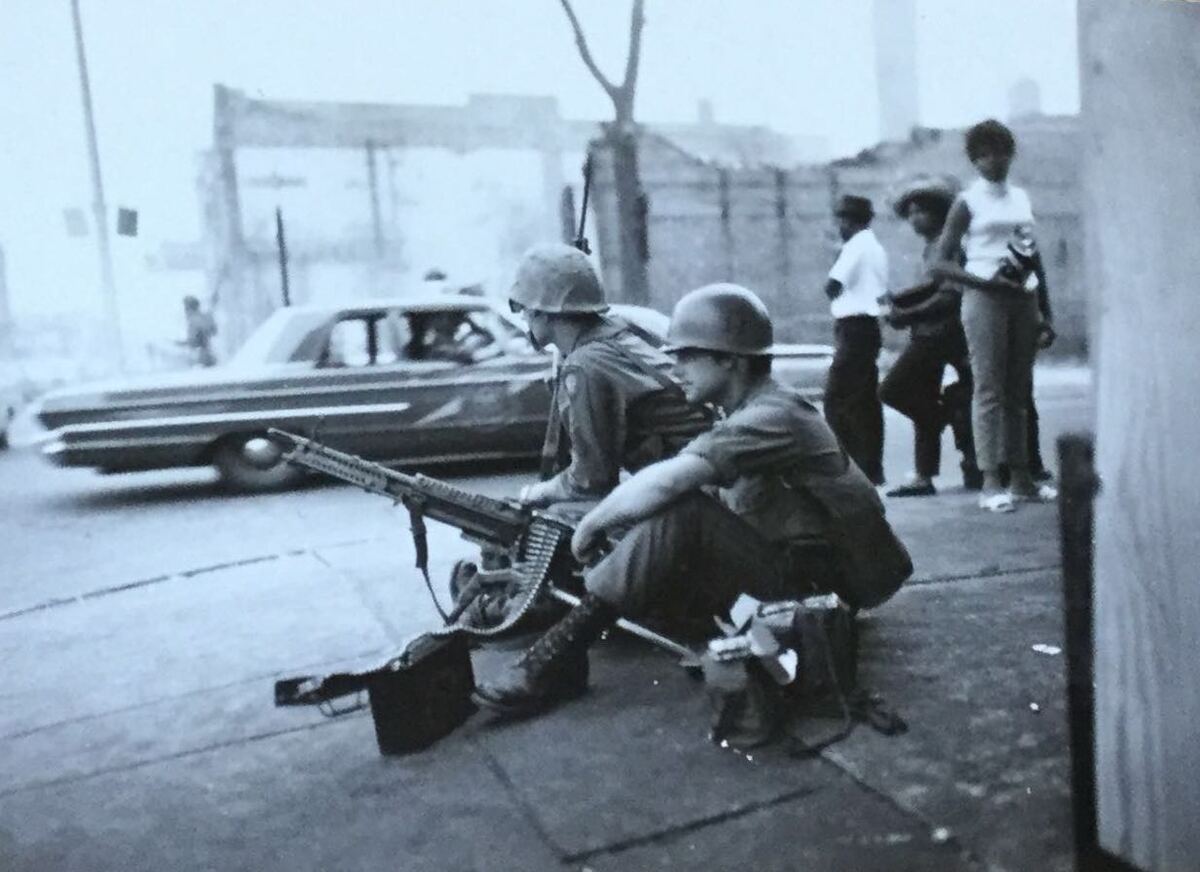
Five days. 43 dead. 7,200 arrests. Over 2,000 buildings reduced to charred skeletons. When people talk about the Detroit riots in 1967, they often get caught up in the politics of what to call it—was it a "riot," an "uprising," or a "rebellion"? Honestly, it doesn't matter what label you slap on it if you don't understand the pressure cooker that was 12th Street in the mid-sixties.
It started with a party. Specifically, a "blind pig"—an illegal after-hours drinking spot—located above the Economy Printing Company. It was a hot, sticky Sunday morning, July 23, 1967. The police expected to find a few folks. Instead, they walked into a homecoming party for two veterans returning from Vietnam. There were 82 people inside. The police decided to arrest everyone.
A crowd gathered. Someone threw a bottle. Then a brick. By the time the sun came up, Detroit was breathing smoke.
Why the Detroit riots in 1967 weren't just about one police raid
You can't look at 1967 in a vacuum. If you think it was just about a bar raid, you're missing the forest for the trees. Detroit was a powder keg.
In the 1960s, the "Motor City" was supposedly the model for racial progress. We had a liberal mayor, Jerome Cavanagh. We had United Auto Workers (UAW) money flowing. But under the surface? It was a mess. Black residents were squeezed into overcrowded neighborhoods like Virginia Park because of "redlining" and restrictive covenants. While white residents were moving to the suburbs—taking the tax base with them—Black Detroiters were dealing with a police force that was 95% white.
And they weren't exactly friendly.
The "Big Four" were legendary. These were four-man police teams in unmarked cars that cruised the streets, often harassing Black men for just standing on a corner. It was systemic. It was exhausting. Basically, the community was tired of being treated like an occupied territory in their own ZIP code.
The Escalation: From looting to a war zone
Things went south fast. By Monday, the city was losing control. Governor George Romney—yes, Mitt’s dad—called in the Michigan State Police and the National Guard. But here’s the thing: those guardsmen were mostly young white kids from the suburbs who had never seen the inside of a city, let alone a riot. They were terrified. They were shooting at shadows, at snipers that often didn't exist, and sometimes even at each other.
It got so bad that President Lyndon B. Johnson had to do something he really didn't want to do. He sent in the 82nd and 101st Airborne Divisions. Federal troops. Guys who had just gotten back from actual combat in Vietnam were now patrolling the streets of an American city with bayonets fixed.
Think about that for a second. Tanks on Woodward Avenue.
The Algiers Motel Incident: A dark turning point
If you want to understand the deep scars left by the Detroit riots in 1967, you have to look at the Algiers Motel. This wasn't "combat" or "collateral damage." It was a nightmare.
On the night of July 25, three young Black men—Carl Cooper, Aubrey Pollard, and Fred Temple—were killed by police at the motel. The officers claimed they were looking for snipers. What actually happened involved hours of "interrogation games," beatings, and executions. No snipers were ever found. No weapons were recovered.
John Hersey wrote a famous book about it, The Algiers Motel Incident, and it remains one of the most chilling accounts of police brutality in U.S. history. It’s the moment where the "rebellion" narrative really takes hold because it showed that the law wasn't there to protect everyone.
The Human and Economic Cost
The numbers are staggering, but they don't tell the whole story.
- The Dead: 43 people. 33 were Black, 10 were white. The youngest was four years old.
- The Damage: $40 million to $80 million in property damage (in 1967 dollars). That’s hundreds of millions today.
- The Arrests: So many people were picked up that the city ran out of jail cells. They had to keep people in buses, underground garages, and even makeshift pens.
Business owners watched their life savings go up in smoke. Some were targeted; some were just in the way. A lot of those lots stayed empty for decades. Some are still empty today.
Misconceptions: It wasn't just "Black vs. White"
One of the biggest myths is that this was a race riot in the traditional sense, like the 1943 riot in Detroit where white and Black mobs literally fought each other. 1967 was different. It was more of a social eruption against the system.
There are plenty of accounts of white and Black neighbors working together to protect their blocks. You’d see "Soul Brother" written on the windows of Black-owned businesses to keep them from being looted, but you’d also see integrated crowds watching the chaos. It was a breakdown of the social contract, not just a racial skirmish.
Historians like Thomas Sugrue, who wrote The Origins of the Urban Crisis, argue that the riot was the result of decades of industrial decline and housing discrimination. The job market was already shrinking as car plants moved to the outskirts. 1967 just sped up the clock.
The Long-Term Fallout: What happened next?
After the smoke cleared, the "New Detroit" committee was formed. There were all these promises to fix the schools, the housing, the jobs. But the exodus of the white middle class turned into a flood. In the years following the Detroit riots in 1967, the city’s population plummeted.
The political landscape changed forever, though. In 1973, Detroit elected its first Black mayor, Coleman Young. He spent much of his tenure trying to rebuild a city that felt abandoned by the state and federal governments.
Actionable ways to explore this history today
If you’re trying to wrap your head around what this means for modern Detroit, you shouldn't just read a Wikipedia page. History is still alive in the city.
- Visit the Detroit Historical Museum: They have a massive, permanent exhibit called "Detroit 67: Looking Back to Move Forward." It’s incredibly well-done and uses oral histories from people who were actually there.
- Check out the 12th Street (now Rosa Parks Blvd) memorial: See the actual geography. Many of the buildings are gone, but the street layout remains, giving you a sense of the density of the area.
- Read the Kerner Commission Report: This was the federal investigation ordered by LBJ. Its famous line—"Our nation is moving toward two societies, one black, one white—separate and unequal"—was written because of Detroit. It’s still a hauntingly relevant read.
- Support the Charles H. Wright Museum of African American History: They offer deep context on the civil rights movement in the North, which is often overshadowed by the events in the South.
Understanding 1967 isn't about wallowing in the past. It's about seeing the "why" behind the city's current landscape. You can't talk about Detroit’s "comeback" without acknowledging what it’s coming back from. The scars are there, but so is the resilience.