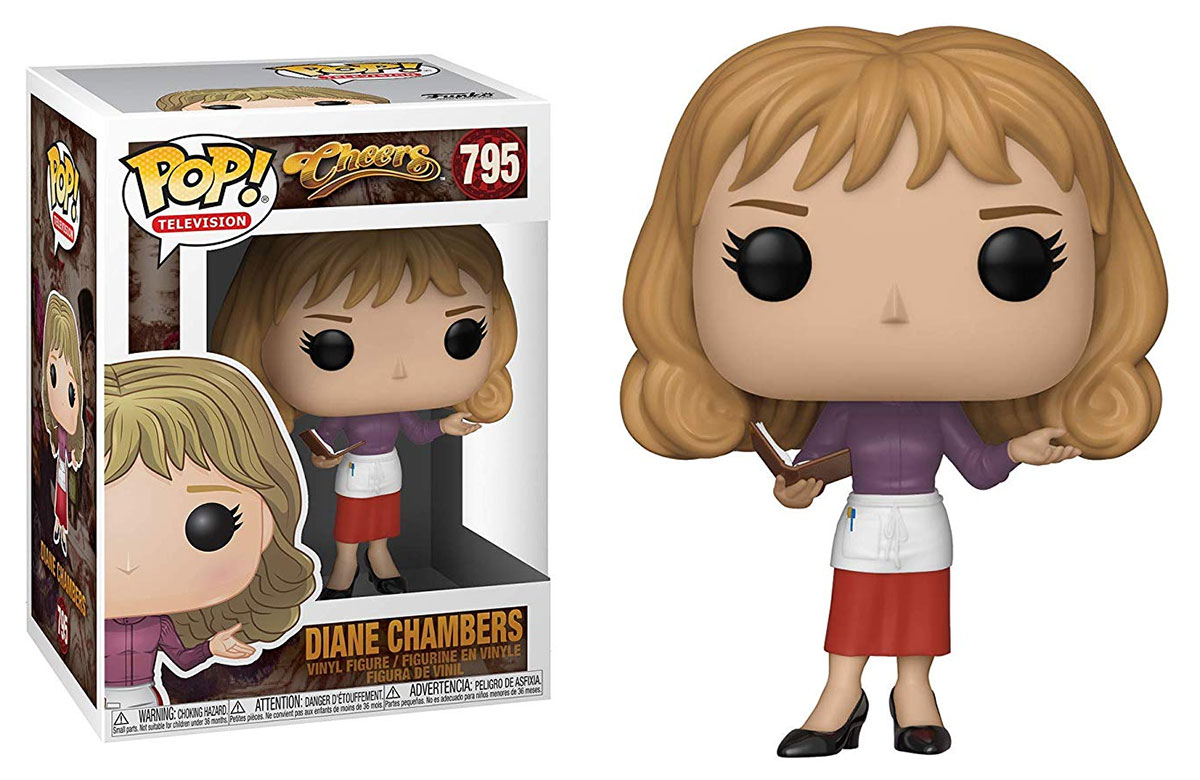
Maybe you remember the first time she walked in. Diane Chambers on Cheers wasn't just a character; she was a category five hurricane wrapped in a tweed jacket. She entered that Boston bar in 1982 trailing behind a fiancé who was about to dump her, and she basically never left—at least, not until she did, and the show changed forever.
Some people absolutely loathed her. They found her "pseudo-intellectual" rambling and her constant need to "elevate" the barflies exhausting. Others saw her as the heart of the show. She was the sophisticated foil to Sam Malone’s blue-collar, skirt-chasing ways. Honestly, the show was a different beast with her there. It was smarter. It was more painful.
The "Will They, Won't They" That Invented the Rulebook
If you think about modern TV tropes, you’ve got to look at Sam and Diane. Before Ross and Rachel, before Jim and Pam, there was this specific brand of friction. Diane Chambers on Cheers brought a level of academic snobbery that Sam, an ex-relief pitcher for the Red Sox, couldn't wrap his head around.
But it worked.
The chemistry between Shelley Long and Ted Danson was legendary, even if it was reportedly prickly behind the scenes. They weren't just two people who liked each other. They were two people who fundamentally didn't understand why they liked each other. She thought he was a "neanderthal," and he thought she was a "pretentious windbag."
They were both right.
That Final Walk Out the Door
When Shelley Long decided to leave after Season 5, it felt like a death knell. Most sitcoms don't survive losing half of their core romantic duo. She wanted to pursue a movie career and spend time with her daughter, which is fair, but fans felt jilted.
The finale of Season 5, "I Do, Adieu," is a tear-jerker. Diane leaves to finish her novel. She promises Sam she'll be back in six months. We all knew she wouldn't be. Sam knew it, too. That final "Have a good life" he whispers as she walks up those stairs? It still stings.
Why Diane Was the "Villain" (And Why She Wasn't)
It’s easy to side with Carla Tortelli. Carla hated Diane with the fire of a thousand suns. To the regular bar crowd, Diane was an outsider who looked down on their beer-soaked lives. She quoted Keats. She corrected their grammar.
But look closer.
Diane was vulnerable. She was a woman whose life had fallen apart in the first ten minutes of the pilot. She was overcompensating for her insecurity by using big words as a shield. When she tried to help Coach with his problems or when she stood up for her own dignity, you saw the real Diane. She wasn't just a caricature of a grad student.
She was a person who didn't fit in anywhere, trying to fit in at the one place that shouldn't have wanted her.
The Frasier Connection
We can't talk about Diane Chambers on Cheers without mentioning Frasier Crane. She literally brought him into the show. He was her rebound from Sam, a world-class psychiatrist who was arguably even more pretentious than she was.
Without Diane, there is no Frasier. No Lilith. No spin-off that ran for another eleven years. She was the catalyst for some of the best writing in sitcom history.
The Rebecca Era vs. The Diane Era
When Kirstie Alley joined as Rebecca Howe, the show shifted gears. Rebecca wasn't an intellectual; she was a corporate climber who was secretly a mess.
- The Diane Years: Romantic comedy, high-brow wit, intense emotional stakes.
- The Rebecca Years: Ensemble comedy, slapstick, "one of the guys" energy.
Ratings actually went up after Diane left. It’s a weird fact, but it’s true. Cheers became the #1 show in America during the Rebecca years. Some people prefer that version because it’s lighter. It’s easier to watch. But the Diane years are the ones that win the awards. They’re the ones people write dissertations about.
The Finale Return: "One for the Road"
In 1993, Diane finally came back. She was a successful cable TV writer. Sam was still Sam. They tried to make it work one last time, even getting as far as the airport.
But they realized the truth.
They were never going to work. The "happily ever after" for Sam and Diane wasn't a marriage; it was the realization that they helped each other grow into who they were supposed to be, and then they had to let go. Sam went back to his true love—the bar. Diane went back to her career.
It was messy and realistic. It wasn't the fairy tale ending people wanted, but it was the ending the characters deserved.
Actionable Insights for Fans and Writers:
- Rewatch the Pilot: If you haven't seen "Give Me a Ring Sometime" in a while, go back. It's a masterclass in character introduction.
- Study the Dialogue: Writers should look at how Diane's "long-winded" speech patterns were used to create rhythm and comedy without losing her humanity.
- Compare the Departures: Look at how Cheers handled Shelley Long's exit versus how other shows fail when a lead leaves. The key was changing the show's DNA rather than trying to find a "new Diane."
Whether you loved her or wanted to throw a beer at her, Diane Chambers was the engine that started the greatest sitcom of all time. You don't have to like her to respect what she did for television.