You’ve seen them in every picture book since you were five. A massive, lizard-like face framed by a giant, bony shield. Most people just call it the "Triceratops look," but if we’re being honest, that’s like saying every smartphone is just an iPhone. The world of the dinosaur with head frill is actually way weirder, more colorful, and frankly more confusing than the movies let on. We are talking about the Ceratopsians. These weren't just walking tanks; they were evolutionary experiments that pushed the limits of what a skull could actually do.
For a long time, we thought that frill was basically a medieval shield. You know the drill: a Tyrannosaurus rex lunges, the Triceratops ducks its head, and the predator breaks a tooth on solid bone. It makes sense. It’s intuitive. But as paleontologists like Dr. Andrew Farke and Dr. David Hone have pointed out over the last decade, the "shield" theory has some massive holes in it—literally. Many of these animals had giant openings in their frills called fenestrae. If you’re trying to not get eaten, having giant, skin-covered holes in your primary armor is a pretty bold (and probably fatal) choice.
What Was the Point of That Giant Bone Shield?
So, if it wasn't strictly for defense, why bother growing a massive, heavy structure on the back of your head? It seems like a lot of metabolic effort for nothing.
The leading theory now leans toward "biological billboard." Think of a peacock’s tail. It’s heavy, it makes it easier for predators to catch them, and it serves zero purpose for survival in the traditional sense. But it’s everything for reproduction. A dinosaur with head frill likely used that space to signal to others. Maybe it was brightly colored. Maybe it flushed with blood when they were angry or looking for a mate.
We also have to look at intra-species combat. Instead of fighting off predators, these animals were likely wrestling each other. Imagine two massive Styracosaurus locking horns and pushing, using the frill as a landing pad for the opponent’s horns to prevent a lethal blow to the neck. It’s less about "don't eat me" and more about "I’m the toughest guy in this herd."
Not Just One Flavor: The Diversity of Ceratopsians
The variety is honestly staggering. You have the Centrosaurines and the Chasmosaurines.
Centrosaurines, like Centrosaurus or Styracosaurus, usually had shorter frills but went absolutely wild with the spikes. Styracosaurus looked like someone stuck a bunch of stone daggers into a shield. Then you have the Chasmosaurines, which includes the famous Triceratops. These guys generally had much longer, more expansive frills. Chasmosaurus itself had a frill that took up almost half its body length. Can you imagine trying to balance that while walking through a swamp?
- Protoceratops: The "sheep of the Cretaceous." Small, no horns, but a very distinct, sharp frill. Found in the Gobi Desert.
- Kosmoceratops: This one is just showing off. It has 15 horns or horn-like structures, many of them curling forward along the top of the frill like a bony fringe of bangs.
- Einiosaurus: It has a horn that curves forward like a bottle opener.
- Regaliceratops: Nicknamed "Hellboy" because the spikes on its frill look like a crown.
There’s also the question of growth. A juvenile dinosaur with head frill looked almost nothing like the adult version. This has caused massive fights in the paleontology world. Most notably, the "Toroceratops" debate. Jack Horner, a name you might know if you're into Jurassic Park lore, famously proposed that Torosaurus isn't a separate species at all. He argued it’s just a very old, very large Triceratops. According to this theory, as the animal aged, the solid bone of the Triceratops frill thinned out and opened up into the large holes seen in Torosaurus. Not everyone agrees. In fact, many experts like Nicholas Longrich have pushed back, citing differences in the number of "epoccipitals" (those little bony bumps around the edge of the frill).
The Engineering of a Heavy Head
Gravity is a hater. Carrying a skull that can weigh over 1,000 pounds requires some serious neck strength. If you look at the skeleton of a dinosaur with head frill, the first few vertebrae are actually fused together. This is called a syncervical.
It’s nature’s way of creating a heavy-duty ball-and-socket joint. This allowed the animal to pivot its massive head with surprising speed. They weren't slow, lumbering idiots. They were high-torque machines. The muscle attachments on the back of the frill were also massive, linking up to the jaw. This gave them one of the most powerful bites in herbivore history. They weren't just chewing leaves; they were slicing through tough, fibrous palms and cycads like a pair of industrial shears.
Finding Them in the Wild (Or the Dirt)
Most of these discoveries happen in the "Dinosaur Provincial Park" in Alberta, Canada, or the Hell Creek Formation in the US. The conditions there during the Late Cretaceous were perfect for preserving bone.
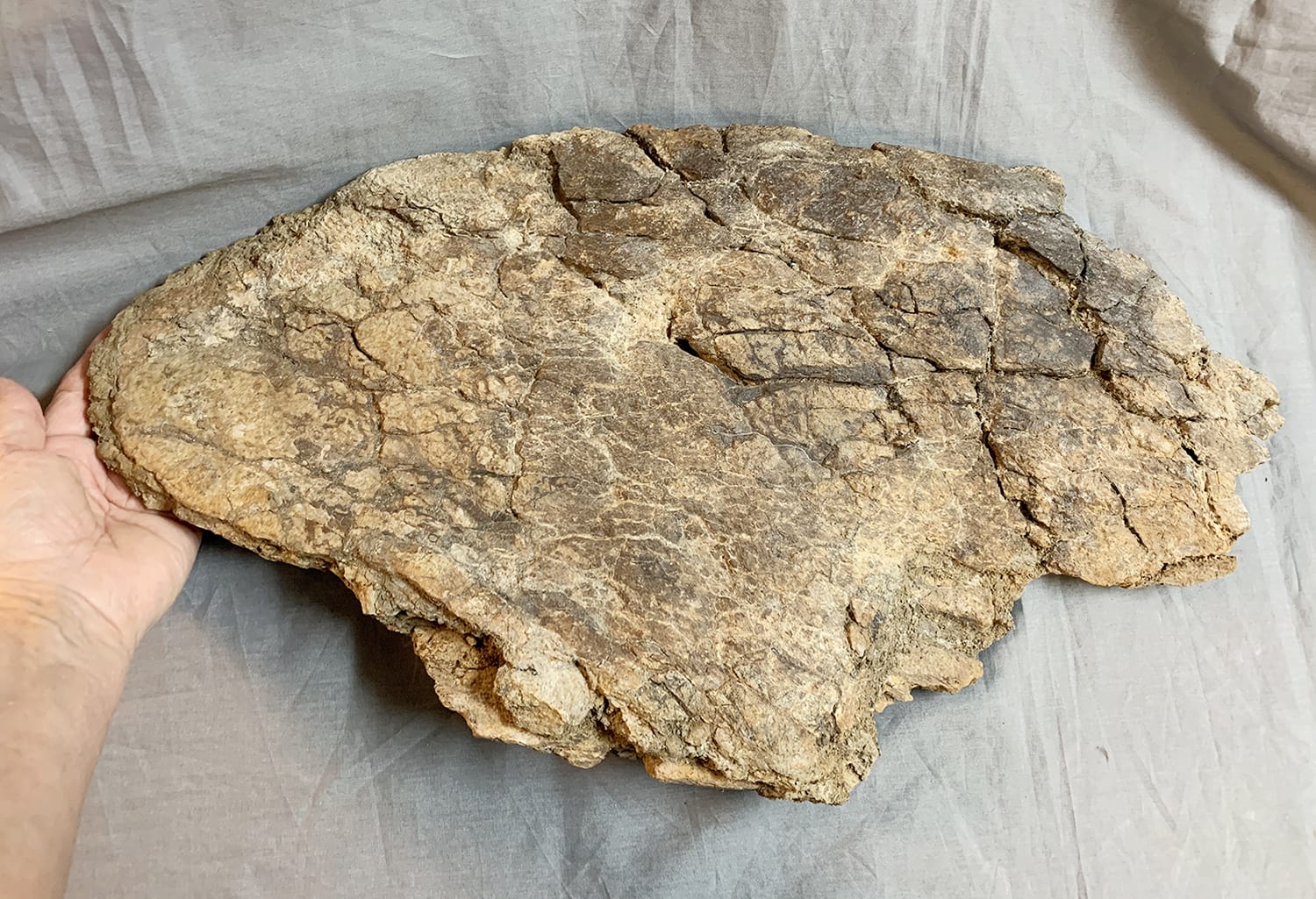
When you find a dinosaur with head frill in the field, you’re usually looking for the "horn cores" or the edges of the frill first. Bone is porous, but the horn cores are dense. Interestingly, we've found "bone beds" where hundreds of these animals died together. This suggests they were social. They traveled in herds. Imagine a thousand Centrosaurus crossing a flooded river. It would have been a chaotic, noisy, terrifying mess of bone and muscle.
Common Misconceptions That Need to Die
First, the frill wasn't skin stretched over a wire frame. It was solid bone (usually). Even the ones with holes (fenestrae) had thick, structural beams of bone keeping the shape.
Second, they didn't use the frill to regulate temperature. For years, people thought they pumped blood into the frill to cool down, like an elephant’s ears. While it might have helped a little, the vascular patterns in the bone don't really support this as a primary function. It was mostly for show or for shoving.
Third, they weren't "slow." Based on trackway evidence and limb proportions, a Triceratops could likely trot faster than a human can run. You couldn't just outrun one in a straight line.
Making Sense of the Fossil Record
Understanding the dinosaur with head frill helps us understand how evolution works when it’s under pressure. These animals lived in a world with Tyrannosaurus rex and Dakotaraptor. They were in an arms race. But they were also in a "beauty pageant" within their own species.
If you want to dive deeper into this, I highly recommend checking out the work of Dr. Lindsay Zanno or looking into the "Dueling Dinosaurs" exhibit at the North Carolina Museum of Natural Sciences. It features a Triceratops and a T. rex buried together. It is the closest we will ever get to seeing if that frill actually worked in a real-life fight.
Actionable Insights for Paleo-Enthusiasts
- Check the Frill Margins: If you’re looking at a museum specimen, look at the "epoccipitals"—the small bones along the edge. If they are fused tight, the animal was an adult. If they are loose or missing, it was a juvenile.
- Visit the Royal Tyrrell: If you ever get the chance to go to Drumheller, Alberta, do it. It’s the undisputed capital of ceratopsian fossils.
- Follow the "New" Finds: Paleontology moves fast. In the last few years, we’ve found Lokiceratops (with massive blade-like horns) and Bisticeratops. The family tree is getting crowded.
- Look for Scars: Many frill fossils have healed puncture wounds that match the horns of the same species. This is the best evidence we have that they were fighting each other for dominance.
- Identify the Beak: All frilled dinosaurs have a "rostral bone," a unique beak-like structure at the front of the snout. It’s a dead giveaway that you’re looking at a ceratopsian, even if the frill is broken off.