He just wanted his arm back.
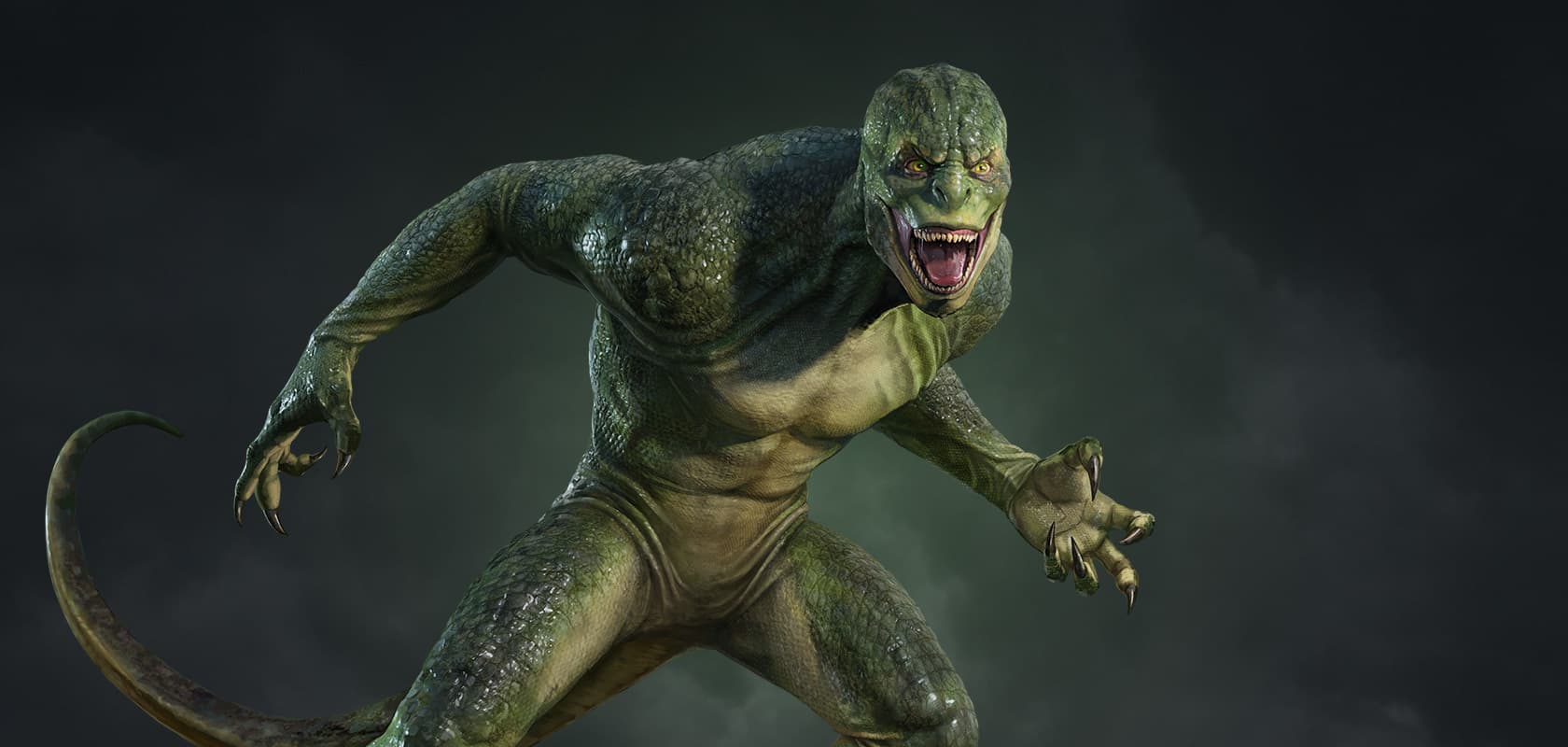
That’s the core of the tragedy. Before he was a scaly, twelve-foot-tall nightmare tearing through the New York City sewers, Dr. Curt Connors Marvel legend was a war hero. He was a surgeon. A family man. He lost his right arm in a blast while serving as a medic, a sacrifice that ended his career in the operating room but sparked an obsession that would ruin his life.
If you think he’s just another "monster of the week," you're missing the point. Curt Connors isn't a villain by choice. He’s the Jekyll and Hyde of the Marvel Universe, and his story is a brutal reminder that even the best intentions can lead to a swamp full of scales and sharp teeth.
The Science That Went Horribly Wrong
Connors was a genius in herpetology—the study of reptiles. He looked at lizards and saw something humans should envy: the ability to regrow lost limbs. It’s a simple dream, right? Give a veteran their leg back. Help a child born without a hand.
He developed a serum based on reptilian DNA. He tested it on a rabbit; it worked. In a moment of desperation and scientific hubris, he injected himself.
The arm grew back. For a second, he was whole.
Then the scales started. His mind went dark. The serum didn't just fix his body; it rewrote his DNA, turning him into The Lizard. Unlike many villains who want to rob banks or rule the world, the Lizard often just wants to turn everyone else into cold-blooded reptiles so they can be "perfect" like him.
What Most People Get Wrong About the Lizard
You’ve probably seen the movies. Rhys Ifans played him in The Amazing Spider-Man (2012) and returned for the multiverse chaos of No Way Home (2021). But the comics? They’re way darker.
In the comics, specifically Earth-616, the relationship between Connors and the Lizard is a constant war. Sometimes the Lizard is feral and animalistic. Other times, he’s hyper-intelligent and speaks with a chilling, sibilant hiss.
The Tragic Reality of the Connors Family
Most fans forget how much Curt's family suffered. He has a wife, Martha, and a son, Billy. In one of the most soul-crushing arcs in Marvel history (Shed by Zeb Wells), the Lizard persona actually takes over so completely that he hunts and kills his own son.
It’s heavy stuff. It’s not "kinda" sad; it’s devastating.
Later, during the Clone Conspiracy storyline, Billy and Martha were cloned back to life, but they had to be injected with the Lizard serum just to survive. Now, the whole family basically lives in the sewers as reptilian humanoids. They’re "happy" in their own twisted way, but it’s a far cry from the suburban life Curt once dreamed of.
Power Set: More Than Just a Tail
The Lizard is a physical powerhouse. He’s one of the few Spider-Man villains who can consistently overpower Peter Parker in a straight-up fistfight.
- Strength: He can lift about 12 tons. That’s enough to toss a car like a frisbee.
- Speed: Despite his bulk, he’s fast. He can outrun a moving vehicle and has reflexes that give Spidey’s spider-sense a workout.
- Regeneration: This is his "thing." You can cut off his tail or even a limb, and it grows back. It makes him nearly impossible to put down for good.
- Reptile Telepathy: This is a weird one. He can actually communicate with and command other reptiles. Imagine being chased by a giant lizard and then having every sewer rat and pet snake in a three-block radius join the hunt.
The Spider-Man Connection
What makes Dr. Curt Connors Marvel's most tragic figure is his bond with Peter Parker. In almost every version of the story, Curt is Peter’s mentor, professor, or boss.
Peter doesn't want to fight him. He wants to save him.
Every time Spider-Man throws a punch at the Lizard, he’s terrified he might actually hurt his friend. He spent years carrying around an antidote "just in case." This dynamic is why the character still matters after 60 years. It’s personal. It’s not just a hero stopping a bad guy; it’s a kid trying to stop his favorite teacher from committing a crime he’ll regret when he wakes up.
Why the Character Still Matters in 2026
We’re living in an era where "bio-hacking" and "gene-editing" aren't just sci-fi tropes anymore. Curt Connors represents the fear of losing our humanity to the technology we created to save it.
He’s the ultimate cautionary tale.
Honestly, the Lizard is at his best when the writers focus on the man inside the monster. When Curt is sitting in a cell, staring at his regrown arm and wishing it was gone because of the price he paid, that’s when the character shines. He isn't evil. He’s just broken.
Next Steps for Fans and Researchers
If you want to understand the true depth of this character, skip the generic wiki summaries and look at these specific resources:
- Read the "Shed" Arc: Specifically The Amazing Spider-Man #630-633. It is arguably the most terrifying and definitive Lizard story ever written.
- Compare the Media Versions: Watch the 1994 Spider-Man: The Animated Series version of Connors (where he’s more of a reluctant ally) versus the Spectacular Spider-Man (2008) version to see how the "mentor" dynamic changes the stakes.
- Explore the Gaming Lore: Check out Marvel’s Spider-Man 2 (2023) on PS5. The game provides a deep dive into Connors' work for Oscorp and features one of the most intimidating visual designs for the Lizard to date.
- Study the Science (The Real Part): Research real-world "axolotl regeneration." Scientists are actually studying how these creatures regrow limbs, which is the very real-world foundation Stan Lee and Steve Ditko used when they created Connors in 1963.