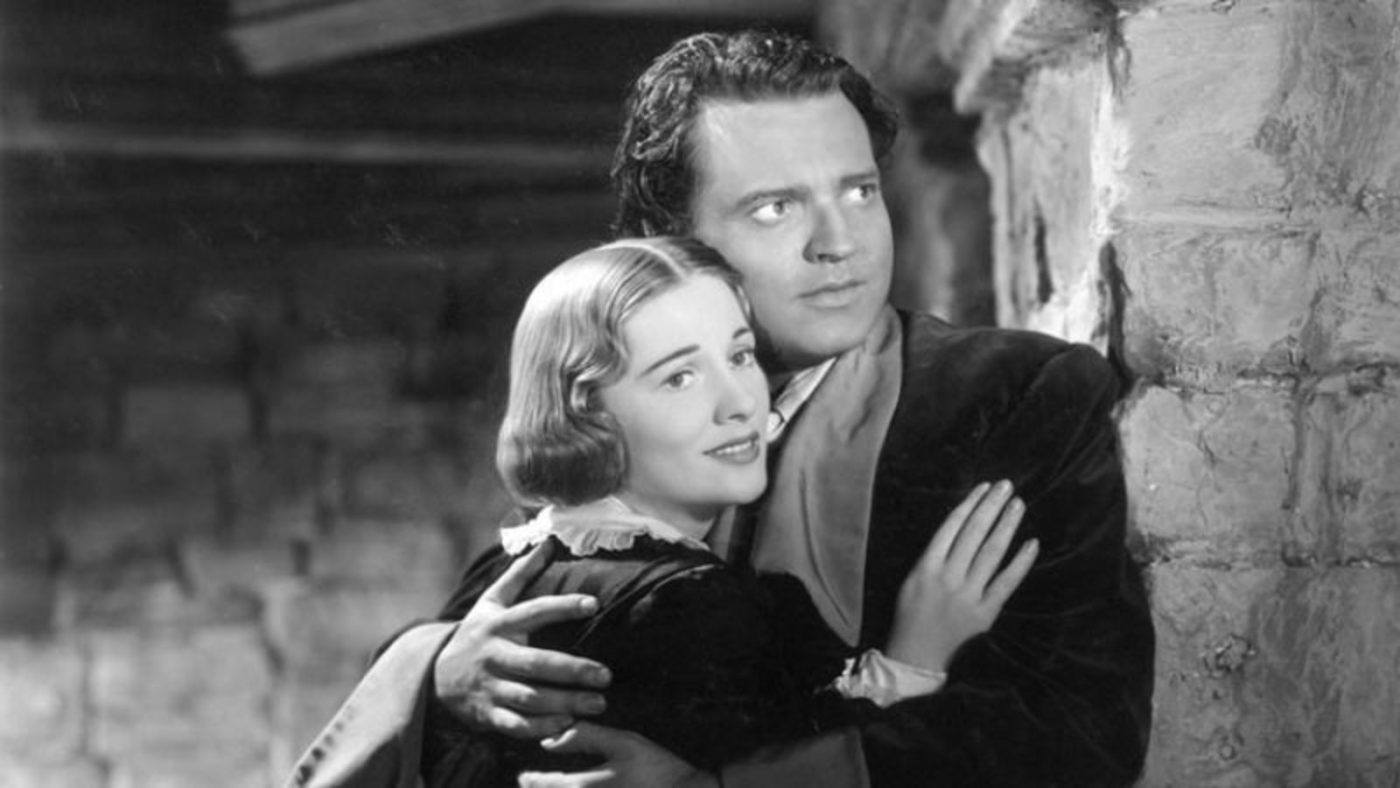
You’ve probably seen the 1943 version of Jane Eyre. It’s the one with Orson Welles looming over the moors like a caffeinated thunderstorm and Joan Fontaine looking perpetually worried. It’s a classic. But there is this one specific moment—a heartbreaking, rain-soaked sequence at Lowood Institution—that catches people off guard. A young girl with violet eyes and a presence that practically vibrates off the screen appears for just a few minutes. That’s Elizabeth Taylor in Jane Eyre, playing the tragic Helen Burns.
The weird thing? Her name isn’t in the credits.
Seriously. One of the biggest icons in cinema history, and if you blink during the opening scroll, you’d never know she was there. It wasn't because she was bad. Honestly, she’s one of the best parts of the movie's first act. But in 1943, Elizabeth Taylor was just a kid from London with a fresh contract and a look that the camera absolutely loved. She was "loaned out" from MGM to 20th Century Fox for the role, and because of the weird, bureaucratic studio politics of the Golden Age, she remained uncredited.
Why the Elizabeth Taylor Jane Eyre Cameo Matters So Much
Most people think of Elizabeth Taylor as the violet-eyed queen of Cleopatra or the fiery Martha in Who’s Afraid of Virginia Woolf?. But her bit part as Helen Burns is where we see the raw blueprints of her talent.
Helen Burns is the moral compass of Charlotte Brontë's novel. She's the girl who teaches Jane about forgiveness while they’re both being essentially tortured by the sadistic Mr. Brocklehurst. It’s a heavy role for a child. Taylor was only about ten or eleven during filming, yet she brought this eerie, ethereal stillness to the screen. When she stands on that stool to be shamed, or when she’s coughing her lungs out in the dark, she doesn't act like a "child star." She just is Helen.
It’s actually kinda jarring.
You have Peggy Ann Garner playing the young Jane Eyre, and she’s fantastic—very grounded, very gritty. Then you have Taylor, who looks like she stepped out of a Pre-Raphaelite painting. The contrast creates this immediate sense of doom for Helen. You just know this girl is too fragile for the world the movie is building.
The Lowood Scenes: A Masterclass in Gothic Atmosphere
Director Robert Stevenson knew exactly what he was doing with the lighting in these scenes. The 1943 Jane Eyre is famous for its "film noir" take on the moors. Everything is high contrast. Deep blacks, piercing whites.
When Elizabeth Taylor in Jane Eyre shares the screen with Garner, the shadows are heavy. Taylor’s face catches the light in a way that feels almost supernatural. There’s a specific shot where Helen is comforting Jane, telling her about a better world beyond this one. Taylor’s delivery isn't precocious; it’s weary. It’s the kind of performance that makes you realize why she became a legend. Most child actors "perform" for the back of the room. Taylor just breathed.
Interestingly, Margaret O’Brien was originally considered for the role of Helen Burns. O'Brien was the reigning queen of child stars at the time, known for her ability to cry on command. But there’s something about Taylor’s inherent dignity that fits the character of Helen Burns better. Helen shouldn't just be a victim; she should be a saint. Taylor nailed the "saintly" vibe without making it annoying.
The Mystery of the Missing Credits
So, why did 20th Century Fox leave her out?
Hollywood in the 40s was a giant chess board. Taylor was under contract at MGM. MGM basically owned her. When Fox needed a striking girl for the role of Helen, they borrowed her. Usually, credit is negotiated in the contract. For whatever reason—likely because the role was considered a "bit part" or because MGM didn't want their rising star associated with a supporting death scene—her name was omitted.
By the time the film was released in early 1944, Taylor had already filmed National Velvet. That movie changed everything. Suddenly, she was a household name. Fox probably kicked themselves for not putting her name on the posters of Jane Eyre to boost ticket sales, but by then, the celluloid was already cut.
A Stark Contrast to Other Versions
If you look at other adaptations, the Helen Burns character often gets sidelined. In the 2011 version with Mia Wasikowska, Helen is there, but she doesn't linger in your mind. In the 1996 Zeffirelli version, the focus shifts so fast to the adult Jane that the childhood trauma feels like a footnote.
But the 1943 version? It stays with you.
A huge part of that is the chemistry between Taylor and Garner. They didn't feel like two kids reciting lines. They felt like two kids trying to survive a horror movie. And Lowood was a horror movie. The cold, the hunger, the public shaming—it’s brutal. Taylor’s portrayal of Helen’s death is famously understated. No big, dramatic gasps. Just a quiet fading away. It’s one of the few times a 1940s film resisted the urge to be over-the-top melodramatic.
What Most Fans Get Wrong About This Role
There’s a common misconception that this was Taylor’s first movie. It wasn't. She had already done There's One Born Every Minute (1942) and Lassie Come Home (1943).
However, Jane Eyre was the first time she played a character with a tragic arc. It proved she could handle "the heavy stuff." Critics at the time mostly ignored her because, again, no credit. But modern film historians point to this uncredited cameo as the moment Taylor’s "screen presence" was truly codified.
She had those double eyelashes (a genetic fluke called distichiasis) that made her eyes look incredibly deep on black-and-white film. In Jane Eyre, those eyes do a lot of the heavy lifting. While Orson Welles is chewing the scenery as Rochester, Taylor is just sitting there being luminous and doomed.
The Orson Welles Factor
Speaking of Welles, he didn't just act in this movie; he basically co-directed it from the shadows. He brought his Mercury Theatre aesthetic to the production. This explains why the film feels so much like Citizen Kane in parts.
Welles reportedly liked working with the kids. He understood that for the Rochester/Jane romance to work later, the audience had to feel the weight of Jane’s miserable childhood. He needed Helen Burns to be an angel so that when she dies, the loss feels visceral. Taylor delivered that.
If you watch closely, the scenes at Lowood have a different rhythm than the rest of the film. They’re slower. More atmospheric. They rely on the faces of these young girls to tell the story of Victorian cruelty.
How to Spot Elizabeth Taylor in the Film Today
If you’re watching the 1943 Jane Eyre for the first time, keep your eyes peeled during the first 20 minutes.
- The Hair-Cutting Scene: Look for the girl who remains calm while the world is falling apart around her.
- The Punishment: When Jane is forced to stand on the "pedestal of infamy," Taylor’s Helen Burns walks past and gives her a secret, encouraging smile. It’s a tiny gesture, but it’s the emotional core of the scene.
- The Bedside Scene: This is the big one. Helen is dying of consumption (tuberculosis). Jane sneaks into the infirmary to see her. This is where Taylor’s performance really hits. She’s calm, almost eerily at peace with her own death.
It’s honestly some of the most effective acting in any Brontë adaptation. Usually, child actors in these period pieces are either too stiff or too "stagey." Taylor was neither.
The Legacy of a Ghost Performance
It’s funny how history works. Elizabeth Taylor in Jane Eyre is now a major talking point for film buffs, but for decades, it was just a "did you know?" trivia fact.
Today, we value these early glimpses into a superstar's career. It’s like finding a lost sketch by a master painter. You can see the technique being formed. You can see the magnetism that would eventually define an entire era of Hollywood.
Even without the credit, she owns those scenes. It's a reminder that there are no small parts—only small actors. And Elizabeth Taylor was never small.
Actionable Ways to Appreciate This Film History
If you're a fan of Taylor or Brontë, you can’t just watch the clips on YouTube. You need the context. Here is how to actually dive into this:
- Watch the 1943 film alongside the 2011 version. Compare the Helen Burns scenes. Notice how the 1943 version uses Taylor’s "star power" (even before she was a star) to make the character feel more significant than just a plot point.
- Check out the "uncredited" list on IMDb. It’s a rabbit hole. Taylor isn't the only legend who started this way. Look up other Golden Age stars who did uncredited cameos in classics. It tells you a lot about how the studio system worked.
- Read the book again. After seeing Taylor as Helen, read the Lowood chapters of Jane Eyre. You’ll find that Taylor’s "ethereal" quality perfectly matches Brontë’s description of Helen as a girl whose "spirit seemed to be already in another world."
- Look for the 4K restoration. If you can find the restored version of the 1943 film, do it. The black-and-white cinematography by George Barnes is stunning, and seeing Taylor’s performance in high definition makes her screen presence even more undeniable.
The 1943 Jane Eyre isn't just a movie for English majors or TCM addicts. It’s a piece of Hollywood archaeology. It’s the moment a legend-in-waiting showed the world she could break hearts without saying a word. Next time you see those violet eyes on a poster for Cat on a Hot Tin Roof, remember the little girl in the rain at Lowood who didn't even get her name on the screen.