You’ve probably seen a print of a dog playing poker in a basement or a majestic stag standing on a misty mountain in a hotel lobby. It’s easy to dismiss animal art as "kinda cheesy" or just something for calendars. But honestly? The history of famous animal painting artists is actually a weird, obsessive, and sometimes messy saga of people trying to capture what it means to be alive through the eyes of a creature that can't talk back.
Art history usually obsesses over portraits of kings and scenes of bloody battles. We forget that for centuries, the most skilled painters in the world were the ones huddled in barns or trekking through the Scottish Highlands just to figure out how light hits a cow’s ear. It wasn't just about "cute pets." It was about power, science, and the uncomfortable realization that humans aren't as different from beasts as we’d like to think.
The woman who broke the rules for a horse
Rosa Bonheur was a total rebel. In the 19th century, women weren't really supposed to be painting massive, muscular animals, and they definitely weren't supposed to be hanging out at slaughterhouses or horse markets. But Rosa didn't care. She actually got permission from the French police—literally a "cross-dressing permit"—to wear trousers so she could blend in at horse fairs without getting harassed.
Her masterpiece, The Horse Fair, is basically a rock concert on canvas. It’s huge. It’s loud. You can almost smell the dust and the manure. What makes her one of the most legendary famous animal painting artists isn't just that she could paint a horse; it’s that she painted them with a sense of dignity that was usually reserved for Roman emperors. She didn't "feminize" her subjects. She gave them weight and muscles and temperaments.
When Queen Victoria saw Bonheur’s work, she was obsessed. That’s the thing about great animal art—it crosses class lines. A queen and a stable boy can both look at a Bonheur horse and recognize the same raw energy.
Landseer and the "Disneyfication" of the wild
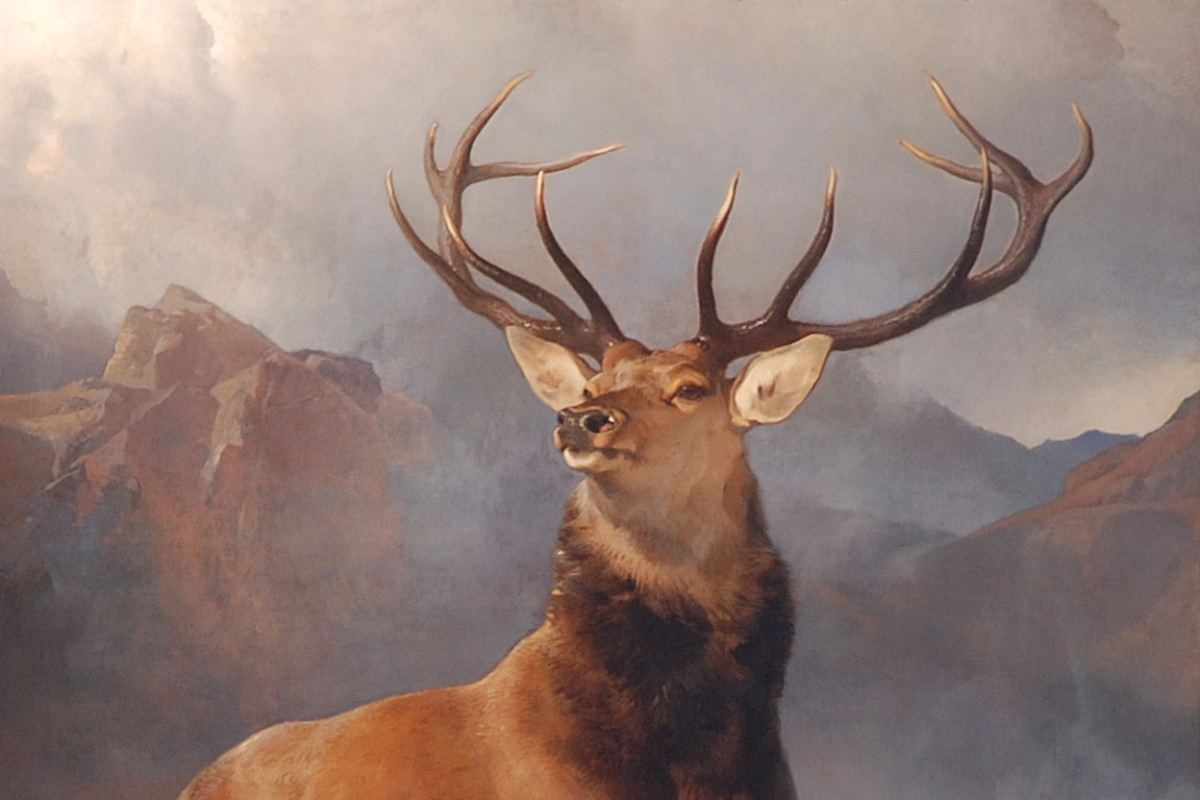
Then you have Sir Edwin Landseer. If Bonheur was about realism and grit, Landseer was the king of the "mood." You know that painting of the deer with the massive antlers looking out over the mountains? That’s The Monarch of the Glen.
Landseer was a prodigy. He was exhibiting at the Royal Academy when he was just 13. He had this uncanny ability to give animals human-like expressions without making them look like cartoons. It’s a bit controversial today, honestly. Some critics think he paved the way for the sentimental, "cutesy" animal art that eventually led to those "Dogs Playing Poker" paintings (which, for the record, were by Cassius Marcellus Coolidge, a very different kind of artist).
But Landseer’s impact is massive. He designed the bronze lions in Trafalgar Square. Think about that. Every time a tourist takes a selfie with those lions in London, they’re looking at Landseer’s vision of what a "noble" animal should look like. He defined the visual language of the Victorian relationship with nature—one that was part respect and part "let’s put this on a postcard."
The obsession with the "perfect" specimen
George Stubbs was basically a scientist who happened to be incredible with a brush. Before he became one of the most celebrated famous animal painting artists in history, he spent years—and I mean years—dissecting horses.
It was gruesome.
He’d hoist horse carcasses up in his barn and peel back layers of muscle just to see how they worked. His book The Anatomy of the Horse changed everything. When you look at his famous painting Whistlejacket, there’s no background. No grass, no sky, no rider. It’s just a giant, chestnut stallion on a plain beige backdrop.
It shouldn't work. It should look unfinished.
But it’s electric. Because Stubbs knew every tendon and every vein, the horse looks like it’s about to leap off the wall and kick you. This wasn't about decoration. It was about the terrifying, beautiful machine that is a living creature. Stubbs proved that an animal didn't need a human in the frame to be "worthy" of fine art.
Why we get it wrong today
Modern audiences often think animal painting is "easy" or "low-brow." We see it as something you find at a craft fair. But for guys like Stubbs or Albrecht Dürer, painting a hare or a rhinoceros was a way of exploring the unknown world.
Dürer’s Young Hare (1502) is a perfect example. He used watercolors and gouache to catch the texture of the fur in a way that feels almost digital in its precision. He wasn't just drawing a bunny. He was documenting the miracle of life. People at the time were used to seeing animals as symbols—lions meant courage, lambs meant innocence. Dürer just wanted to show you a hare.
The weird world of "Animalier"
In 19th-century France, there was a whole group called the Animaliers. Antoine-Louis Barye was the leader. He mostly did sculptures, but his influence on painters was huge. He loved the "nature is metal" vibe. Lots of lions eating bulls or tigers fighting pythons.
It was a reaction against the stuffy, polite art of the time. People wanted to see the "sublime"—that feeling of being both amazed and terrified by the world. These artists spent hours at the Jardin des Plantes in Paris, watching the captive animals. There’s a sadness there, too. You’re seeing the wild captured and put on display, both in the zoo and on the canvas.
Beyond the fluff: The technical struggle
Painting fur is a nightmare. Honestly. If you talk to any modern realist painter, they’ll tell you that the sheer physics of light hitting millions of individual hairs is enough to make you want to quit.
Famous animal painting artists like Henriette Ronner-Knip, who specialized in cats, had to figure out how to paint motion. Cats don't sit still. They aren't like human models who can be told to hold a pose for four hours. These artists had to develop incredible visual memories. They’d watch a kitten pounce, then paint the "memory" of that movement.
It’s a high-wire act of technical skill.
How to actually appreciate this stuff
If you want to dive deeper into this world, don't just look at the subject. Look at the "brushwork."
- Check the eyes. A mediocre artist paints a glass marble. A master like Bonheur or Landseer paints a "soul" behind the iris.
- Look for the anatomy. Can you see the shoulder blade moving under the skin? That’s where the real skill lives.
- Ignore the "cuteness." Try to see the animal as a biological entity.
Actionable Steps for the Aspiring Collector or Enthusiast:
- Visit the small galleries. Big museums like the Met or the National Gallery have the "hits," but smaller, specialized museums (like the American Museum of the Dog in NYC) often have the weirder, more technically daring works.
- Study the "Anatomical" tradition. If you want to understand why a painting looks "right," look up George Stubbs’ sketches. It’ll ruin "bad" animal art for you forever because you'll start seeing where the muscles are wrong.
- Look at the medium. Watercolors (like Dürer’s) require zero mistakes. Oil can be layered and fixed. Appreciate the "one-shot" nature of early animal sketches.
- Follow the "New Realists." There are contemporary artists today doing incredible, non-cheesy work that honors these traditions without the Victorian fluff. Look for artists who treat animals as individuals, not just types.
The reality is that famous animal painting artists aren't just people who liked pets. They were observers of the wild pulse that runs through everything. They remind us that we aren't the only ones here. And sometimes, a painting of a cow or a horse can tell us more about being "human" than a portrait of a person ever could.