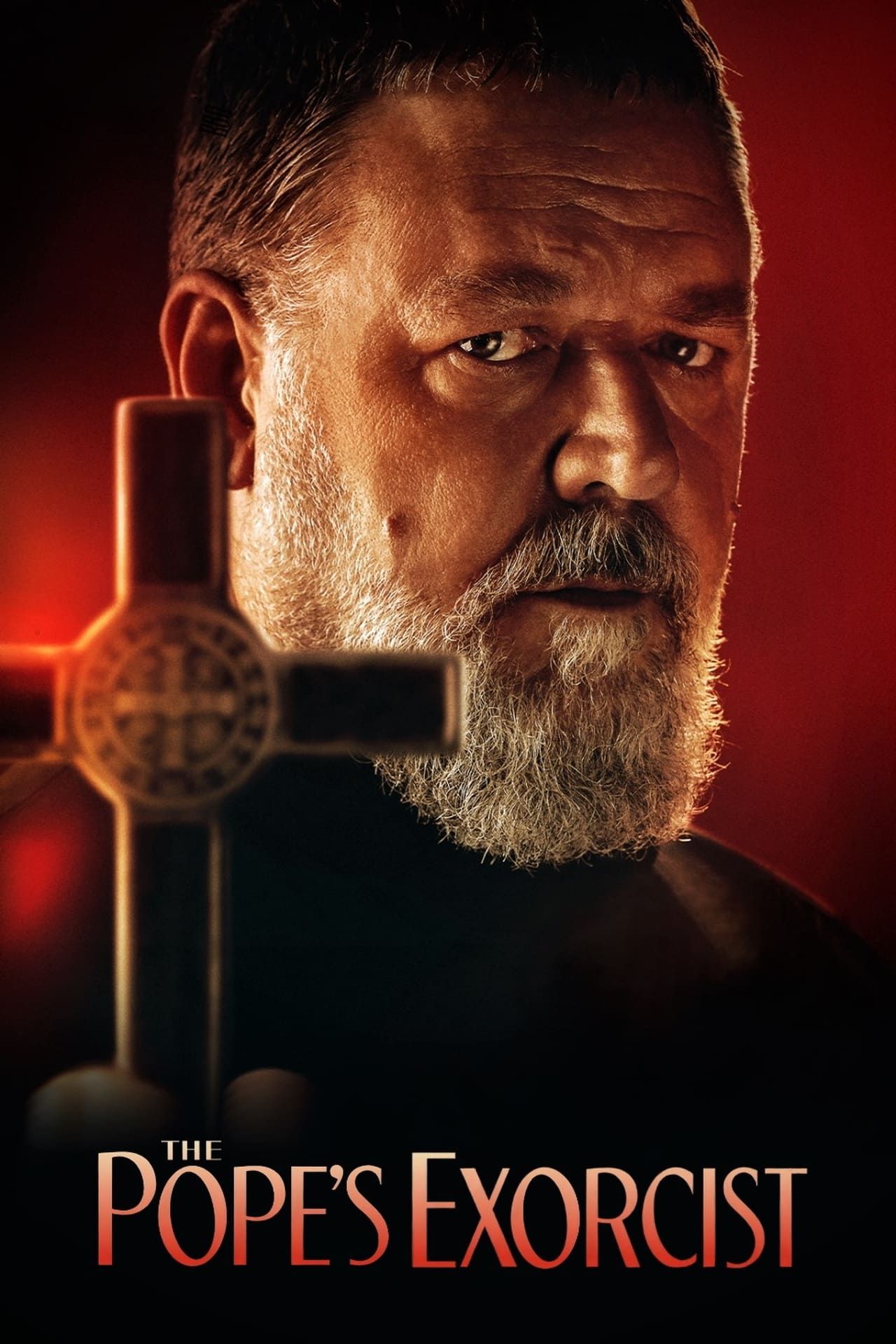
The movie theater version of a demon-slayer usually involves glowing eyes, levitating beds, and CGI explosions. But the real-life man who inspired Russell Crowe’s recent blockbuster wasn't exactly a superhero in a leather jacket riding a Vespa through the Roman night—well, maybe the Vespa part was true. Father Gabriele Amorth, the man famously known as The Pope’s Exorcist, was a complex, often controversial figure who claimed to have performed over 60,000 exorcisms during his career. He was a guy who loved jokes, hated the devil, and spent decades in the literal trenches of spiritual warfare.
Hollywood took some liberties. Obviously.
If you’ve seen the film, you might think the Vatican is hiding a secret underground library of demon lore or that exorcists engage in physical combat with fallen angels. The reality is both more mundane and, in many ways, much weirder. Amorth wasn't just some rogue priest; he was the official exorcist of the Diocese of Rome. He was also a prolific writer and a media personality who didn't mind a bit of controversy if it meant getting people to take the concept of "evil" more seriously.
Who Was the Real Father Gabriele Amorth?
Born in Modena in 1925, Amorth didn't start out clutching a crucifix and shouting Latin. During World War II, he was actually a partisan fighter against the Nazis. He was a man of action long before he was a man of the cloth. After the war, he studied law and even had a stint in politics working with the future Italian Prime Minister Giulio Andreotti. It wasn’t until 1954 that he was ordained as a priest in the Society of St. Paul.
His life took a sharp turn in 1986. That’s when the Cardinal Vicar of Rome, Ugo Poletti, unexpectedly appointed him as an assistant to the Chief Exorcist, Father Candido Amantini. Amorth often told a story about how he felt totally unprepared for the job, but Amantini was a legend who had a "gift" for sensing the presence of the demonic.
Amorth took over the role and basically became the face of modern exorcism. He didn't just sit in a dark room waiting for the phone to ring. He founded the International Association of Exorcists in 1990. He wanted to professionalize the practice and make sure priests weren't just winging it. He was obsessed with the idea that the modern world—and even the modern Church—had forgotten that the devil was a real, literal entity.
The 60,000 Exorcisms Claim
You’ll see this number everywhere. It sounds impossible. If you do the math, that’s several exorcisms every single day for decades without a single day off.
Honestly, it’s a bit of a terminological thing. Amorth himself explained that an "exorcism" in his count could be a full-blown ritual or just a quick prayer of deliverance. Most of his "clients" were people who just felt oppressed or burdened. He estimated that only a tiny fraction—maybe a few hundred—were cases of genuine "diabolical possession." He was actually quite skeptical of most claims. He worked closely with psychiatrists and doctors because he knew that most of the time, what people called a demon was actually schizophrenia, epilepsy, or some other undiagnosed medical condition.
What Most People Get Wrong About the Ritual
The movie makes it look like a high-stakes wrestling match. In real life, an exorcism is mostly a lot of repetitive praying. Amorth described the process as a long-form dialogue—not with the person, but with the entity he believed was inside them.
- The Litany of Saints: This is the warm-up. It's meant to call in "backup."
- The Sprinkling of Holy Water: It’s a reminder of baptism.
- The Command: This is the part everyone knows. "Vade retro Satana!" (Begone, Satan!).
- The "Evidence": Amorth claimed to see things that defied physics. He talked about people speaking ancient languages they’d never studied (like Aramaic or Greek) or displaying "preternatural" strength. He famously kept a collection of objects he claimed people had vomited up during sessions—nails, pieces of glass, even small plastic figurines.
He was very clear: he wasn't the one doing the work. He was just the conduit. He’d say that the devil is terrified of the Virgin Mary because she is a human who stayed pure, which shames his pride more than God’s power does.
His Thoughts on Pop Culture
Amorth was a bit of a firebrand when it came to modern entertainment. He wasn't exactly a fan of Harry Potter. He argued that the books encouraged a fascination with the occult that could open "doors" to demonic influence. You’ve probably heard people mock him for that, but to him, it was a matter of spiritual safety. He felt the same way about yoga, which he claimed could lead to eastern "falsehoods" that distanced people from Christ.
You don't have to agree with him to see his logic. He viewed the world as a constant battlefield. To him, there was no "neutral" ground. Everything either led you toward the light or nudged you toward the dark.
The Vatican's Complicated Relationship with Amorth
The Vatican is a big, slow-moving institution. While Amorth was the "Pope’s Exorcist," he wasn't always the darling of the Holy See’s PR department. He was loud. He was blunt. He once said that "Satan is at work in the Vatican," referring to various scandals and internal power struggles. That didn't exactly win him friends in the high offices of the Curia.
However, Pope John Paul II was a believer in the necessity of exorcism. It’s been reported that he performed at least three exorcisms during his papacy. Pope Francis, too, mentions the devil more than almost any recent Pope, often warning the faithful that the devil is a "person," not a myth.
Amorth’s legacy is really about this tension: the struggle between a modern, rationalist world and an ancient, supernatural faith. He occupied the space right in the middle. He utilized modern psychology to rule out the fake cases, but he held onto the old rituals to deal with the ones he couldn't explain.
The Emanuela Orlandi Connection
If you’re a true crime fan, you’ve heard of the disappearance of Emanuela Orlandi in 1983. It’s one of Italy’s greatest mysteries. Amorth had his own theories about it, which were—unsurprisingly—dark. He claimed at one point that the girl had been kidnapped for "sex parties" involving Vatican police and foreign diplomats. He didn't provide hard evidence for this, and many saw it as him lashing out at the bureaucracy he often bumped heads with. It shows that he wasn't just a "religious" guy; he was deeply tuned into the dark underbelly of Roman society.
Practical Insights from the Life of an Exorcist
Whether you believe in demons or just view them as metaphors for human trauma, Amorth’s work offers some interesting takeaways for how we handle "evil" in our lives.
- Rule out the natural first. Amorth’s first step was always a doctor. We should do the same. If you're struggling with mental health, look for a therapist before you look for a miracle.
- The power of humor. Amorth was known for cracking jokes even during exorcisms. He believed the devil was incredibly prideful and couldn't stand being laughed at. Humility and a sense of humor are surprisingly effective tools for mental resilience.
- The danger of "open doors." In his view, people didn't get possessed by accident. It happened through trauma, or by involving themselves in things they didn't understand. In a modern sense, this translates to being careful about what we consume and what we allow to take root in our minds.
- Consistency over intensity. He didn't think one big prayer solved everything. It was usually a process that took months or years. Healing—spiritual or otherwise—is rarely an "instant" fix.
Father Gabriele Amorth passed away in 2016 at the age of 91. He left behind a legacy of books, an association of exorcists that continues to grow, and a cinematic franchise that is only loosely based on his life. He was a man who lived in a world of shadows but seemed remarkably unafraid of them.
If you want to understand the real history, skip the sequels and read his primary memoir, An Exorcist Tells His Story. It’s a lot less flashy than the movie, but the stories in it are significantly more chilling because he believed every word of them.
To dig deeper into the actual history of the office of the exorcist, look for the Rituale Romanum, the official book of rites used by the Catholic Church. It hasn't changed much since 1614, though a revised version was released in 1999. Understanding the formal structure of the rite explains why Amorth was so frustrated with modern "innovations" that he felt weakened the Church's spiritual defenses. You can also explore the archives of the International Association of Exorcists to see how they train new priests today, moving far beyond the Hollywood tropes to a practice that is heavily clinical and deeply scrutinized by the Church hierarchy.