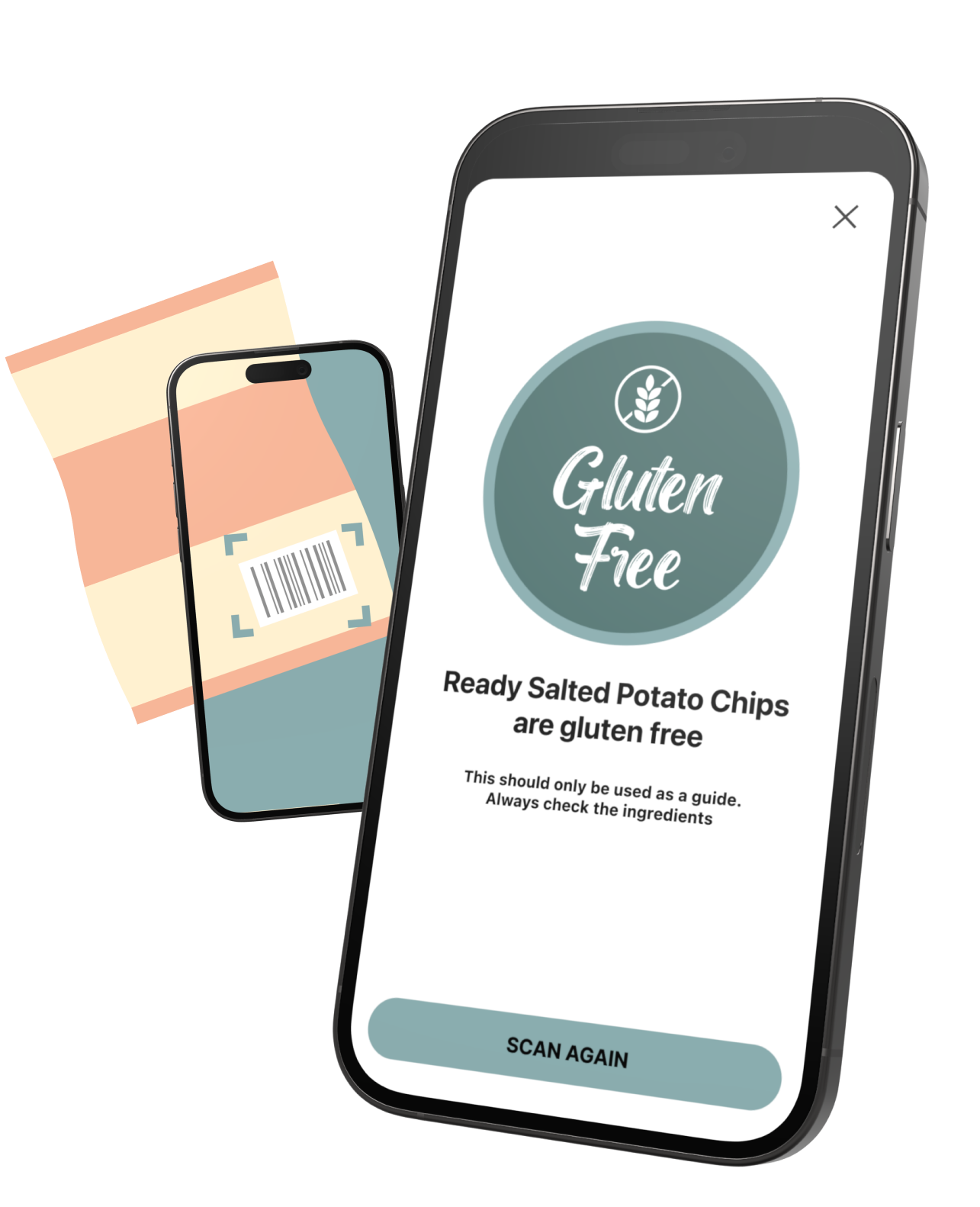
You’re standing in the aisle. It’s Tuesday. You just wanted a decent moisturizer or maybe some crackers that won’t make your kids bounce off the walls, but the back of the bottle looks like a chemistry final. Phenoxyethanol? Red 40? High fructose corn syrup? It’s overwhelming. Most people just give up and toss the product in the cart because who has twenty minutes to Google every single multi-syllabic word on a label? This is exactly why searching for a free app to scan products for harmful ingredients has become a literal survival tactic for the modern shopper.
We’ve all been there. You see a "natural" label with a picture of a leaf, and you assume it’s safe. Then you find out "fragrance" can be a loophole for three thousand different chemicals. It’s kinda frustrating.
Why Your Labels are Lying to You
The FDA doesn't actually approve cosmetics before they hit the shelves. Did you know that? It’s wild. Apart from color additives, companies can basically use whatever ingredients they want as long as the product is "safe" under labeled conditions of use. But "safe" is a very flexible word. In the EU, over 1,300 chemicals are banned from cosmetics. In the US? That number is closer to 11.
That’s a massive gap.
Because of this, we’re forced to be our own detectives. But honestly, most of us aren't toxicologists. We need a shortcut. These apps act as a digital filter between corporate marketing and your actual health. They translate "Polyethylene Glycol" into "Hey, this might be contaminated with 1,4-dioxane, which is a known carcinogen."
The Heavy Hitters: Which Apps Actually Work?
Not all scanners are created equal. Some are funded by the very brands they rate, which is a huge red flag. Others are passion projects that haven't been updated since 2019. If you're looking for a free app to scan products for harmful ingredients, you want something backed by a database that actually evolves.
Yuka: The Aesthetic Favorite
Yuka is probably the one you’ve seen on TikTok. It’s incredibly fast. You scan a barcode, and it gives you a color-coded score from 0 to 100. Green is great, red is "put it back right now." What’s cool about Yuka is that it isn’t just for beauty products; it does food too. It looks at additives, sugar, salt, and saturated fat.
One thing to keep in mind: Yuka is strict. Like, really strict. It uses the precautionary principle. If there’s even a slight hint that an ingredient might be an endocrine disruptor, Yuka flags it. Some people think it’s a bit "alarmist," but if you’re trying to avoid every possible toxin, it’s a solid choice. Plus, if a product scores poorly, it suggests better alternatives. That’s a lifesaver when you’re in a rush and don't want to leave the store empty-handed.
EWG Healthy Living
The Environmental Working Group (EWG) is the OG in this space. Their Skin Deep database has been around forever. Their app is essentially the mobile version of that massive research library. They use a scale of 1 to 10.
EWG is great because they cite their sources. If they say an ingredient is bad, they’ll link to the study. It’s very transparent. However, the app can be a bit clunky. It’s not as "snappy" as Yuka. Sometimes the barcode scanner struggles with certain lighting. But for sheer depth of data? It’s hard to beat. They cover over 120,000 products. That’s a lot of soap.
Think Dirty
Think Dirty is laser-focused on beauty and personal care. It uses a "Dirty Meter" from 0 to 10. They focus heavily on "hormone disruptors" and "allergy triggers."
One thing you've gotta watch out for here: Think Dirty has a "Verified Brands" program. While they claim it doesn't affect their ratings, it does mean you'll see a lot of ads or "suggested" products from brands that pay for the partnership. It’s still a great tool, especially for finding niche, clean-beauty brands you won’t find at a typical drugstore.
The Problem With "Clean" Apps
Let’s be real for a second. These apps aren't perfect.
Science is rarely black and white. For example, some preservatives are necessary to prevent mold and bacteria from growing in your shampoo. A "free" app might flag a preservative as an irritant, but is it worse than having a colony of fungus in your hair? Probably not.
Also, dose matters.
Toxicology is built on the idea that "the dose makes the poison." An app can tell you a chemical is present, but it usually can't tell you how much is in there. If a harmful chemical is the very last ingredient on a list of fifty, you’re getting a microscopic amount. If it’s the second ingredient? That’s a different story. Most apps treat every ingredient on the list with roughly the same weight, which can lead to some misleading scores.
How to Scan Like a Pro
If you're going to use a free app to scan products for harmful ingredients, don't just blindly follow the number. Use it as a starting point.
- Check the first five ingredients. These make up about 80% of the product. If the "red" ingredient is in the top five, it’s a major issue. If it’s at the bottom, it might be okay depending on your personal sensitivity.
- Look for specific "nasty" categories. Are you worried about PFAS? Parabens? Fragrance? Most apps allow you to click on the ingredient to see why it was flagged.
- Don't panic. If your favorite mascara gets a "dirty" score, you don't have to throw it in the trash immediately. Just finish it and look for a better alternative next time. Transitioning to a cleaner lifestyle is a marathon, not a sprint.
Beyond the Barcode
What happens when the app doesn't recognize the product? It happens all the time with smaller, indie brands or international items. You have to learn a bit of the "language."
"Fragrance" or "Parfum" is the biggest red flag. It’s a trade secret, meaning companies don't have to disclose what’s in it. It could be phthalates, which are linked to reproductive issues. If an app can't scan the bottle, look for "Fragrance-Free" or products that list their scent sources (like "Lavender Essential Oil").
Also, watch out for "Greenwashing." Brands use green bottles, pictures of flowers, and words like "earth-friendly" to trick you. An app doesn't care about the packaging. It only cares about the INCI (International Nomenclature Cosmetic Ingredient) list. That's where the truth is.
Real World Impact: Does Scanning Actually Matter?
It sounds like a lot of work. Is it?
A study published in Environmental Health Perspectives found that when people switched to "cleaner" personal care products for just three days, the levels of endocrine-disrupting chemicals in their urine dropped significantly. Specifically, phthalates dropped by 27% and parabens by 45%.
That’s huge.
It proves that the small choices you make at the grocery store actually show up in your blood and urine. It’s not just "hippie" stuff; it’s biology. Using a free app to scan products for harmful ingredients is a simple way to facilitate that drop without needing a degree in organic chemistry.
The "Free" Catch
Most of these apps are free to download, but they have to make money somehow. Usually, it's through:
- Premium tiers: Want to scan products offline? You might have to pay $10 a year.
- Affiliate links: If you buy a "clean" alternative through the app, they get a small commission.
- Data: Some apps might track what you're scanning to sell consumer trend reports to brands.
Honestly? For most people, the basic free version is more than enough. You don't need the bells and whistles to know if your laundry detergent is full of optical brighteners.
Taking the Next Steps
If you’re ready to clean up your cabinets, don't try to do it all at once. It's expensive and exhausting. Start with the products that stay on your skin the longest.
First, scan your body lotion. Since it covers your whole body and sits there all day, it’s the most important thing to get right. Next, move to your deodorant and toothpaste. These are used daily on sensitive areas or areas where absorption is high. Finally, tackle the rinse-off products like hand soap or shampoo. Since you wash these off, the "harm" is generally lower than a leave-on cream.
Download Yuka or EWG Healthy Living today. Take them to your bathroom right now—not the grocery store. Scan five items you use every single morning. You might be surprised to find that your "luxury" cream is actually worse than the cheap stuff, or that your favorite soap is perfectly fine. Knowledge is power, but only if you actually use the tool in your pocket.
Start with one scan. See what’s actually in your house. Once you know, you can’t un-know, and that’s when the real change happens.