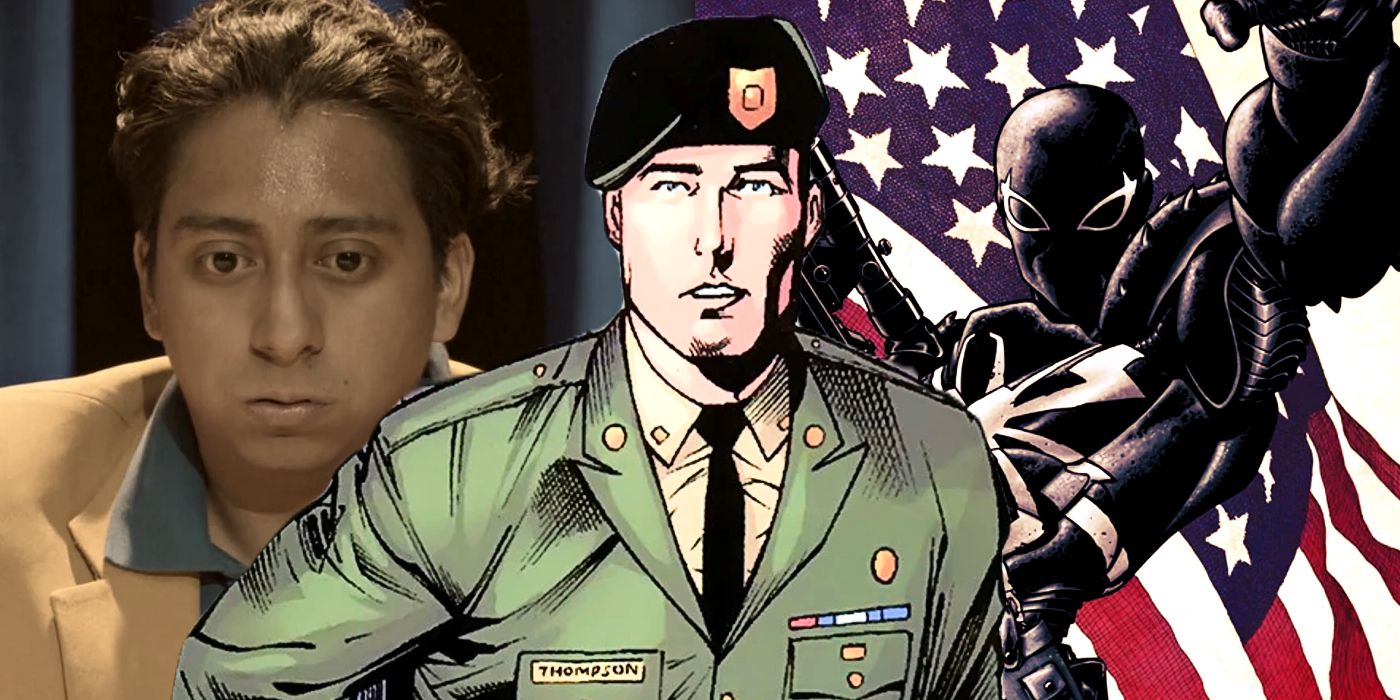
You probably remember Flash Thompson as the stereotypical jock from the early Sam Raimi movies or the "Puny Parker" heckler from the classic Steve Ditko comics. He was the loud-mouthed jerk with the letterman jacket. Most people think his story ends there, or maybe they’ve heard he eventually joined the army. But the truth is, Eugene "Flash" Thompson has one of the most complex, tragic, and ultimately inspiring character arcs in the history of Marvel Comics.
He didn't just stop being a bully. He became a war hero, a double amputee, a secret agent, a Guardian of the Galaxy, and literally died (and came back) saving the world. Honestly, if you still think of Flash as just a footnote in Peter Parker’s high school years, you’re missing out on the best part of the Spider-Man mythos.
The Myth of the One-Dimensional Bully
Stan Lee and Steve Ditko created Flash in Amazing Fantasy #15 (1962) to be the perfect foil for Peter Parker. He was everything Peter wasn't: popular, athletic, and socially confident. But there was always a weird irony at the center of his character. Flash Thompson was the founding president of the Spider-Man Fan Club.
Think about that for a second.
He spent his days shoving Peter Parker into lockers while spending his nights defending Spider-Man’s honor in the streets of Queens. He idolized the man behind the mask without ever realizing he was tormenting the human being under it. It’s a level of dramatic irony that keeps the early comics grounded. Flash wasn't a "villain" in the way Doc Ock or Green Goblin were; he was just a kid with a lot of misplaced aggression.
As the years rolled on, writers like John Romita Sr. started peeling back the layers. We found out Flash had a rough home life—an alcoholic, abusive father named Harrison Thompson. That doesn't excuse the bullying, but it explains it. It makes him human. By the time they hit college at Empire State University, Flash and Peter actually became friends. Real friends.
From the Iraq War to Project Rebirth 2.0
Flash’s real transformation happened when he grew up and looked for a purpose beyond football. He joined the army. In the modern continuity (post-Brand New Day), Flash served in the Iraq War. This wasn't some background detail; it was a defining moment of heroism. He saved his fellow soldiers under heavy fire, an act that cost him both of his legs from the knees down.
Coming home as a double amputee changed everything. The "jock" was gone, replaced by a man struggling with his identity and his physical limitations. This led him to volunteer for Project Rebirth 2.0.
The government had captured the Venom symbiote (after Mac Gargan was arrested). They wanted a soldier they could control to use the alien as a weapon. Flash was the perfect candidate. Why? Because unlike Eddie Brock, who was driven by vengeance, Flash was driven by a sense of duty he learned from watching his hero—Spider-Man.
The Agent Venom Era
When Flash bonded with the symbiote, he didn't become a hulking monster with a long tongue. Well, not usually. He used his willpower to force the symbiote into a sleek, tactical black suit. He looked like a super-soldier.
Agent Venom was born.
It gave him his legs back. It gave him Spider-Man’s powers. But it came with a terrifying price: he could only stay bonded for 48 hours at a time, or the symbiote would take over and go "feral." Flash was essentially a recovering alcoholic (literally, he struggled with booze in the comics) who was now addicted to a sentient alien that wanted to eat people.
He served on the Secret Avengers alongside Captain America. He joined the Thunderbolts. He even went to space with the Guardians of the Galaxy. During his time in space, we learned the symbiote’s race—the Klyntar—weren't actually evil. They were "cleansed," and Flash became a Space Knight. He was finally a hero in his own right, no longer just "the guy who used to pick on Spider-Man."
The Sacrifice and the Birth of Agent Anti-Venom
Flash’s journey took a sharp turn during the Go Down Swinging arc. Norman Osborn had bonded with the Carnage symbiote to become the Red Goblin. He was unstoppable. Flash, who had recently become Agent Anti-Venom (after an accident involving Alchemax and a serum), was the only one who could heal the people Osborn was infecting.
Flash used his powers to save Peter’s friends and family, but the effort exhausted him. In his final moments, he realized Peter Parker was Spider-Man. He didn't feel betrayed. He felt proud.
He died a hero.
But this is comics. Nobody stays gone forever. During the King in Black event in 2021, Flash’s consciousness was found inside the symbiote hive-mind. He eventually fought his way back to the land of the living, returning as a permanent Agent Anti-Venom.
What Most People Get Wrong About Flash
People often assume Flash’s redemption is just about being "nice" to Peter. It's much deeper. Flash Thompson represents the idea that your worst traits as a teenager don't have to define you. He is the "Great Responsibility" lesson in practice.
Peter Parker was born with a good heart. Flash had to build one.
| Era | Alias | Primary Role |
|---|---|---|
| Silver Age | "Flash" | High School Bully / Spidey Fan |
| Bronze Age | Soldier | Vietnam/Iraq Veteran |
| Modern Age | Agent Venom | Government Black-Ops Hero |
| Modern Age | Space Knight | Intergalactic Peacekeeper |
| Current | Agent Anti-Venom | Symbiote Healer / Defender |
Why He Matters Right Now
If you're watching the movies or playing the Spider-Man games (like the recent Insomniac titles), you're seeing bits and pieces of this evolution. In the MCU, Tony Revolori plays a different kind of Flash—a "tech-bully"—but the DNA of the character seeking validation is still there.
There are rumors that 2026 might bring a more serious version of the character to the big screen. Whether he becomes Agent Venom or stays as Peter’s complicated friend, his comic history is the blueprint for how to write a "redemption" arc that actually feels earned.
Actionable Insights for Fans
If you want to understand the real Flash Thompson, don't just watch the movies. You've got to hit the source material.
- Read the Rick Remender run: Start with Venom Vol. 2 (2011). This is the definitive Agent Venom era.
- Track the growth: Compare Amazing Fantasy #15 to The Amazing Spider-Man #800. The contrast is mind-blowing.
- Look for the symbols: Flash wears the white "Anti-Venom" suit now because he’s a healer. It’s a visual representation of his shift from a soldier of war to a guardian of life.
Stop thinking of him as the guy who yelled "Parker!" in a hallway. He’s the guy who gave his life for a friend he spent years tormenting. That’s a legacy worth talking about.