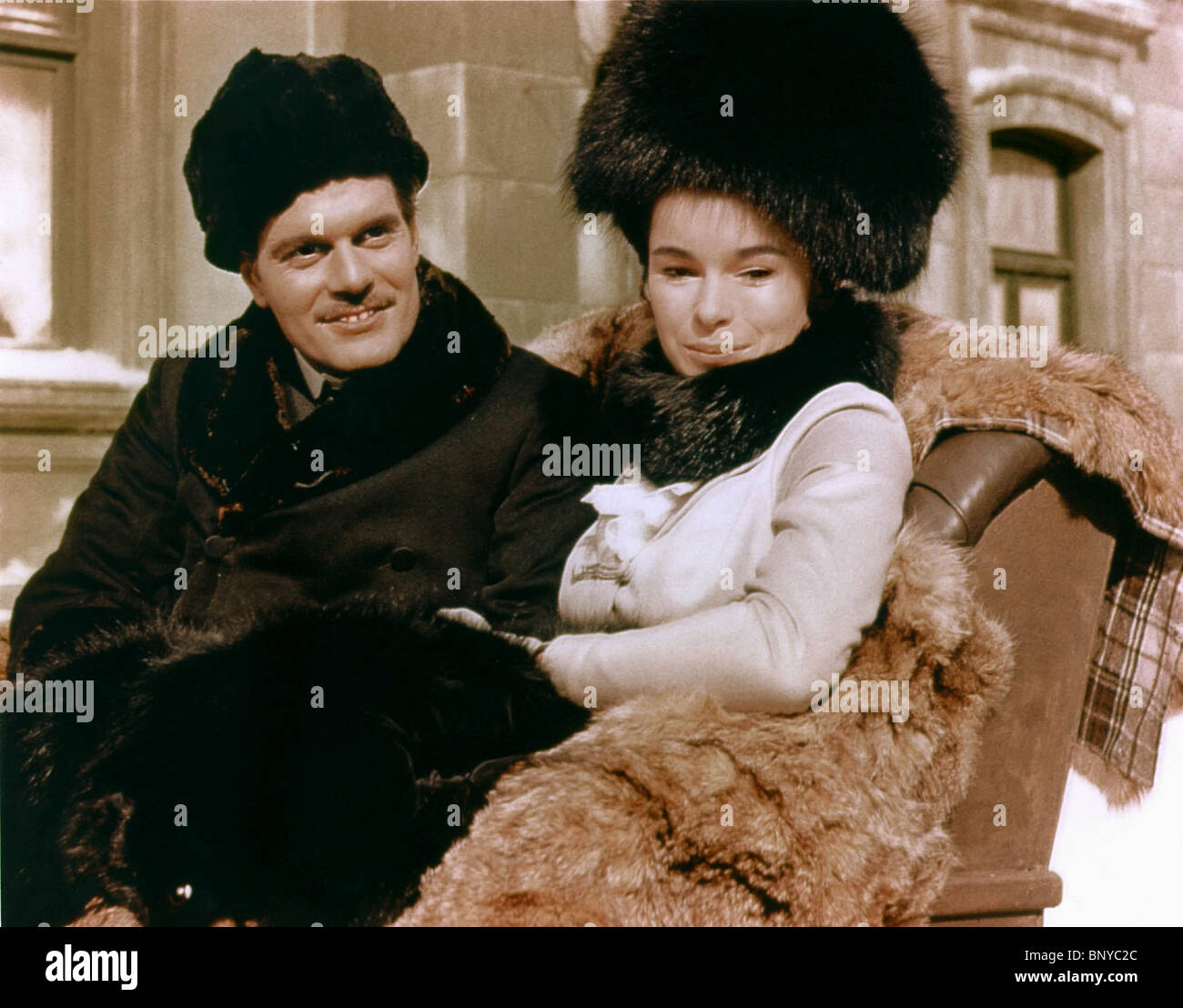
When you think of David Lean’s 1965 epic Doctor Zhivago, your brain probably goes straight to Maurice Jarre’s sweeping "Lara’s Theme" or Julie Christie’s iconic fur hat. Maybe Omar Sharif’s soulful, moist eyes. But there is a specific, quiet gravity that holds the domestic half of that film together. It belongs to a then-21-year-old Geraldine Chaplin.
Playing Tonya Gromeko wasn't just a role; it was a baptism by fire. Imagine being the daughter of Charlie Chaplin—the most famous face on the planet—and trying to carve out a space for yourself in a three-hour Russian revolution drama. It's a lot.
Honestly, Tonya is often the character people overlook because she’s the "stable" choice. She’s the wife. She represents the old world, the warmth of the Moscow aristocracy, and the tragedy of being a good woman caught in a love triangle that’s basically fueled by destiny and war. But if you look closer, Chaplin’s performance is what gives the film its moral ache.
The "Nepo Baby" Narrative of 1965
People love to talk about "nepo babies" today like it’s a new invention. It’s not. When Geraldine Chaplin was cast in Dr. Zhivago, the whispers were everywhere. She had been a ballet dancer in Paris and had done some modeling, but she hadn’t really acted in a major English-language production.
David Lean didn't care about the gossip. He saw her dancing in a play in Paris and was struck by her face. It wasn't just that she looked like a Chaplin; she had this translucent, Victorian quality that fit the pre-revolutionary Russian upper class perfectly.
Chaplin herself was refreshingly blunt about it. She once told the press, "Because of my name, the right doors opened." You've gotta respect that kind of honesty. Most people would try to claim it was all "grit," but she knew the last name helped. The real trick was staying in the room once she got there.
Finding Tonya in the Snows of Spain
One of the weirdest facts about the production is that almost none of it was filmed in Russia. Cold War politics made that impossible. So, Lean took the whole circus to Spain.
They built a massive, ten-acre set of Moscow outside Madrid. It was brutal. They were filming winter scenes in the middle of a Spanish heatwave. Chaplin and the rest of the cast were draped in heavy furs and wools while the temperature soared.
- The "Ice House" at Varykino: That famous scene where the house is covered in frost? That wasn't real ice. It was tons of marble dust and wax.
- The Daffodils: They planted thousands of bulbs for the spring scenes, but the Spanish weather was so erratic that the flowers bloomed months early. They had to dig them up and stick them in cold storage to save them for the shoot.
In the middle of this logistical nightmare, Chaplin had to find the soul of Tonya. In the Boris Pasternak novel, Tonya is a bit of a saint—loyal, educated, and perhaps a little too "proper" for the wild heart of Yuri Zhivago. Chaplin played her with a vulnerability that makes you feel for the "other woman" in the relationship, even though she’s the one with the wedding ring.
Why Geraldine Chaplin's Performance Holds Up
There is a scene that always gets me. It’s when Tonya is at the train station, wrapped in a stunning winter coat, greeting Yuri. She looks like a porcelain doll, but there’s a flicker of awareness in her eyes. She knows the world is ending. She knows her husband’s heart is drifting.
Critics at the time were sometimes dismissive. They were so dazzled by Julie Christie’s Lara that they saw Tonya as a secondary, "boring" character. That’s a mistake. Tonya represents the cost of the revolution. She loses her home, her status, and eventually her husband, but she maintains this incredible, quiet dignity.
The Golden Globe and Beyond
Her work didn't go unnoticed. She grabbed a Golden Globe nomination for Most Promising Newcomer. It was the launchpad for one of the most interesting careers in cinema. Most actresses with her pedigree would have stayed in Hollywood playing "the wife" or "the ingenue."
Chaplin didn't. She moved to Spain, fell in love with director Carlos Saura, and spent the next decade making avant-garde, politically charged films like Peppermint Frappé and Cría Cuervos. She chose the weird, difficult path. That’s likely why she’s still working today while many of her contemporaries from the 60s faded away.
The Reality of the "Zhivago" Legacy
Let’s be real: Dr. Zhivago is a long movie. It’s a slow burn. But Geraldine Chaplin’s presence is the anchor for the first half. Without her, Yuri’s eventual betrayal of his family doesn't carry any weight. You have to love Tonya to understand the tragedy of what Yuri loses.
If you’re watching it for the first time—or the tenth—pay attention to the way she uses her hands. She has this dancer’s grace that she never quite lost. It makes Tonya feel fragile and indestructible all at once.
What to Do Next
If you want to truly appreciate Geraldine Chaplin's range beyond the furs of Russia, here is your homework:
- Watch "Cría Cuervos" (1976): It’s a Spanish masterpiece. She plays both the mother and the adult version of the lead child. It’s haunting and nothing like her Hollywood work.
- Re-read the "Letter from Tonya" scene: In the film, when Yuri reads the letter Tonya sent from Paris, listen to Chaplin’s voiceover. It’s one of the most heartbreaking moments in cinema.
- Check out "Sand Dollars" (2014): Proof that she only got better with age. She plays a wealthy woman in the Dominican Republic, and her performance is raw and fearless.
The "Chaplin" name might have gotten her the audition for Geraldine Chaplin in Dr. Zhivago, but it was her own talent that made Tonya Gromeko unforgettable. She didn't just play a character; she survived a revolution on screen.