It was the year 2000. Rob Zombie—the guy with the dreadlocks and the gravelly voice who redefined heavy metal—walked into a meeting at Universal Studios. He wasn't there to talk about music. He was designing a haunted house for their Halloween Horror Nights. On a whim, he pitched a movie. He basically made it up on the spot. Universal liked it, he wrote a 12-page treatment, and two months later, cameras were rolling.
That movie was House of 1000 Corpses.
Most people think this movie was just another slasher. It wasn't. Honestly, it was a miracle it even got released. By the time it actually hit theaters in 2003, it had been shelved, sold, and nearly buried by the "Hollywood machine." Universal saw the final cut and freaked out. They thought it was too depraved. They feared an NC-17 rating and didn't want the PR nightmare. So, they dropped it. MGM picked it up, then dropped it too after Zombie made a joke about them having "no morals." Eventually, Lionsgate stepped in, and a cult legend was born.
The Firefly Family: Not Your Average Killers
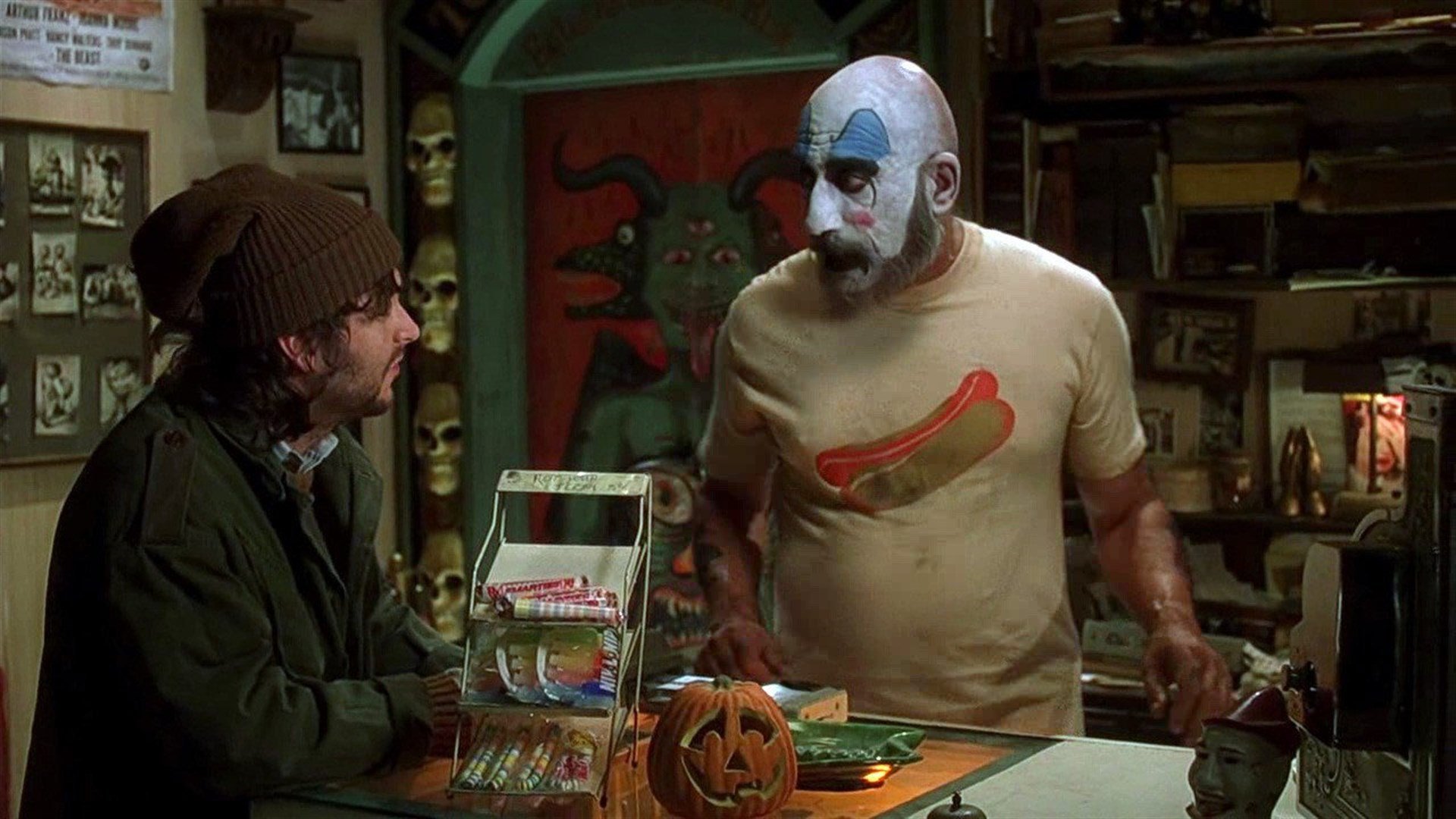
If you've seen the House of 1000 Corpses movie, you know it’s not just about the gore. It’s about the vibe. The film follows four teenagers—Jerry, Bill, Mary, and Denise—looking for local legends in the middle of nowhere, Texas. They stumble upon Captain Spaulding’s Museum of Monsters and Madmen.
Sid Haig, as Captain Spaulding, is the absolute heart of this nightmare. He's a clown. He's a murderer. He sells fried chicken. It's weirdly charming and deeply unsettling all at once. Zombie named his villains after Groucho Marx characters: Captain Spaulding (Animal Crackers), Otis Driftwood (A Night at the Opera), and Rufus Firefly (Duck Soup). It’s a bizarre nod to his childhood love for the Marx Brothers, but there’s nothing funny about what these people do.
Otis B. Driftwood, played by Bill Moseley, is pure filth. He’s the philosopher of the group, if the philosophy is just "everything is garbage." Then you’ve got Baby, played by Sheri Moon Zombie. She’s like a serial killer Barbie. She recites nursery rhymes while she stabs people. It’s colorful, loud, and feels like an acid trip gone horribly wrong.
Why the Critics Hated It (And Fans Loved It)
When it finally came out, critics absolutely trashed it. They called it "immoral" and "frenzied." The New York Times said it was just a series of cheap scary images. They weren't entirely wrong, but they missed the point.
Zombie wasn't trying to make a high-brow thriller. He was making a haunted house on film. The movie uses smash cuts, home-video footage, and color-distorted filters that make you feel dizzy. It’s designed to disorient you, just like fog and strobe lights in a real-life attraction. It’s a love letter to the 70s grindhouse era—specifically The Texas Chain Saw Massacre and The Hills Have Eyes.
The Lost Scenes and the NC-17 Battle
There is a lot of talk about a "director's cut" of the House of 1000 Corpses movie. The truth? It probably doesn't exist anymore. To get that R rating, Zombie had to recut the film at least five times. He trimmed the violence, cut out a subplot involving Baby, and shaved down some of the more "experimental" moments.
Fans have been begging for the original 35mm negatives for decades. But Zombie has admitted that Universal likely tossed the footage. When Lionsgate put out the 20th Anniversary Edition, they were basically "scraping the bottom of the barrel" for new content because the original assembly cut is gone. It's a tragedy for horror historians.
The filming itself was a mess of ingenuity. They shot at the Four Aces Movie Ranch in Palmdale and on the Universal backlot. Fun fact: the Firefly house is the same house from The Best Little Whorehouse in Texas. Don Willis's house? That was the house from Leave It to Beaver. Seeing the most wholesome sets in Hollywood history turned into a blood-soaked dungeon is peak Rob Zombie.
The Legacy of Ruggsville
Despite the $7 million budget and the three-year delay, the movie grossed over $16 million. It didn't break records, but it broke ground. It paved the way for the "torture porn" era of the mid-2000s, like Saw and Hostel. It gave us a new breed of horror icon.
The film's third act takes a sharp turn into the supernatural with Dr. Satan. Some people hate this. They think it ruins the grounded "serial killer" vibe. But if you view the movie as a literal descent into hell, it works. The basement of the old Ambassador Hotel in L.A. served as the setting for Dr. Satan's lair—a place so dark it makes the rest of the movie look like a cartoon.
How to Experience it Today
If you’re diving into the House of 1000 Corpses movie for the first time, or the fiftieth, you have to look past the surface. It’s a patchwork quilt of horror history.
- Watch for the cameos: Chris Hardwick and Rainn Wilson (before he was Dwight Schrute) are in this. Watching Rainn Wilson get turned into "Fishboy" is a rite of passage for horror fans.
- Check the lighting: Notice how the colors shift from earthy browns to neon pinks and deep reds. It’s a visual representation of losing your mind.
- The Groucho Marx connection: Once you see the Marx Brothers influence, the dialogue feels different. It’s rhythmic and theatrical.
The Firefly family returned in The Devil's Rejects and 3 from Hell, but those movies are different. They’re grittier. They’re more like "real" movies. House of 1000 Corpses remains the most "Rob Zombie" thing Rob Zombie has ever done. It’s messy, it’s loud, and it smells like grease and blood.
For the best experience, grab the 20th Anniversary 4K release. It’s the cleanest the film has ever looked, even if we never get to see those lost "uncut" scenes. If you’re a creator, use this as a lesson: sometimes, sticking to your weird, unmarketable vision is exactly what creates a legacy.
Don't go looking for the original cut—it's a ghost. Instead, appreciate the chaotic, R-rated version that survived the studio system. It’s a reminder that horror doesn't have to be polite. It's meant to be a carnival ride through the dark.