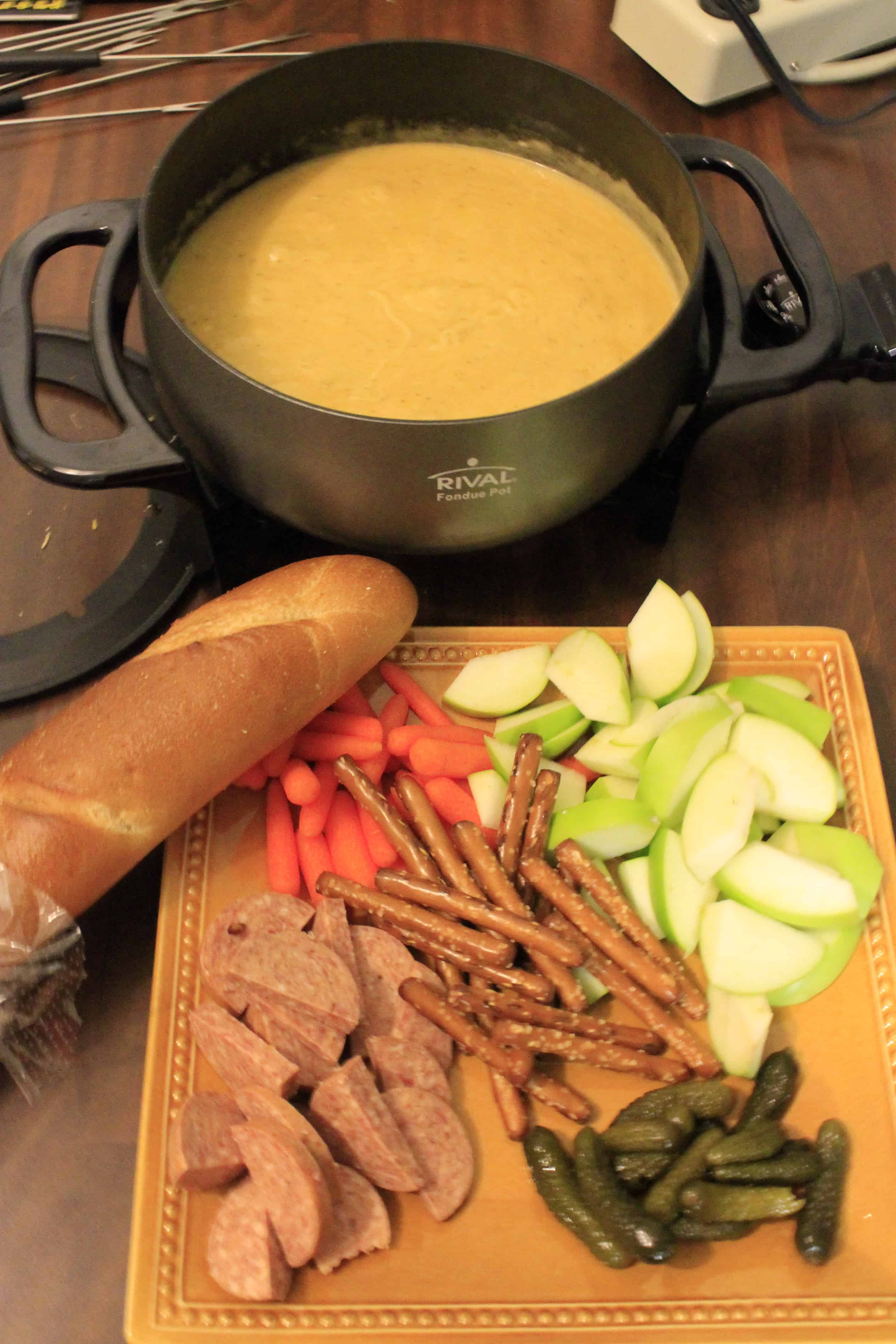
You’re standing over a pot of expensive Gruyère and suddenly it happens. The cheese separates into a clumpy, rubbery ball floating in a pool of yellow oil. It’s frustrating. It's also entirely preventable if you stop treating cheese like a solid and start treating it like an emulsion. Most people think fondue is just "melted cheese," but if you approach it that way, you're going to fail. Honestly, learning how to make cheese fondue easy is more about chemistry than culinary school.
It’s all about the bond.
When you heat cheese, the protein matrix—specifically the casein—tends to tighten up and push out the fat. This is why a cheap pizza gets greasy. To keep things smooth, you need an emulsifier and a stabilizer. Usually, that’s wine and cornstarch. If you skip the science, you get a mess. If you follow the science, you get that silky, velvet texture that makes people actually want to eat out of a communal pot.
The gear you actually need (and what’s a waste of money)
Stop worrying about having a specific "fondue set" with the little tea light. Those things are cute for a 1970s themed party, but they are terrible for actually cooking the food. They don't get hot enough to melt the cheese properly, and they're notoriously bad at maintaining a consistent temperature. Use a heavy-bottomed saucepan on the stove first. A cast-iron Dutch oven or a thick stainless steel pot works best because they hold heat evenly.
You can transfer it to a ceramic pot later if you really want the aesthetic.
One thing you can't skip? A box of cornstarch. Or flour, if you're old school, though cornstarch gives a cleaner finish. You also need a garlic clove. Just one. You aren't making garlic bread; you're "seasoning the pot." You rub the cut side of the garlic all over the inside of the saucepan before you add a single drop of liquid. It leaves behind an essential oil film that perfumes the entire dish without overpowering the delicate nutty notes of the Alpine cheese.
The cheese selection: Don't get fancy, get functional
There is a reason the Swiss use Gruyère and Vacherin Fribourgeois. It’s not just tradition; it’s physics. These cheeses have the perfect fat-to-moisture ratio. If you try to use a sharp, aged cheddar that’s been sitting in a cave for three years, it will break. Aged cheeses lose moisture. Low moisture equals clumping.
If you want the best results, stick to a 50/50 split of Gruyère and Emmentaler. This is the classic "Moitié-Moitié" (half-and-half) style. Emmentaler brings the stretch and the mildness, while Gruyère brings the funk and the depth.
- Gruyère: The backbone. Savory, salty, and melts like a dream.
- Emmentaler: The "Swiss cheese" with the holes. It's high in moisture.
- Appenzeller: If you want it extra spicy or pungent, swap out some Emmentaler for this.
- Fontina: A great Italian alternative that's incredibly creamy.
Always grate your own cheese. Always. The pre-shredded stuff in bags is coated in potato starch or cellulose to keep it from sticking together in the package. That coating ruins your fondue. It creates a grainy, sand-like texture that no amount of whisking can fix.
How to make cheese fondue easy without the stress
Here is the secret: Toss your shredded cheese with the cornstarch before it ever touches the pot. This is the ultimate "pro move." By coating every individual strand of cheese in a thin layer of starch, you ensure that the stabilizer is present the very second the protein starts to melt. It acts like a bodyguard, preventing the fat from escaping.
Use about one tablespoon of cornstarch for every pound of cheese.
Now, let's talk about the wine. You need acidity. The tartaric acid in dry white wine breaks down the cheese proteins and keeps them from stringing together into a giant rubber band. Use a dry Sauvignon Blanc or a Pinot Grigio. Avoid anything "buttery" like an oaked Chardonnay. The flavors will clash and the fat content will be off.
The Temperature Trap
Heat is the enemy of a smooth fondue. If you boil the cheese, it’s over. You want a very low simmer. Once the wine starts to show tiny "fish eye" bubbles, you add the cheese in small handfuls.
Don't dump it all in at once.
Whisk in a figure-eight motion. This ensures you’re hitting the edges of the pot and keeping the mixture moving. Wait until the first handful is completely melted before adding the next. If the mixture starts to look a bit thick, add a splash more wine. If it's too thin, keep adding cheese. It’s a balance, but it’s a forgiving one as long as you keep the heat low.
Troubleshooting the "Break"
If you see oil pooling on top, don't panic. This is the "break" everyone fears. To fix it, you need to re-emulsify. Add a teaspoon of lemon juice or a little more dry wine and whisk vigorously. The extra acid can often coax the proteins back into a stable state. Some chefs even swear by a tiny pinch of sodium citrate—it’s the "magic salt" used to make processed American cheese so melty—but for a home cook, a squeeze of lemon usually does the trick.
If it’s too stringy? You probably didn't use enough wine or the cheese was too young.
If it’s grainy? You likely overheated it or used pre-shredded cheese.
Beyond the Bread: What to Dip
Bread is the standard, obviously. Use a day-old baguette. Fresh bread is too soft; it will fall off the fork and get lost in the "cheese lake," which is a social faux pas in Switzerland (tradition says if you lose your bread, you have to buy the next round of drinks).
But don't stop at bread.
- Cornichons and Pickled Onions: The acidity cuts through the heavy fat.
- Blanched Broccoli or Cauliflower: It makes the meal feel slightly less like a heart attack in a pot.
- Green Apples (Granny Smith): The tart crunch is arguably better than the bread.
- Boiled Baby Potatoes: Firm, waxy potatoes like Yukon Golds are incredible.
The Cultural Etiquette (And why it matters)
Fondue is a social event. In 1930, the Swiss Cheese Union declared it the national dish as a way to increase cheese consumption. It worked. Because it's a shared pot, there are "rules." No double-dipping, obviously. Also, traditionally, you should drink white wine or hot tea with fondue.
There is a long-standing myth that drinking cold water or beer with melted cheese will cause it to "coagulate" in your stomach and give you massive cramps. While science hasn't exactly proven the "cheese ball in the stomach" theory, the tradition of drinking Kirsch (cherry brandy) alongside the meal is a great way to aid digestion and keep the party going.
Practical Next Steps for Your Fondue Night
If you want to master how to make cheese fondue easy, start with the right ratios. A good baseline is 1/2 pound of cheese per person and 1/2 cup of wine per pound of cheese.
- Buy your cheese today: Look for a block of Gruyère and a block of Emmentaler.
- Grate it coarsely: Use the large holes on a box grater.
- Coat with starch: Toss that cheese in a bowl with cornstarch until it looks dusty.
- The Kirsch finish: If you can find Kirschwasser, add a tablespoon at the very end. It adds an ethereal floral note that makes the dish taste "authentic" rather than just like melted cheese.
- The "Religieuse": When you get to the bottom of the pot, don't scrub it. There will be a crusty, browned layer of cheese called the "religieuse" (the nun). Carefully peel it off and share it. It’s the best part of the whole experience.
Forget the fancy electric pots. Focus on the wine selection, the manual grating, and the low-and-slow heat. That's the only way to ensure your fondue stays smooth from the first dip to the last bit of crust.
Actionable Insight: For the smoothest possible texture, add a tiny pinch of nutmeg and white pepper to the wine before adding the cheese. These spices don't make it "spicy," but they highlight the earthy flavors of the Alpine milk. If your fondue feels too heavy, a teaspoon of Dijon mustard whisked in at the end provides a sharp contrast that lightens the entire profile.