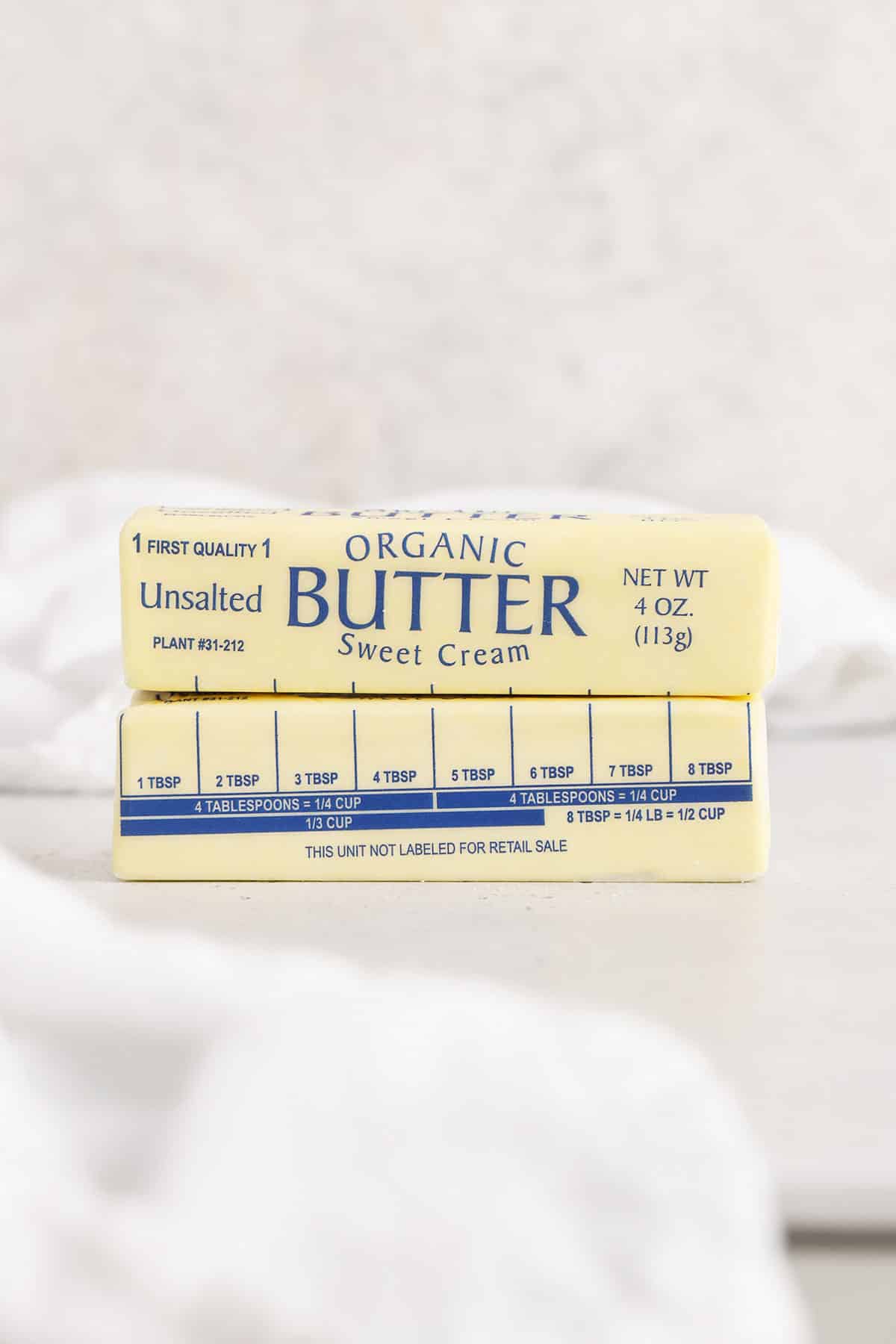
You're standing over a bowl of expensive organic flour, halfway through a delicate batch of French macarons or maybe a spicy dry rub, and the recipe calls for a weird fraction. You need to cut it in half. Suddenly, you're staring at the phrase "half of 3/4 tablespoon" and realizing your brain has completely checked out. It happens to the best of us. Math in the kitchen feels different than math in a classroom because if you mess up a classroom equation, you just lose a point; if you mess up this measurement, your cake doesn't rise or your dinner tastes like a salt lick.
Let's get the quick answer out of the way before we dive into why this matters and how to actually execute it without a degree in applied mathematics. Half of 3/4 tablespoon is exactly 1 1/8 teaspoons. That sounds simple. It isn't. Most of us don't own an "eighth" teaspoon, and we certainly don't have a "one-and-an-eighth" scoop just lying around in the drawer next to the pizza cutter.
The Brutal Math of Half of 3/4 Tablespoon
When you're trying to figure out half of 3/4 tablespoon, you're basically dealing with nested fractions. In a standard US kitchen, the hierarchy of volume is fixed. One tablespoon is equal to three teaspoons. This is the foundational law of American baking. If you take that 3/4 tablespoon and try to divide it while it's still in "tablespoon form," you get 3/8 of a tablespoon.
Does anyone have a 3/8 tablespoon? No. That would be ridiculous.
Instead, you have to convert to the smaller unit. Since one tablespoon is three teaspoons, 3/4 of a tablespoon is actually 2.25 teaspoons (or 2 1/4 teaspoons). Now, divide that 2.25 in half. You get 1.125 teaspoons. In the world of kitchen measurements, 0.125 is the decimal equivalent of 1/8.
So, your target is 1 teaspoon plus a tiny 1/8 teaspoon.
If you are a serious baker, someone like Rose Levy Beranbaum—author of The Baking Bible—would tell you that these tiny shifts matter. A 1/8 teaspoon of baking soda can be the difference between a cookie that browns perfectly and one that tastes like metallic soap. For spices like cayenne or cloves, doubling or halving incorrectly can ruin the entire flavor profile of a dish.
Why We End Up in This Mess
Most people run into this problem when they're trying to scale down a recipe. Maybe you're cooking for two instead of four. Or maybe you're trying to use up the last bit of heavy cream.
The "half of 3/4 tablespoon" dilemma usually pops up in recipes for:
- Homemade salad dressings (where the acid-to-oil ratio is sensitive).
- Small-batch cookies.
- Spice blends for single-serving proteins.
- High-potency ingredients like yeast or baking powder.
Honest truth? Most home cooks just "eyeball" it. They take a teaspoon, fill it up, and then add a "pinch." But a pinch isn't a measurement. Well, technically, in some old-school culinary circles, a "pinch" is defined as 1/16 of a teaspoon, while a "dash" is 1/8 of a teaspoon. If you want to be precise, half of 3/4 tablespoon is a teaspoon and a dash.
How to Measure 1 1/8 Teaspoons Without the Right Tools
So, you don't have an 1/8 teaspoon. Join the club. Most standard sets go 1/4, 1/2, 1 teaspoon, and then jump to the tablespoon. To get half of 3/4 tablespoon accurately, you have to get creative.
The "Half of a Quarter" Method
Grab your 1/4 teaspoon. Fill it up. Now, carefully dump out (or level off) half of it. What’s left in the spoon is your 1/8 teaspoon. Add that to a full 1 teaspoon, and you've successfully measured half of 3/4 tablespoon. It's not laboratory-perfect, but it's close enough for 95% of recipes.
The Liquid Displacement Trick
If you're working with liquids—say, vanilla extract or soy sauce—surface tension is your enemy. It’s hard to "half" a 1/4 teaspoon of liquid without it spilling. In this case, it’s often easier to measure out 2 1/4 teaspoons into a small ramekin, stir it up, and then remove half of the total volume using a syringe or a smaller measuring tool.
The Metric Pivot
If you want to be genuinely precise, stop using spoons. Switch to milliliters.
- One tablespoon is roughly 14.79 ml (we usually call it 15 ml).
- 3/4 of a tablespoon is 11.1 ml.
- Half of that is 5.55 ml.
Most liquid measuring cups or medicine droppers have milliliter markings. Aiming for 5.5 ml is way easier than squinting at a 1/4 teaspoon trying to decide if you’ve removed exactly half of the powder.
When Does This Precision Actually Matter?
Look, if you’re making a beef stew and you need half of 3/4 tablespoon of dried oregano, just wing it. It doesn't matter. Truly. Cooking is an art; baking is a science.
In baking, the chemistry depends on specific ratios. If you are working with leavening agents—baking powder, baking soda, or cream of tartar—you need to be exact. These ingredients react with acids and heat to produce carbon dioxide. Too much, and your cake rises too fast and then collapses. Too little, and it stays a dense brick.
Same goes for salt. Salt isn't just for flavor; it controls yeast growth and strengthens gluten. When a recipe asks for a specific amount, and you’re halving it, getting that 1 1/8 teaspoon (half of 3/4 tablespoon) right is the difference between bread that poofs and bread that stays flat.
Dealing With Scarcity: The 1/8 Teaspoon Problem
If you find yourself halving recipes often, just buy a set of "odd" measuring spoons. You can find sets that include 1/8 tsp, 2/3 tsp, and even 1 1/2 tablespoons. They seem like a gimmick until you're trying to figure out half of 3/4 tablespoon at 7:00 PM on a Tuesday while your kids are screaming.
King Arthur Baking and other high-end kitchen sites sell these "mini" sets. They usually label 1/8 teaspoon as a "dash." Having one takes the guesswork out of the math.
Real-World Conversion Table for Half-Measurements
Sometimes it helps to see the whole landscape. If you're halving a recipe, you aren't just looking for half of 3/4 tablespoon. You're probably looking for a bunch of other weird numbers too.
- Original: 1 tablespoon -> Half: 1 1/2 teaspoons
- Original: 3/4 tablespoon -> Half: 1 1/8 teaspoons (or 1 tsp + 1 dash)
- Original: 1/2 tablespoon -> Half: 3/4 teaspoon
- Original: 1/4 tablespoon -> Half: 3/8 teaspoon (this is roughly 1/4 tsp + 1/8 tsp)
It gets messy fast. This is why many professional kitchens have moved entirely to weight-based measurements.
The Case for the Kitchen Scale
If you want to never worry about "half of 3/4 tablespoon" again, get a digital scale. Seriously.
When you measure by volume (spoons), you’re dealing with air pockets. Depending on how hard you pack the flour or how "fluffy" your salt is, a tablespoon can weigh wildly different amounts. But 11 grams of sugar is always 11 grams of sugar.
If a recipe says 3/4 tablespoon of sugar is 9 grams, and you need half? You just weigh out 4.5 grams. It’s faster, cleaner, and you don’t have to wash five different spoons afterward. Brands like Oxo or MyWeigh make scales that are sensitive enough to pick up half-gram increments. It's a game changer for anyone who likes to scale recipes up or down.
Common Mistakes to Avoid
Don't confuse a dessert spoon with a tablespoon. In some older British recipes, a "dessertspoon" is actually 2 teaspoons, which is smaller than a US tablespoon (3 teaspoons). If you’re halving 3/4 of a British dessertspoon, your math is going to be completely different.
Also, watch out for "heaping" vs. "level" spoons. Unless a recipe specifically says "heaping," always use the back of a knife to level off the top of your measuring spoon. When you're dealing with tiny amounts like 1 1/8 teaspoons, a little extra mound on top can represent a 20% error in the total volume.
Actionable Steps for Your Kitchen
Next time you hit this snag, don't panic. Follow this checklist to get it right:
- Switch to teaspoons immediately. Forget the tablespoon exists. 3/4 tablespoon is 2 1/4 teaspoons.
- Divide the whole numbers first. Half of 2 teaspoons is 1 teaspoon.
- Tackle the fraction. Half of 1/4 teaspoon is 1/8 teaspoon.
- Combine them. 1 teaspoon + 1/8 teaspoon.
- No 1/8 spoon? Use a 1/4 teaspoon and only fill it halfway, or use two "pinches" using your thumb, index, and middle finger.
- Write it down. If you’re halving a whole recipe, grab a pen and write the new numbers next to the old ones on the page. Don't try to do the math in your head for every single ingredient while you're actually cooking. You will miss one, and that’s how you end up with cookies that have the full amount of salt but half the sugar.
Precision in the kitchen isn't about being a perfectionist; it's about consistency. Once you know that half of 3/4 tablespoon is just 1 1/8 teaspoons, you can stop guessing and start cooking with confidence. It’s one of those tiny pieces of kitchen trivia that makes everything else run just a little bit smoother.
Grab a permanent marker and write "3/4 Tbsp = 2 1/4 tsp" on the inside of your cabinet door. You'll thank yourself later.