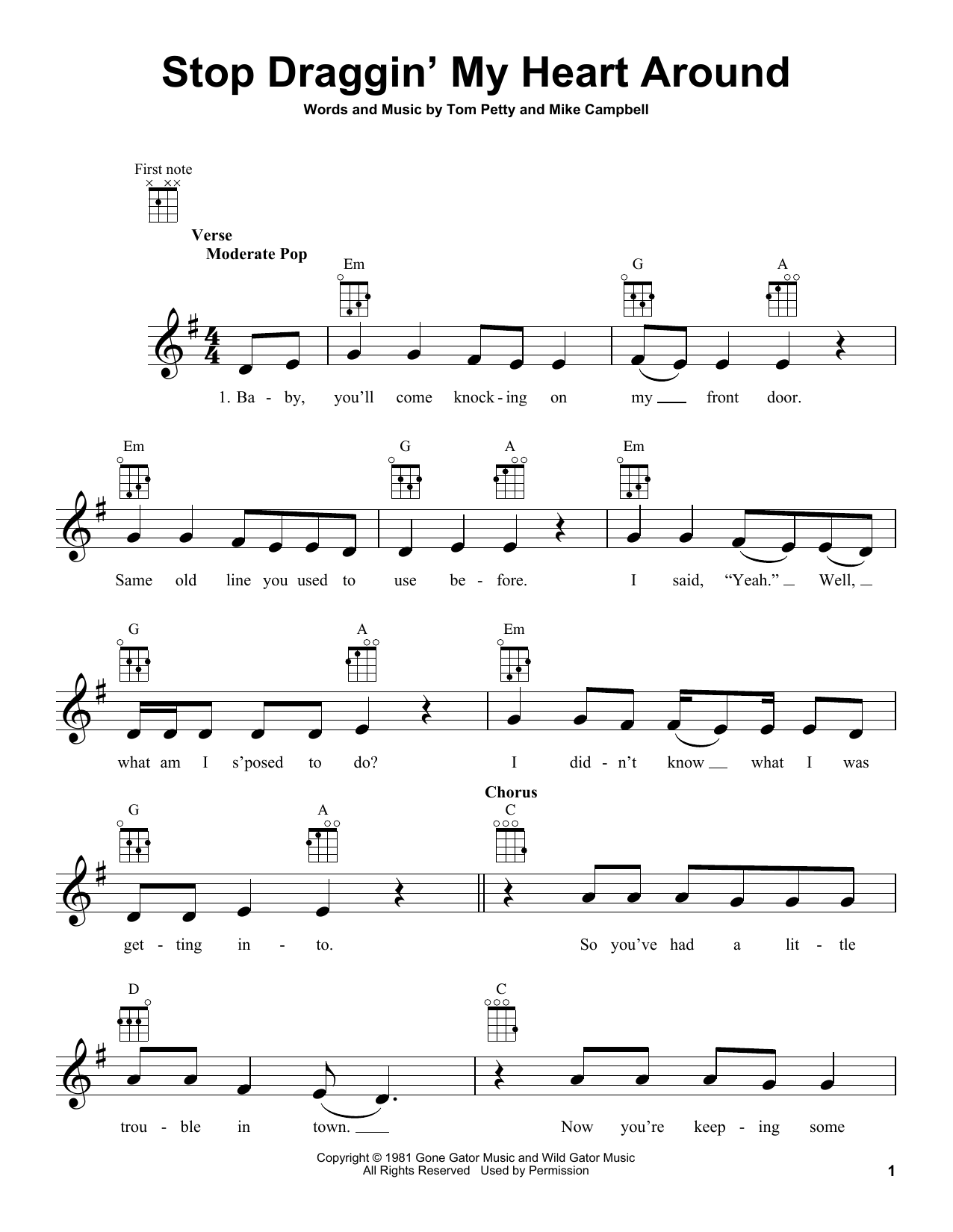
It wasn't supposed to be hers. Honestly, if Jimmy Iovine hadn't been so stubborn, one of the most iconic duets in rock history might have just been another track on a Tom Petty and the Heartbreakers record. But music history is messy. It’s full of "what-ifs" and happy accidents. Stop Draggin' My Heart Around is the ultimate example of a song finding its rightful home, even if the original owner wasn't exactly thrilled to give it up at first.
The heist of a Heartbreakers hit
You’ve got to picture the scene in 1981. Stevie Nicks was already a superstar with Fleetwood Mac, but she was terrified about going solo. She wanted that "Tom Petty sound." She basically spent months trailing the Heartbreakers like a fan, hoping some of that gritty, Rickenbacker-drenched cool would rub off on her debut album, Bella Donna.
Petty and the Heartbreakers had already recorded "Stop Draggin' My Heart Around" for their own album, Hard Promises. It was done. It was polished. Then Jimmy Iovine—who was producing both artists at the time—had a wild idea. He realized Nicks needed a lead single that would bridge the gap between her mystical "White Witch" persona and the rock-and-roll mainstream.
Iovine convinced Petty to give the song to Nicks.
It wasn't a "gift" in the traditional sense. It was more like a strategic business move that felt like a betrayal to some members of the Heartbreakers. Mike Campbell, the man who co-wrote the music with Petty, has mentioned in interviews that the band had a bit of a hard time seeing their hard work handed over to someone else. But the second Nicks laid down her vocals, everyone knew. The chemistry was undeniable.
That unmistakable Mike Campbell riff
Let’s talk about the sound.
The song starts with that muddy, bluesy guitar lick. It’s heavy. It’s got this swagger that feels like a humid night in a Florida dive bar. Mike Campbell didn't write it to be a pop hit; he wrote it to be a Heartbreakers anthem. When you listen to the track, you aren't hearing a studio band or session musicians hired to back Stevie Nicks. You are hearing the actual Heartbreakers at the peak of their powers.
Benmont Tench’s organ work provides that swirling, atmospheric bed that allows the vocals to breathe. Stan Lynch’s drumming is minimalist but punchy. It’s a masterclass in restraint. Most pop songs of the early 80s were starting to get shiny and synth-heavy. This was the opposite. It was leather, denim, and grit.
Why the vocals shouldn't work (but do)
Stevie Nicks has a vibrato that can cut through glass. Tom Petty had a nasal, Dylanesque drawl that felt like it was dragged through a gravel pit. On paper? That sounds like a disaster.
But listen to the chorus.
When they hit that line—"Stop draggin' my, stop draggin' my, stop draggin' my heart around"—their voices don't just layer; they fight. There’s a tension there. It sounds like a real conversation between two people who are absolutely exhausted by each other's drama. It’s not a love song. It’s a "get out of my face" song.
Nicks brings the vulnerability. Petty brings the "I've heard this all before" attitude. That contrast is why the song exploded. It reached number three on the Billboard Hot 100 and stayed there for six weeks. For many fans, it was the moment Stevie Nicks proved she could stand entirely on her own, even while leaning on the best band in the world.
The "Secret Sixth Heartbreaker"
There’s a reason Stevie Nicks and Tom Petty stayed close until his passing in 2017. She famously asked to join the Heartbreakers, and Petty, in his typical blunt fashion, told her there were no girls in the band. He told her she was too big for them anyway.
But "Stop Draggin' My Heart Around" created a permanent link.
The music video—one of the first to really dominate the early days of MTV—is incredibly simple. It’s just the band in the studio. No costumes. No special effects. Just Stevie in her platform boots and Tom in his vest, sharing a microphone. It felt authentic. In an era of burgeoning over-the-production, seeing two icons just playing was revolutionary.
A song of its time, yet timeless
A lot of 1981 music sounds dated now. The drums are too gated, the synths are too "toy-like." But this track? It could be released tomorrow by a Nashville indie-rock band and it would still work.
The lyrics are simple.
- "You’ll never be who you’re proud of."
- "People look at you and say what a lucky girl she is."
- "But I know you're just a part of the herd."
It’s biting. It’s cynical. It captures that specific Petty lyrical DNA where he calls you out on your nonsense while still sounding like he’s on your side.
What most people get wrong about the recording
There's a common misconception that this was a collaborative songwriting effort. It wasn't.
Tom Petty and Mike Campbell wrote it. Period. Nicks didn't change a word. She didn't have to. She stepped into a world Petty had already built and made herself the protagonist. It’s a testament to her talent as an interpreter. She took a song written by a man, for a man’s voice, and turned it into a feminist anthem of independence.
Interestingly, Petty actually "erased" his original lead vocal to make room for Stevie. The version we hear today is actually the original Heartbreakers backing track with Stevie’s lead vocal and Tom moved to a harmony/co-lead role.
The legacy of the 12-string sound
If you’re a guitar nerd, you know this song is a goldmine. The use of the Rickenbacker 12-string guitar is subtle but it’s there, adding that jangle that defined the 60s and was resurrected by Petty in the 80s.
It influenced everyone. From the Black Crowes to modern artists like Haim or Courtney Barnett, that specific blend of "American Gothic" and "Top 40 Pop" started right here. Without this song, we might not have the Stevie Nicks we know today. It gave her the "rock" credentials she needed to move away from the folk-rock bubble of Fleetwood Mac.
How to listen like an expert
Next time this comes on the radio—and it will, because classic rock stations play it every 45 minutes—don't just listen to the chorus.
- Focus on the Bass: Duck Dunn didn't play on this, but Donald "Duck" Dunn’s influence on the Heartbreakers' rhythm section is huge. The bass line is incredibly melodic.
- The Silence: Notice the gaps. The Heartbreakers were masters of not playing. There are moments where the instruments drop out just enough to let the tension build.
- The Fade Out: The way Stevie and Tom ad-lib at the end feels unscripted. It feels like they were actually having fun in the studio, which, considering the high-stress environment of 80s recording sessions, was a rarity.
Actionable Insights for Music Fans and Creators
If you’re a songwriter or a producer, there are three massive takeaways from the history of "Stop Draggin' My Heart Around" that you can apply to your own work:
- Kill Your Darlings: Tom Petty gave away a hit song because he realized it served a better purpose elsewhere. Sometimes the song you wrote for yourself actually belongs to someone else’s voice. Don't hold onto a track so tightly that you stifle its potential.
- Contrast is King: If you’re doing a duet, don't pick two singers who sound the same. The magic happens in the friction between Nicks’ raspy highs and Petty’s grounded, dry delivery.
- Vibe Over Perfection: The recording of this song is "loose." It’s not perfectly quantized. It has a swing to it. In a world of AI-generated music and perfect Auto-Tune, the "human" element of the Heartbreakers' performance is what makes it stand out 40+ years later.
If you want to dive deeper into this era, go back and listen to the rest of the Bella Donna album. You’ll hear "Insider," another Petty-Nicks collaboration that is much softer and more melancholic. It provides the perfect bookend to the aggressive energy of "Stop Draggin' My Heart Around."
The song remains a masterclass in collaboration. It wasn't a corporate "feature" meant to move units; it was a genuine musical exchange between artists who respected each other enough to share the spotlight. Petty might have lost a hit for his own record, but he gained a lifelong friend and a place in the history books for one of the greatest rock duets ever captured on tape.