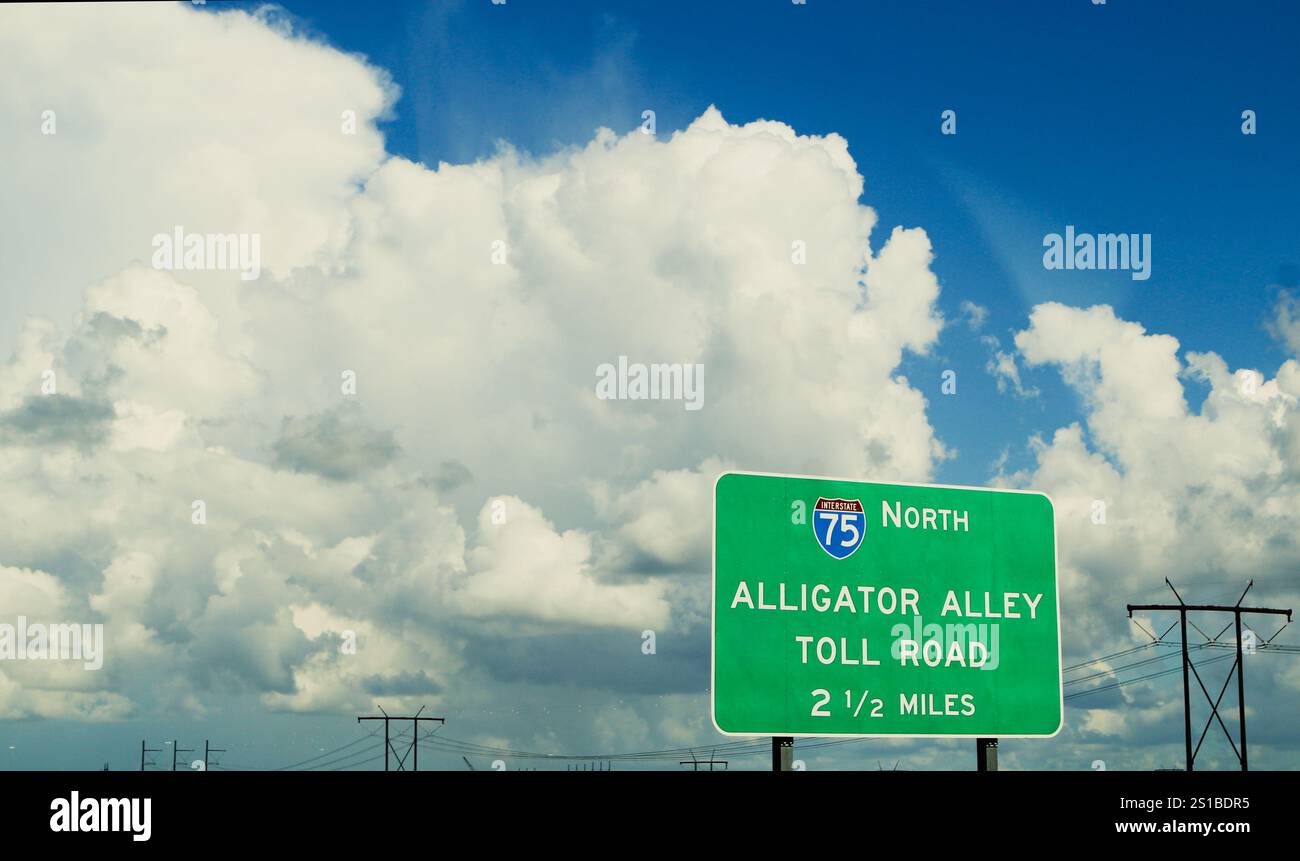
You're cruising down the asphalt, the Florida sun hitting your dashboard, and suddenly you see a sign for a toll plaza. Wait. Is I-75 even a toll road?
Actually, the answer isn’t a simple yes or no. It’s more of a "mostly no, but occasionally yes." If you're driving from the Georgia border all the way down through Tampa and Sarasota, you won’t pay a dime in tolls on the main lanes. But once you hit certain spots in South Florida, the rules of the road change fast.
Honestly, it catches people off guard every year. You might be used to the I-75 that runs through Tennessee or Georgia, which is totally free. Florida likes to do things differently.
The Alligator Alley Exception
The most famous—and expensive—part of I-75 where you’ll definitely pay is a 78-mile stretch known as Alligator Alley.
This section connects Naples on the Gulf Coast to Weston/Fort Lauderdale on the Atlantic side. It cuts straight through the Everglades. Because it’s a remote stretch that requires constant maintenance for wildlife fences and environmental protection, the state charges a fee to use it.
As of 2026, the toll for a standard two-axle car on Alligator Alley is $3.75 if you're paying cash or using Toll-By-Plate. If you have a SunPass, you get a small break, usually paying around $3.18.
There are two main toll plazas:
- The East Toll Plaza (near Mile Marker 25 in Broward County)
- The West Toll Plaza (near Mile Marker 100 in Collier County)
You only pay once per trip across the swamp. If you enter from the Naples side and head east, you hit the plaza early and then it’s clear sailing for the next 70-ish miles.
Those Sneaky Express Lanes
Outside of the Everglades, I-75 is mostly free, but there is a catch: Managed Lanes.
In the Miami and Fort Lauderdale areas (specifically between NW 138th Street in Miami-Dade and I-595 in Broward), there are Express Lanes. These are physically separated from the general-purpose lanes.
The price for these lanes isn't fixed. It’s "dynamic," which is just a fancy way of saying it gets more expensive when traffic is heavy. I’ve seen it cost a couple of bucks, and I’ve seen it spike much higher during a Friday afternoon rush.
Here is the kicker: You cannot pay cash in the Express Lanes. Period. If you enter them without a transponder like SunPass or E-ZPass, you’ll get a bill in the mail with an extra administrative fee tacked on. It’s usually about $2.50 just for the privilege of receiving the invoice.
How to Pay (and Avoid Getting Fined)
Florida has moved away from the old-school "toss a quarter in the bucket" style of tolling. Most of the state is now All-Electronic Tolling (AET).
If you're visiting from out of state, you have a few options:
- SunPass: This is the local favorite. You buy a sticker for about $5, stick it on your windshield, and load it with money. It works on every toll road in Florida and even some other states like Georgia and North Carolina.
- E-ZPass: Great news for Northerners—Florida finally started accepting E-ZPass a couple of years ago. If you have a tag from New York, Ohio, or Maryland, it’ll work on I-75.
- Toll-By-Plate: If you don’t have a tag, the cameras just snap a photo of your license plate. You’ll get a bill at the address where the car is registered. It’s the easiest way, but also the most expensive because of those admin fees.
- Rental Cars: Be careful here. Companies like Hertz or Enterprise often charge a "convenience fee" of $5 or more per day just to use their toll program. Sometimes it's cheaper to bring your own portable SunPass or E-ZPass.
Is there a way to avoid the tolls entirely?
If you absolutely hate paying tolls, you can avoid them, but it’ll cost you time.
For Alligator Alley, the main alternative is U.S. 41, also known as the Tamiami Trail. It’s a two-lane road that runs south of I-75. It’s beautiful and takes you through the heart of the Big Cypress National Preserve, but it’s much slower. You’ll be stuck behind slow-moving RVs and the occasional tractor, and the speed limit is significantly lower.
In the Miami area, you can just stay in the general lanes of I-75. They are totally free. You’ll just have to deal with the legendary South Florida traffic, which might make you wish you’d paid the $3 for the Express Lane.
Quick Facts for Your Trip
- Total Length of I-75 in FL: About 470 miles.
- Toll-Free Portions: From the Georgia border down to the Alligator Alley entrance in Naples, and the general lanes in the Miami area.
- Rest Areas: Alligator Alley has a massive rest area at Mile Marker 63. It’s the only place to get gas or food for a long stretch, so don't skip it if your tank is low.
- Emergency Help: Dial *FHP (*347) if you break down. Florida has a "Road Ranger" service that often provides free help like a gallon of gas or a tire change to keep traffic moving.
Basically, if you stay north of Naples, you don't need to worry about I-75 being a toll road. If you're headed to Miami or Fort Lauderdale, keep your SunPass active or some extra cash in your pocket for the Alley.
Next Steps for Your Drive:
Before you hit the road, check your SunPass or E-ZPass balance to ensure it has at least $10. If you are using a rental car, call the agency ahead of time to ask about their specific toll "convenience fees" so you aren't surprised by a $50 charge on your credit card a month after your vacation ends.