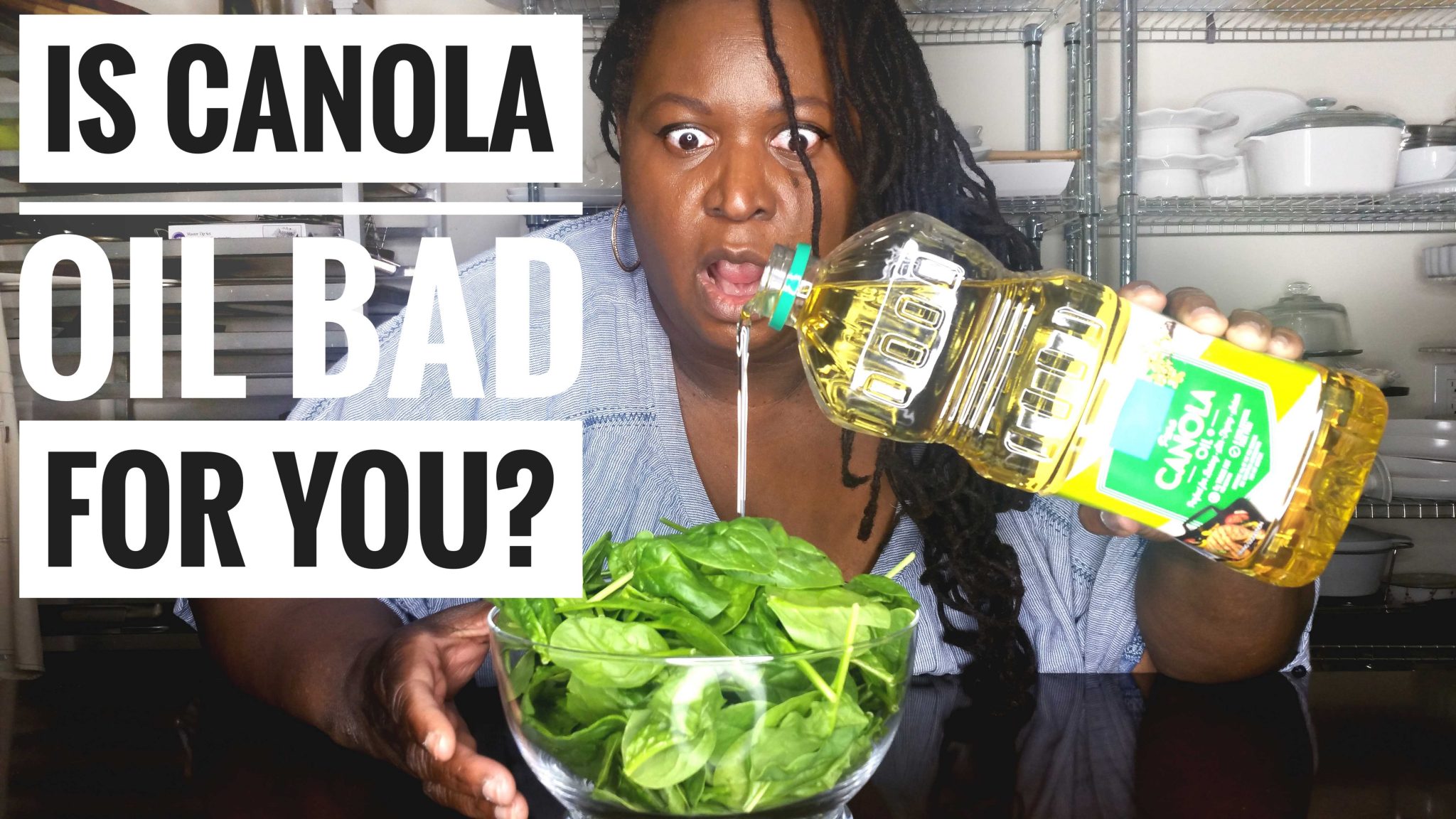
Walk into any grocery store and you’ll see it. Row after row of plastic bottles filled with a pale yellow liquid. It's cheap. It's everywhere. But if you spend five minutes on health Twitter or TikTok, you’d think canola oil was liquid cyanide. You’ve probably seen the claims: it’s "inflammatory," it’s "toxic," or it’s "clogging your arteries" with industrial chemicals.
It’s confusing.
On one side, the American Heart Association (AHA) and most registered dietitians give it a big thumbs up. On the other, the "ancestral health" community treats it like a biohazard. So, is canola oil good or bad for you, or is the reality somewhere in the messy middle? To get the answer, we have to look past the scary infographics and actually talk about the science of seeds, heat, and hexane.
Where Does This Stuff Actually Come From?
First off, there is no such thing as a "canola plant."
That’s usually the first red flag for skeptics. The name is actually a marketing term—short for Canadian oil, low acid. It was developed in the 1970s by researchers at the University of Manitoba. They used traditional cross-breeding (not weird laboratory gene-splicing, though most modern canola is now GMO for pesticide resistance) to transform the rapeseed plant.
Natural rapeseed oil is high in erucic acid. In large amounts, erucic acid is linked to heart damage in lab animals. The Canadian scientists bred a version that had less than 2% erucic acid, making it safe for humans to eat.
The process of getting oil out of those tiny seeds isn't exactly "natural" in the way squeezing an olive is. It involves high heat, a solvent called hexane to get every last drop of oil out, and then a refining process to remove the smell and color. Critics hate this. They argue the heat and chemicals "denature" the oil before it even hits your pan.
The Case for Canola: Why the Pros Love It
If you ask a cardiologist why they think canola oil is good for you, they’ll point straight to the fatty acid profile.
It’s impressively low in saturated fat—about 7%. Compare that to butter (63%) or even olive oil (14%). Most of the fat in canola is monounsaturated, which is the same heart-healthy stuff found in avocados.
But the real "star" here is the Alpha-Linolenic Acid (ALA).
ALA is a plant-based omega-3 fatty acid. Most Americans are drowning in omega-6s (which can be inflammatory in excess) and starving for omega-3s. Canola has an omega-6 to omega-3 ratio of about 2:1. That’s actually fantastic compared to soybean oil (roughly 7:1) or grapeseed oil (which has almost no omega-3s).
There was a massive meta-analysis published in Nutrition Reviews that looked at trials where people swapped out saturated fats for canola oil. The result? A significant drop in LDL cholesterol (the "bad" kind) and improved insulin sensitivity. From a strictly "numbers on a blood test" perspective, canola oil looks like a winner.
The "Inflammation" Argument: Is It Valid?
This is where the debate gets heated. Literally.
The main argument against canola oil is that polyunsaturated fats (PUFAs) are unstable. Unlike saturated fats, which have "straight" molecular chains that pack tightly together, PUFAs have double bonds that make them vulnerable to oxidation.
When an oil oxidizes, it creates free radicals.
If you take a delicate oil like canola and blast it with industrial heat during processing, and then the fast-food joint down the street uses that same oil in a deep fryer for twelve hours straight, that oil is no longer "heart healthy." It’s oxidized. Eating oxidized fats triggers oxidative stress in your body, which is a fancy way of saying it causes internal wear and tear.
However, researchers like Dr. Guy Crosby from the Harvard T.H. Chan School of Public Health have pointed out that the levels of oxidation found in refined canola oil are typically very low. He argues that the health benefits of the unsaturated fats far outweigh the risks of the tiny amounts of trans fats produced during high-heat refining (usually less than 2%).
Hexane and Chemicals: Should You Worry?
Then there's the "it’s made with gasoline" argument.
Hexane is a byproduct of gasoline refining. It’s used as a solvent to extract oil from the canola solids. Does some hexane stay in the oil? Trace amounts might. But the FDA doesn't monitor it because the amount is so minuscule it’s considered "negligible."
If the idea of solvent extraction bugs you, you aren't stuck. You can buy "expeller-pressed" or "cold-pressed" canola oil. This is squeezed out mechanically without the chemicals. It costs more, but it completely removes the hexane argument from the table.
The Practical Reality: Cooking and Taste
One reason canola oil stays popular is that it’s a "workhorse."
It has a smoke point of about 400°F (204°C). That’s higher than extra virgin olive oil. It also has zero flavor. If you’re baking a cake or making a delicate vinaigrette where you don't want everything to taste like olives, canola is the default.
But honestly? If you’re just sautéing some veggies at home, you have better options.
Extra virgin olive oil (EVOO) is less processed and packed with polyphenols that actually protect the oil from heat. Even though it has a slightly lower smoke point, studies have shown EVOO is surprisingly stable because of its high antioxidant content.
So, Is Canola Oil Good or Bad for You?
The boring but true answer? It depends on what you’re comparing it to.
If you’re choosing between a donut fried in canola oil and a donut fried in partially hydrogenated soybean oil (trans fats), canola is the hero. If you’re choosing between drizzling canola oil or extra virgin olive oil on your salad, olive oil wins every single time because it’s a whole-food product with more micronutrients.
Canola oil isn't the "poison" people on the internet claim it is. It’s a highly refined, nutrient-poor but functional fat. It’s better for your heart than lard or butter in terms of cholesterol, but it lacks the "superfood" qualities of avocado or olive oils.
[Image comparing the smoke points and fat compositions of various oils]
What to Do Next
Don't panic and throw out the bottle in your cupboard. But maybe change how you use it.
- Check your "hidden" intake. Most of the canola oil we eat comes from processed snacks, salad dressings, and oat milk. If you're worried about it, start reading labels.
- Switch your primary oil. For most home cooking, stick to Extra Virgin Olive Oil or Avocado Oil. Avocado oil has an even higher smoke point than canola and is usually naturally pressed.
- If you buy canola, buy better. Look for "Organic" and "Expeller-Pressed" on the label. This ensures it’s non-GMO and wasn't processed with hexane.
- Avoid the deep fryer. The worst version of canola oil is the stuff that has been heated and reheated in a commercial fryer. Minimize fried fast food to avoid the truly oxidized stuff.
- Keep it cool. If you have canola oil at home, store it in a cool, dark place. Light and heat are the enemies of PUFAs.
Basically, canola oil is a "neutral" tool. It’s not going to kill you in a single meal, but it’s also not a health tonic. Use it sparingly for its functional properties, and fill the rest of your diet with fats that actually bring something to the table besides just calories.