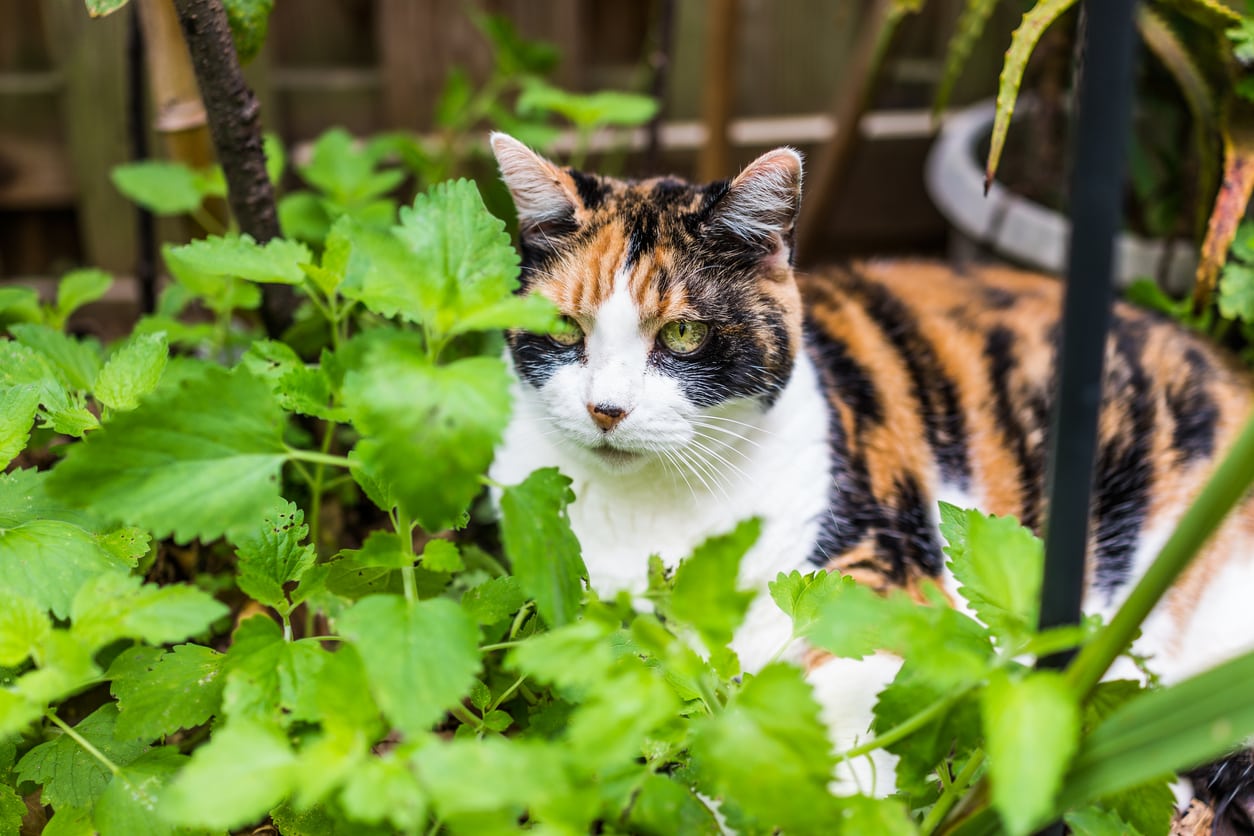
You're standing in the garden center, staring at two fuzzy green plants that look nearly identical. One says Nepeta cataria. The other says Nepeta x faassenii. You’ve heard they’re basically the same thing. You've probably even used the names interchangeably while chatting with other pet owners. But is catnip and catmint the same? Honestly, not really. While they are cousins in the Lamiaceae (mint) family, they serve completely different purposes in your life. One is essentially a feline drug that makes your cat do backflips; the other is a sophisticated landscape staple that keeps your flower beds looking sharp without turning them into a local hangout for every stray in the neighborhood.
Think of them like siblings. They share the same DNA and that classic square stem that all mints have. But while one grew up to be a wild party animal, the other went to finishing school and learned how to behave in polite society.
The Genetic Divide: Understanding the Nepeta Family
Botanically speaking, the distinction matters. Catnip specifically refers to Nepeta cataria. This is the "O.G." plant. It’s tall, it’s a bit weedy, and it contains high concentrations of nepetalactone. That’s the chemical compound that binds to a cat’s olfactory receptors and triggers that famous "zoomie" state.
Catmint, on the other hand, usually refers to the ornamental varieties like Nepeta mussinii or the popular "Walker's Low." These are hybrids. They were bred for beauty, not for potency. While they still contain some nepetalactone, the levels are significantly lower. Most cats will give a catmint plant a polite sniff and move on, whereas they’ll try to physically merge their bodies with a patch of true catnip.
Appearance and Growth Habits
If you look closely, you'll see the difference. Catnip is kind of a scruffy plant. It grows upright, reaching maybe three feet, with heart-shaped leaves that have coarse teeth. Its flowers are small, white, and frankly, a bit boring. It looks like a weed because, in many parts of North America, it effectively is one. It’ll self-seed everywhere if you aren’t careful.
Catmint is the overachiever of the garden world. It grows in tidy, mounded clumps. The foliage is often a silvery-gray, which looks stunning against the lavender-purple flowers that bloom for months. If you want curb appeal, you buy catmint. If you want to see your cat lose its mind, you grow catnip.
Why Cats Go Crazy for One and Not the Other
It all comes down to the oil. Nepetalactone mimics feline pheromones. When a cat catches a whiff of Nepeta cataria, it sends a signal to the amygdala and hypothalamus. This triggers a semi-hallucinogenic response. They rub. They roll. They drool. Some cats get aggressive; others just stare at the ceiling for twenty minutes.
Interestingly, about 30% of cats don't react to catnip at all. It’s a genetic trait. If your cat is a "non-responder," they won't care about catnip or catmint. But for the 70% that do, the concentration in catnip is like a double espresso, while the catmint is a weak decaf.
Is Catmint Safe for Cats?
Yes. It’s totally safe. If your cat decides to munch on your ornamental Nepeta x faassenii, they might get a mild buzz or just a settled stomach. The leaves are edible and non-toxic. In fact, some herbalists use catmint (the ornamental kind) to make teas for humans because it’s much milder and has a pleasant, minty-earthy flavor compared to the somewhat skunky smell of true catnip.
Gardening 101: Which One Should You Plant?
Choosing between them depends on your goal. Are you landscaping or "cat-scaping"?
If you plant true catnip (Nepeta cataria) in your main garden bed, be prepared for chaos. Cats will find it. They will lay on it. They will flatten it until it’s a brown, pathetic pancake of stems. Also, because it’s a prolific self-seeder, you’ll find little catnip babies popping up in your rose bushes and driveway cracks for years to come.
Catmint is the "set it and forget it" choice. It’s drought-tolerant. It repels aphids and squash bugs. It attracts bees and butterflies like crazy. Most importantly, because it’s a hybrid, it’s often sterile, meaning it won't take over your entire yard. Varieties like "Junior Walker" or "Six Hills Giant" stay exactly where you put them and bloom from late spring until the first frost.
The Maintenance Factor
Catmint needs a "haircut" after its first flush of flowers. If you shear it back by half in mid-summer, it’ll reward you with a second round of purple spikes. Catnip doesn't really care. You can chop it, ignore it, or run it over with a mower, and it’ll probably still come back. It’s a survivor.
Culinary and Medicinal Uses You Might Not Know
Believe it or not, people have been using both for centuries. In traditional folk medicine, catnip tea was used as a sedative or to treat digestive issues. It’s got a very "green" taste. Catmint, specifically the ornamental types, is often used in potpourri because the silver leaves hold their scent well when dried.
In the kitchen, catmint can be used similarly to mint or oregano, though it's much more subtle. You won't find it in many modern recipes, but it’s a fun historical herb to play with if you’re into foraging or heirloom gardening.
Summary of Key Differences
To make it easy when you're at the nursery, remember this breakdown:
Catnip (Nepeta cataria):
- Goal: Cat entertainment.
- Flowers: Small, white/pale, not very pretty.
- Growth: Weedy, tall, spreads easily.
- Potency: High nepetalactone levels.
Catmint (Nepeta x faassenii / others):
- Goal: Beautiful landscaping.
- Flowers: Vibrant purple/blue, long-lasting.
- Growth: Neat mounds, silver-gray foliage.
- Potency: Low nepetalactone; usually ignored by cats.
Actionable Steps for Pet Owners and Gardeners
If you’re still undecided on how to handle these two plants in your own backyard, here’s a logical way to approach it. Don't feel like you have to choose just one; they can coexist if you're smart about it.
First, check your cat’s genetics. Before you go buy a bunch of plants, buy a small tub of dried catnip. If your cat doesn't react, then the whole "is catnip and catmint the same" debate is purely academic for you—just buy the catmint for the pretty flowers and call it a day.
If your cat is a responder, plant your catnip in a heavy ceramic pot. This does two things: it keeps the roots from spreading and taking over your garden, and it makes it harder for the cat to completely demolish the plant. You can also move the pot to a high shelf if the cat is getting too "refreshed" and needs a break.
For your flower beds, stick to named catmint cultivars. Look for "Walker's Low" (which, funnily enough, isn't actually low—it gets about two feet tall) or "Purrsian Blue." These will give you that beautiful lavender look without the "cat magnet" effect.
Finally, if you want to harvest your own catnip for toys, wait until the plant is flowering. That's when the oils are most concentrated. Cut the stems, hang them upside down in a dark, dry place, and once they’re crispy, crumble the leaves into an old sock. Your cat will thank you, and your ornamental catmint plants will stay beautiful and un-squashed.