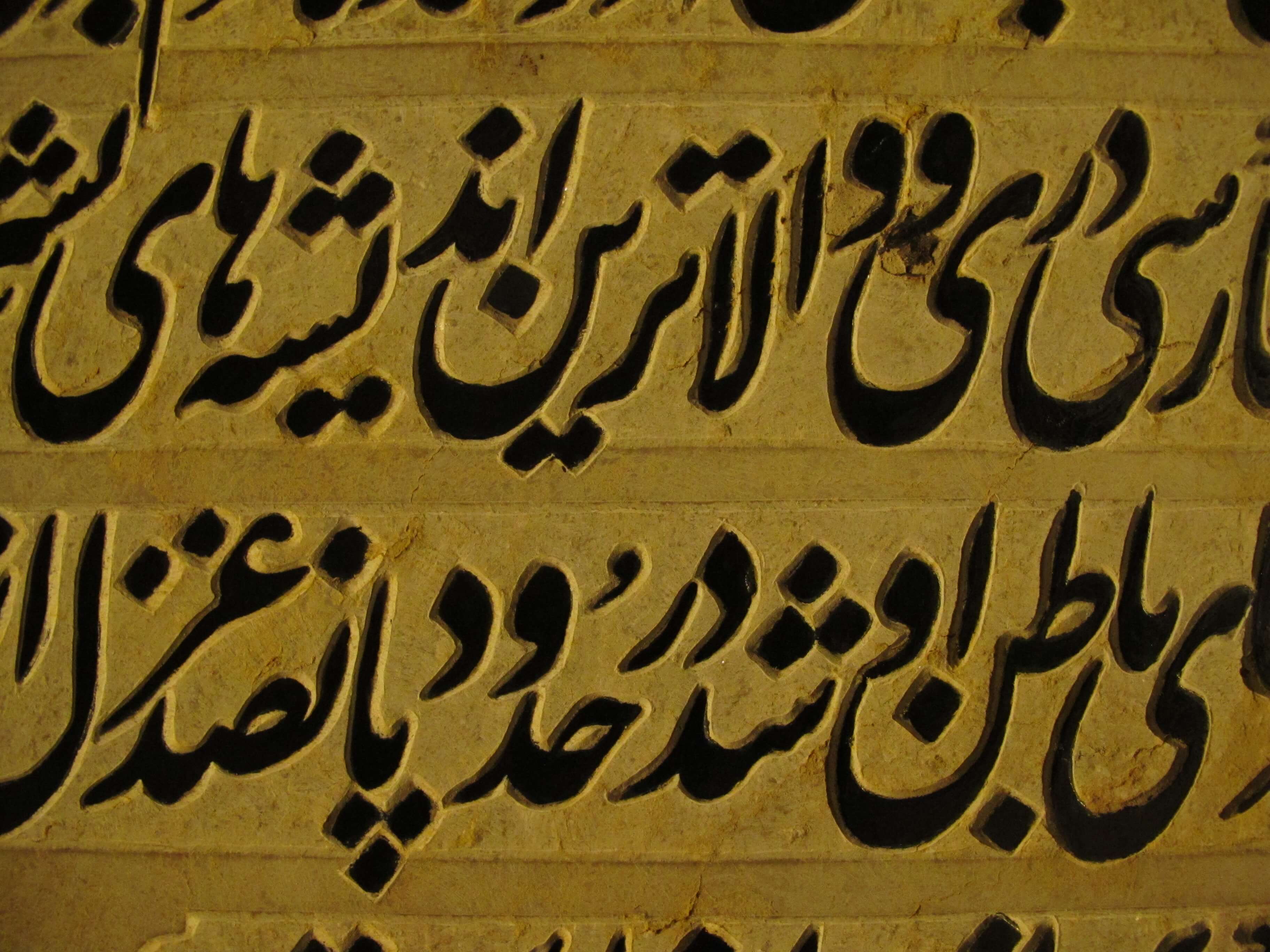
You're probably here because you've heard someone say they speak Persian, but then you saw a dropdown menu on a website that listed Farsi instead. Or maybe you're looking at a map of Iran and wondering why the language name changes depending on who you ask. Is Farsi a language in its own right, or is it just a weirdly specific way to say Persian?
It's a legitimate question.
Honestly, the answer is both simpler and way more complicated than a "yes" or "no." If you want the quick version: Farsi is the local name for the Persian language. It's like calling Spanish Español. But if we stop there, we miss the entire reason people get into heated debates about it at dinner parties or in academic journals.
The Name Game: Farsi vs. Persian
Let's get the terminology out of the way. Persian is an Indo-European language. It’s part of the same massive family tree as English, Greek, and Hindi. Within that tree, it sits in the Indo-Iranian branch. When we say "Persian" in English, we are using an exonym—a name used by outsiders. This comes from the Greek word Persis, referring to the region of Pars (modern-day Fars province in Iran).
Now, why do people ask is Farsi a language? Because "Farsi" is the endonym. It is what native speakers call the language in Iran. Interestingly, the word "Farsi" is actually an Arabized version of "Parsi." Because the Arabic alphabet doesn't have a "P" sound, after the Islamic conquest of Persia, the name shifted.
So, when you use the word Farsi, you're using the local Persian word for Persian. It’s a bit like an English speaker insisting on calling German "Deutsch" while speaking English. Some people think it's more authentic; others think it's unnecessary and confuses people who don't realize they're the same thing.
Why the Distinction Actually Matters
You might think this is just semantics, but for many, it’s about identity. In 2005, the Academy of Persian Language and Literature in Tehran actually issued a pronouncement. They argued that in English, the language should always be called Persian.
Why? Because "Persian" carries thousands of years of cultural weight. It links the modern speaker to Rumi, Hafez, and the ancient Achaemenid Empire. "Farsi," to many Western ears, sounds like a brand new language that just popped up in the 1970s. The Academy worried that by switching to "Farsi" in English, the historical and literary prestige of the language would be lost to the general public.
It’s about the "Vibe."
Think about it. If you tell someone you’re studying "Persian Poetry," they picture ancient manuscripts and intricate carpets. If you say you’re studying "Farsi Poetry," they might just look at you blankly. It’s the same stuff, but the labels change the perception.
The Three Siblings: Iran, Afghanistan, and Tajikistan
If we’re going to be technically accurate, we have to talk about the fact that Persian isn't just one monolithic block. It’s a pluricentric language. This basically means it has multiple standard versions used in different countries.
- Farsi: This is the standard in Iran. It’s heavily influenced by French loanwords (like merci for thank you) and has a very melodic, almost sing-song quality in its Tehrani dialect.
- Dari: This is the version spoken in Afghanistan. It’s often called "Afghan Persian." Linguistically, it’s actually more conservative than the Farsi spoken in Tehran, meaning it sounds a bit more like the classical Persian used centuries ago.
- Tajik: Spoken in Tajikistan and parts of Uzbekistan. Here’s the kicker: it’s written in the Cyrillic alphabet (like Russian) because of the Soviet influence.
Can they understand each other? Mostly, yeah. It’s like a guy from Glasgow, a woman from New Orleans, and a teenager from Sydney trying to talk. There will be some "Wait, what did you just call that?" moments, but they’ll get the job done.
The Grammar is Surprisingly Easy (No, Seriously)
One of the biggest misconceptions about Persian/Farsi is that it must be incredibly difficult because the script looks "exotic" to Western eyes.
Actually, Persian grammar is a dream.
There is no grammatical gender. None. No masculine or feminine nouns to memorize. In French, you have to remember if a table is a "she" or a "he." In Persian, a table is just a table. Even the word for "he" and "she" is the same: u.
There are also no cases. If you’ve ever suffered through German or Latin, you know how much of a relief that is. The verbs are remarkably regular. The real challenge isn't the grammar; it's the "Taarof."
What is Taarof?
You cannot talk about the Persian language without talking about Taarof. It is a complex system of etiquette that dictates how people speak to each other. It’s a dance of extreme humility and hospitality.
Imagine you’re in a taxi in Tehran. You ask the driver how much you owe. He might say, "It’s nothing, please, it’s a gift."
He is lying.
He definitely wants his money.
You are expected to insist on paying. He will refuse again. You insist again. Eventually, he’ll give you the price.
Is Farsi a language of direct communication? Not really. It’s a language of poetry, layers, and social maneuvering. If you take words at face value in a Persian-speaking context, you’re going to have a very confusing day.
The Arabic Script Confusion
A huge reason people ask is Farsi a language distinct from Arabic is the alphabet. Persian uses the Arabic script, plus four extra letters to account for sounds that Arabic doesn't have (p, ch, g, and a zh sound).
But here is the thing: Persian is not related to Arabic. At all.
Arabic is a Semitic language, related to Hebrew and Amharic. Persian is Indo-European. They are as different as English and Vietnamese. They just happen to share an alphabet and a lot of loanwords, similar to how English uses the Latin alphabet and has tons of French words. If you show a Persian speaker a page of Arabic, they can read the letters out loud, but they won't necessarily know what they’re saying unless they've studied it.
Why You Should Care in 2026
We live in a world where the Middle East and Central Asia are constantly in the news, but the cultural nuances are often flattened. Understanding that Farsi is part of a massive, ancient linguistic tradition helps break down those "us vs. them" barriers.
Plus, the Persian-speaking world is huge. We’re talking over 110 million people. It’s a major language of the internet, art, and geopolitics.
If you're thinking about learning it, do it. The script takes a few weeks to get down, but once you do, a world of incredible cinema (think Abbas Kiarostami) and literature opens up. You start to see how the language has influenced everything from Urdu to Turkish.
Real-World Usage Today
If you’re traveling or doing business, knowing when to use which term is actually a nice bit of cultural intelligence.
- In a formal English essay or a history book: Use Persian.
- When talking to an Iranian friend about their native tongue: Farsi is totally fine and very common.
- When referring to the language of Rumi: Persian is better.
- When looking for a translator for a legal document for someone from Kabul: Specify Dari.
Common Myths to Stop Believing
I hear these all the time, and they’re just wrong.
- Myth: Farsi is a dialect of Arabic. (I've covered this, but it bears repeating. Totally different families.)
- Myth: Farsi is a dead language. (Hardly. It’s thriving in tech, music, and daily life across three main countries and a massive global diaspora.)
- Myth: You can't learn it because the script is too hard. (It’s phonetic. Once you learn the 32 letters, you can read anything. No weird English spelling "cough/bough/through" nonsense here.)
Where to Go From Here
If you want to actually experience the language rather than just read about it, your next steps should be practical. Don't just buy a textbook; the formal language is very different from what people actually say on the street.
- Listen to the sound: Go to Spotify and look up "Tehrangeles" pop or traditional classical music by Mohammad-Reza Shajarian. Just get the cadence in your ears.
- Learn the alphabet first: Don't use Romanized transliterations. They are a crutch that will eventually fail you because there is no standardized way to write Persian in English letters.
- Watch a movie: "A Separation" (2011) is a masterpiece and gives you a great look at modern, urban Farsi.
- Find a language partner: Use apps like HelloTalk. There are millions of Iranians eager to practice English who will happily explain the nuances of their language to you.
Understanding that Farsi is the living, breathing, modern version of one of the world's oldest literary tongues makes the world feel a little smaller and a lot more interesting. It’s not just a "language"—it’s a bridge to a history that spans millennia.
Actionable Insight: If you are building a website or a product for a global audience, always list the language as "Persian (Farsi)" to ensure both clarity and cultural respect. This covers your SEO bases while acknowledging the native term. For the most accurate localization, ensure you distinguish between the Persian used in Iran and the Dari used in Afghanistan, as the vocabulary for modern technology differs significantly between the two.