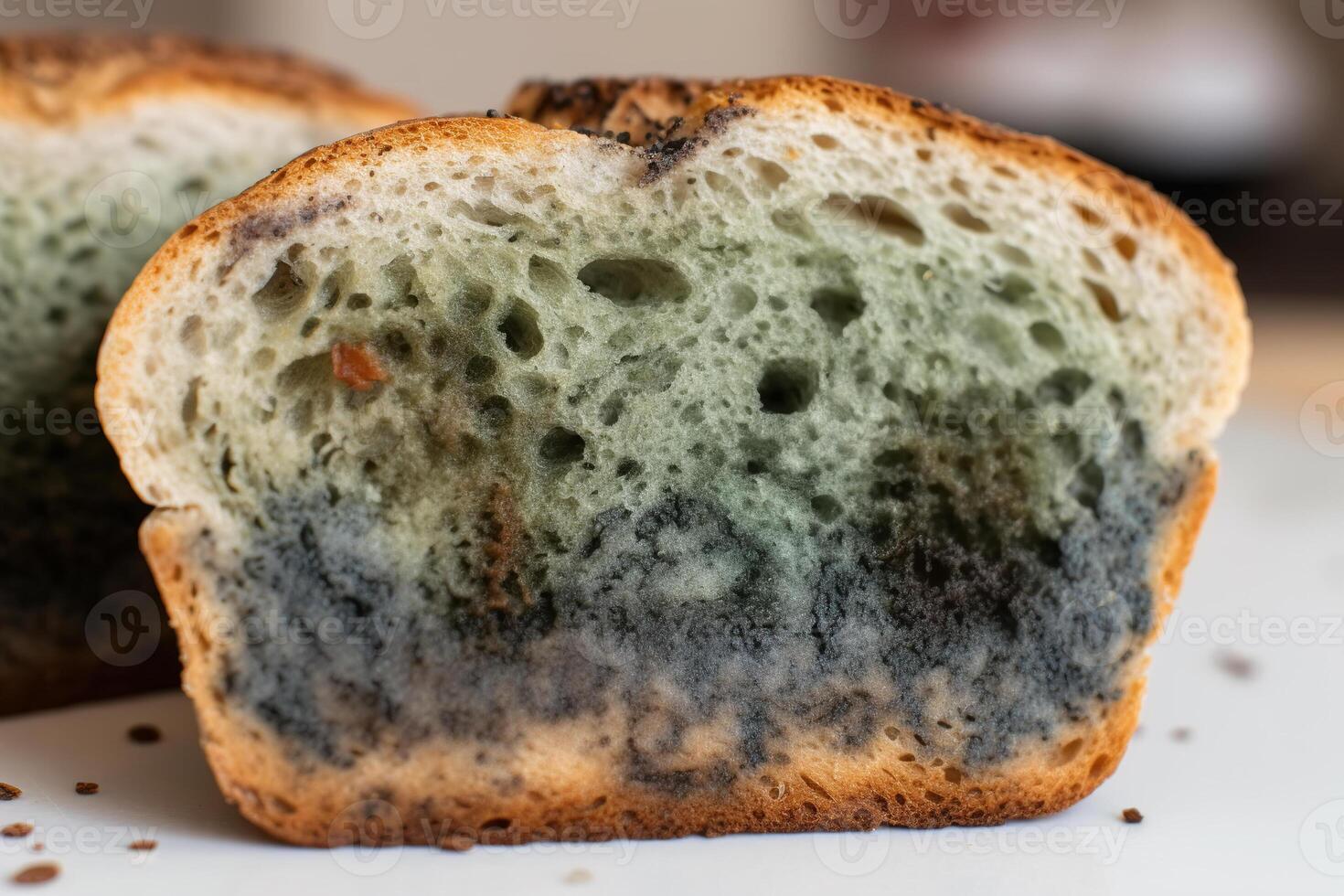
You’re standing in the kitchen, half-awake, reaching for that last slice of sourdough for a quick piece of toast. Then you see it. A tiny, fuzzy green speck right on the edge of the crust. You’re hungry. You don’t want to go to the store. So you wonder: is it okay to eat mold on bread if I just pinch that little bit off?
Honestly? No. Put the toaster down.
Most of us grew up with parents who would just carve off the "bad part" and hand the rest of the loaf back like nothing happened. It felt resourceful. It felt safe. But according to microbiologists like Dr. Marianne Gravely at the USDA, that logic is actually pretty flawed when it comes to porous foods. Bread isn't like a block of extra-sharp cheddar where the density keeps the mold on the surface. Bread is basically a sponge. It’s full of microscopic holes and air pockets that act like a highway system for fungi.
The "Iceberg" Problem: What you see isn't what you get
When you look at a blue-green patch of mold on your rye or brioche, you’re only seeing the reproductive part of the organism. Those are the spores. They’re colorful because they’re ready to fly away and colonize your kitchen. But beneath that visible fuzz lies a complex network of "roots" called hyphae.
Hyphae are thin, thread-like structures that tunnel deep into the bread's interior. Because bread is so soft and porous, these roots can spread through the entire slice—and often the entire loaf—long before you see a single speck of green or white on the surface. By the time you spot the mold, the "infestation" is already deep-seated. Cutting off the visible part is like cutting the top off a weed but leaving the roots in the garden. You didn't actually solve the problem; you just made it invisible.
The real risks: Mycotoxins and respiratory drama
So, what happens if you ignore the advice and eat it anyway? For many people, probably nothing major. You might feel a little grossed out or get a mild stomach ache. But that’s the "best-case" scenario. The real danger comes from substances called mycotoxins.
Mycotoxins are toxic compounds naturally produced by certain types of molds. Aspergillus and Penicillium are common bread-dwellers, and while some are used to make life-saving medicine, others produce toxins that can make you seriously ill. According to the World Health Organization (WHO), acute poisoning from mycotoxins can cause vomiting, abdominal pain, and even more severe issues depending on the specific strain and the amount consumed.
Then there are the respiratory issues. Mold spores are light. If you bring that moldy slice up to your face to sniff it—don't do that, by the way—you’re inhaling thousands of spores. If you have asthma or a mold allergy, this can trigger a localized allergic reaction, wheezing, or even a full-blown respiratory crisis. It’s just not worth the $4 price of a new loaf.
Different molds, different dangers
Not all mold is created equal, but in a home kitchen, you can’t tell the difference between "mostly harmless" and "dangerously toxic" with the naked eye.
- Rhizopus stolonifer: This is your classic black bread mold. It’s aggressive and looks like dark, fuzzy spots. It can cause infections in people with weakened immune systems.
- Penicillium: Often looks blue or green. While some species give us Penicillin, others produce mycotoxins that can lead to long-term health complications if ingested regularly.
- Aspergillus: Can look yellow, green, or black. This one is particularly nasty for people with lung conditions.
Because you aren't a mycologist with a portable lab, the only safe assumption is that any mold you find in your bread bin is potentially hazardous.
Why you can't just "toast it away"
A common myth is that high heat kills the mold. While it’s true that the intense heat of a toaster or oven can kill the living mold fungus, it often does absolutely nothing to the mycotoxins already left behind. Mycotoxins are heat-stable. They are chemical leftovers, not living organisms. You can’t "cook" the poison out of the bread once the mold has started its metabolic process. Think of it like a spoiled steak; you can sear the bacteria off the outside, but you can't fix the chemical rot inside.
Is the whole bag ruined?
This is the part that hurts. If you find mold on one slice of a pre-sliced loaf, the reality is that the whole bag should probably go in the trash.
Why? Because those spores are airborne. When you move the bag, you’re puffing those tiny, invisible seeds onto every other slice. Even if Slice #12 looks pristine today, it’s likely covered in microscopic spores that will bloom by tomorrow. Furthermore, the moist environment inside a plastic bread bag is the perfect incubator. If one slice is visibly moldy, the moisture levels in the bag are already high enough to support growth throughout.
Factors that speed up the rot
Bread molds because of three main things: moisture, heat, and time.
Homemade bread usually molds much faster than store-bought brands. This is because commercial bread contains preservatives like calcium propionate or sorbic acid. These additives aren't "scary chemicals"—they are salts that inhibit fungal growth so your bread lasts two weeks instead of two days. If you're a fan of local, artisanal bakery loaves with zero preservatives, you have a much shorter window to finish that bread before the environment takes it back.
The exception to the rule: When can you actually cut it off?
To be crystal clear: is it okay to eat mold on bread if you cut it off? No.
But there are foods where this practice is perfectly fine. The USDA notes that hard, dense foods can be saved. This includes:
- Hard cheeses (like Parmesan or Sharp Cheddar).
- Hard salami or dry-cured country hams.
- Dense vegetables (like bell peppers or carrots).
In these cases, the mold can't penetrate deep into the food because there isn't enough air or moisture for the hyphae to travel. For these items, you should cut at least one inch around and below the mold spot, making sure the knife doesn't touch the mold itself to avoid cross-contamination.
But bread? Bread is a softie. It doesn't have the structural integrity to keep the "roots" out.
How to keep your bread from molding in the first place
If you’re tired of throwing away half-loaves, you’ve got to change your storage game. Stop keeping your bread on top of the refrigerator. The heat from the fridge's motor creates a warm microclimate that mold absolutely loves.
The Freezer is your best friend.
If you know you won't finish a loaf in three or four days, freeze half of it immediately. Bread freezes incredibly well. You can pop a frozen slice directly into the toaster, and it tastes almost identical to fresh.
Avoid the Refrigerator.
Wait, isn't the fridge cold? Yes, but it’s a weird environment for bread. While it prevents mold, the cold temperature causes the starches in the bread to recrystallize (a process called retrogradation). This makes the bread go stale and tough much faster than if it stayed on the counter. It’s a trade-off: the fridge prevents mold but ruins the texture. The freezer prevents both.
Keep it dry.
Never reach into a bread bag with wet hands. Even a tiny drop of water can create a "bloom zone" where mold will start to grow within 48 hours.
What to do if you've already eaten it
Don't panic. If you realized halfway through a sandwich that the bottom slice had a green patch, you aren't doomed. Most healthy adults with a robust immune system and a functioning liver will handle a small amount of mold just fine. Your stomach acid is pretty good at neutralizing many biological threats.
However, keep an eye out for symptoms over the next 24 to 48 hours. If you start experiencing persistent nausea, a high fever, or shortness of breath, call a doctor. For most, the "symptoms" are mostly psychological—the "ick" factor is strong.
Immediate Action Steps
- Toss the loaf. Don't try to save "clean" slices from a bag that has visible mold. The spores are already there.
- Clean the area. If you keep your bread in a bread box or a specific drawer, wipe it down with a mild vinegar solution. This kills any lingering spores so they don't infect the next loaf you bring home.
- Check the surroundings. Mold spreads. If your bread is moldy, check nearby fruit or other grain products.
- Switch to the freezer. From now on, slice your fresh bread and freeze what you won't eat within 72 hours.
- Ignore the "scuff" test. If the bread smells "off" or "musty" but looks fine, throw it out anyway. That smell is the mold off-gassing before the visible colonies appear.