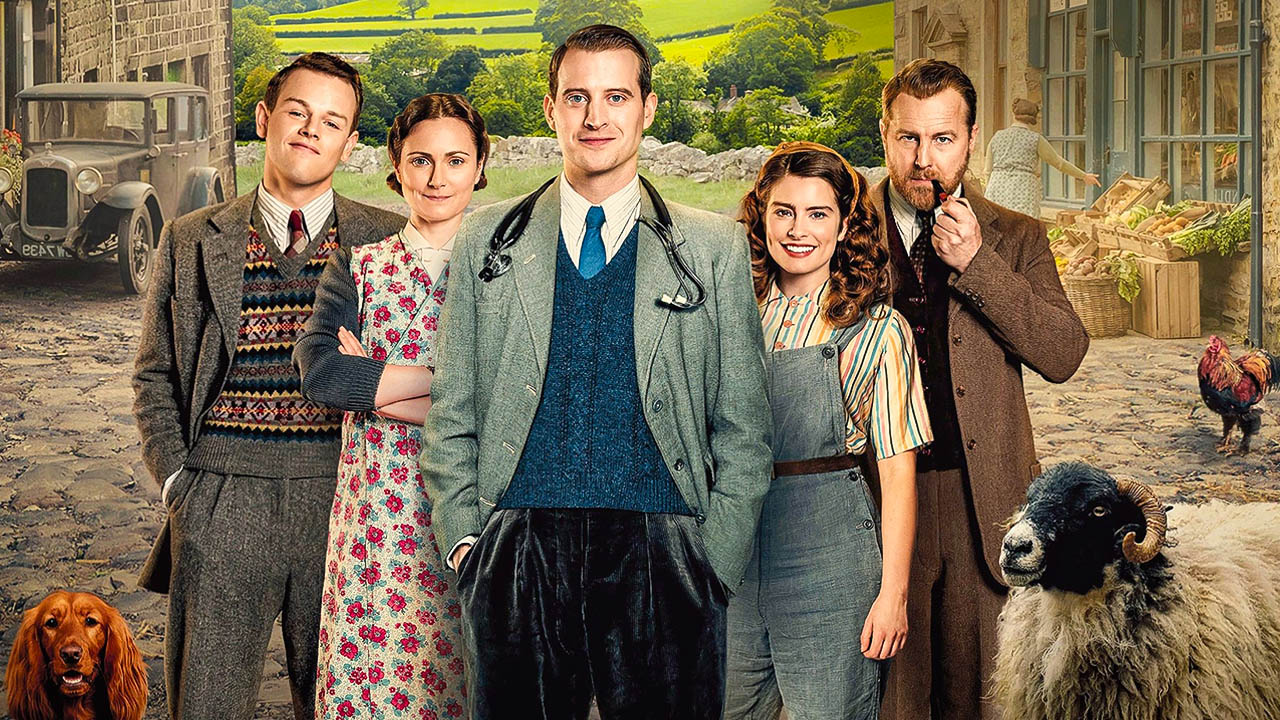
If you’ve ever walked into a bookstore and felt a strange sense of peace in the "Nature" or "Memoir" section, there is a good chance you were looking at a row of green-spined paperbacks. They feature rolling Yorkshire hills and perhaps a patient-looking Border Collie. These are the works of James Herriot, the pen name for James Alfred Wight, the most famous veterinarian to ever pick up a pen. He is the author of All Creatures Great and Small, a book that didn't just sell well—it basically defined a whole genre of "cozy" realism that we are still trying to replicate today.
Honestly, it's wild to think he didn't even start writing seriously until he was fifty. Most people have their mid-life crises and buy a sports car. Alf Wight bought a typewriter.
He lived a double life. By day, he was a hardworking vet in Thirsk, face-deep in the business end of a cow or trekking through snow to reach a remote sheep farm. By night, he was a storyteller. But here is the thing: he wasn't trying to be a literary giant. He just wanted to tell his wife about his day. The result was a series of books that feel less like "literature" and more like sitting in a pub with a very funny, very tired friend who has seen some things.
The Man Behind the Pen: Who Was Alf Wight?
James Herriot wasn't actually from Yorkshire. That surprises people. He was born in Sunderland and grew up in Glasgow, which explains the dry, self-deprecating Scottish wit that peppers his writing. He graduated from Glasgow Veterinary College in 1939, right as the world was falling apart. He landed a job with Donald Sinclair (the real-life Siegfried Farnon) in the town of Thirsk.
He didn't use his real name because, at the time, the Royal College of Veterinary Surgeons had incredibly strict rules about advertising. If a vet wrote a book under his own name, it could be seen as a cheeky way to drum up business. So, he looked at a football match on TV, saw a goalkeeper named Jim Herriot, and thought, "Yeah, that'll do."
It worked.
The author of All Creatures Great and Small became a global phenomenon while the man himself was still out there in the mud, dehorning cattle for a few shillings. He actually kept practicing long after he was a millionaire. There are stories of tourists showing up at his surgery in Thirsk, hoping to see the famous James Herriot, only to have the man himself walk past them in a dirty smock, completely unrecognized because he looked like... well, a vet.
Why the Books Are Grosser (and Better) Than You Remember
If you’ve only seen the Masterpiece or Channel 5 TV adaptations, you might think the books are all tea and crumpets and golden sunsets. They aren't. Not really.
The writing is visceral.
He describes the smell of a gangrenous udder or the bone-deep exhaustion of trying to pull a calf in a freezing barn at 3:00 AM. It’s gritty. It’s messy. He writes about death quite a lot. Sometimes the animal dies, and there is nothing you can do about it, and the farmer loses his livelihood, and everyone just has to go home and eat some cold stew. That's the reality of 1940s farming.
Yet, he balances that with the absurd. Like Tricki Woo. You remember Tricki Woo? The pampered Pekingese who suffered from "flop-bott" and sent Herriot hampers of Fortnum & Mason luxury goods? Those stories are the "kinda" ridiculous breaks that make the heavy stuff bearable.
The Evolution of the "Herriot Style"
Wight’s prose is a masterclass in "show, don't tell." He doesn't tell you the farmers are tough; he describes their gnarled, giant hands and the way they stare at a sick sheep with a mix of despair and stoicism.
- The Short-Long Rhythm: He’ll spend a page describing the Yorkshire landscape—the purple heather, the wind whistling through the dry-stone walls—and then follow it with a three-word sentence: "The cow kicked." It snaps you back to reality.
- The Self-Deprecation: Herriot is almost always the butt of the joke. He trips. He gets covered in muck. He says the wrong thing to a beautiful woman. This makes us trust him.
His style wasn't an accident. He spent years honing it. He actually wrote two or three novels about football and other topics that were roundly rejected before he hit his stride with the veterinary memoirs. It turns out the world didn't want a Scottish thriller; they wanted to hear about the time he got stuck in a drainage pipe.
The Yorkshire Impact: Then and Now
Thirsk is now a pilgrimage site. The "World of James Herriot" museum is literally his old house and surgery at 23 Kirkgate. You can see the actual dispensary where he mixed medicines that probably tasted like gasoline and peppermint.
But it’s more than tourism. The author of All Creatures Great and Small changed how we perceive the veterinary profession. Before him, vets were often seen as "the cow doctor"—a necessary, somewhat low-status technician. After Herriot, the profession gained a layer of romance and nobility. Applications to vet schools skyrocketed in the 70s and 80s. Everyone wanted to be the guy in the Barbour jacket saving a lamb in the rain.
What most people get wrong, though, is thinking he romanticized the past. If you read closely, he’s actually documenting the death of a way of life. He caught the transition from horse-drawn plows to tractors, and from "magic potions" to penicillin. He was the bridge between the old world and the new.
The Controversy You Didn't Hear About
It wasn't all sunshine. The real "Siegfried," Donald Sinclair, was reportedly quite annoyed by his portrayal. While Herriot made him look like an eccentric, brilliant, but volatile mentor, the real Donald felt it was an invasion of privacy. He once famously said, "Alfred, this book is a real test of our friendship."
Then there was the "Tristan" of it all. Brian Sinclair, Donald’s brother, loved his portrayal as the fun-loving, exam-failing prankster. He leaned into it. He spent a good portion of his later years enjoying the fame that came with being the inspiration for one of the most beloved characters in British literature.
And we should talk about the "All Creatures" title. It comes from the hymn "All Things Bright and Beautiful," written by Cecil Frances Alexander. The American publishers were the ones who decided to split the original British books (like If Only They Could Talk) and rebrand them with the hymn lines. It was a marketing stroke of genius. It gave the books a spiritual, universal quality that bypassed the "gritty vet" label.
Real-World Insights: What James Herriot Teaches Us Today
If you are a writer, a vet, or just someone trying to survive a 9-to-5, there are actual lessons here.
First, details matter. Herriot doesn't just say a room is messy; he tells you about the layer of dust on the medicine bottles and the smell of stale tobacco and old dog. He anchors his stories in the physical world.
Second, empathy is a superpower. Whether he was dealing with a wealthy socialite or a penniless laborer, he treated their grief over a pet with the same gravity. In a world that feels increasingly clinical, that kind of radical empathy is refreshing.
Third, it’s never too late. He was fifty. If he had given up at forty-nine, the world would never have known James Herriot.
How to Engage with the Legacy
If you’re looking to dive deeper into the world of the author of All Creatures Great and Small, don’t just watch the show. Read the books in the order they were released in the UK if you can find them. The American versions are great, but the British titles like Let Sleeping Vets Lie have a different, more cynical edge that is fascinating.
Visit the Yorkshire Dales, but go to the "quiet" parts. Go to Swaledale or Wensleydale. Stand on a hill when the wind is biting, and you'll realize why he wrote the way he did. It’s a beautiful, brutal landscape that demands a certain kind of toughness.
Actionable Steps for Fans and Aspiring Storytellers
- Visit the Source: Go to the World of James Herriot in Thirsk. It’s not a polished, corporate museum. It feels like a home. You can see the 1950s Austin car he used for calls.
- Read the Son’s Biography: Jim Wight (Alf’s son) wrote The Real James Herriot. It’s essential. It clears up the myths and shows the man struggled with depression and the pressures of fame. It makes him more human.
- Observe Your Own "Boring" Life: Herriot’s genius was finding the extraordinary in the mundane. Start a "Herriot Journal." Write down one weird, funny, or gross thing that happened at work today. Don't polish it. Just record the details.
- Support Local Vets: The profession is under immense pressure today, with high burnout rates. The "Herriot Dream" is harder to achieve in the era of corporate-owned practices. Be the client who brings the "Tricki Woo" hamper (or just some nice biscuits).
James Herriot didn't just write about animals. He wrote about the invisible threads that connect us to the creatures we share our lives with. He showed us that a life spent in the service of something else—whether it’s a sick sheep or a story—is a life well-lived.
The books aren't just about the past. They are about the parts of us that don't change: our need for connection, our capacity for hard work, and our ability to find a reason to laugh even when we’re covered in something we’d rather not talk about at the dinner table.
Start with All Creatures Great and Small. Then move to All Things Bright and Beautiful. By the time you get to The Lord God Made Them All, you’ll feel like you’ve lived a lifetime in those hills. And honestly, that’s the best thing a writer can ever give you.