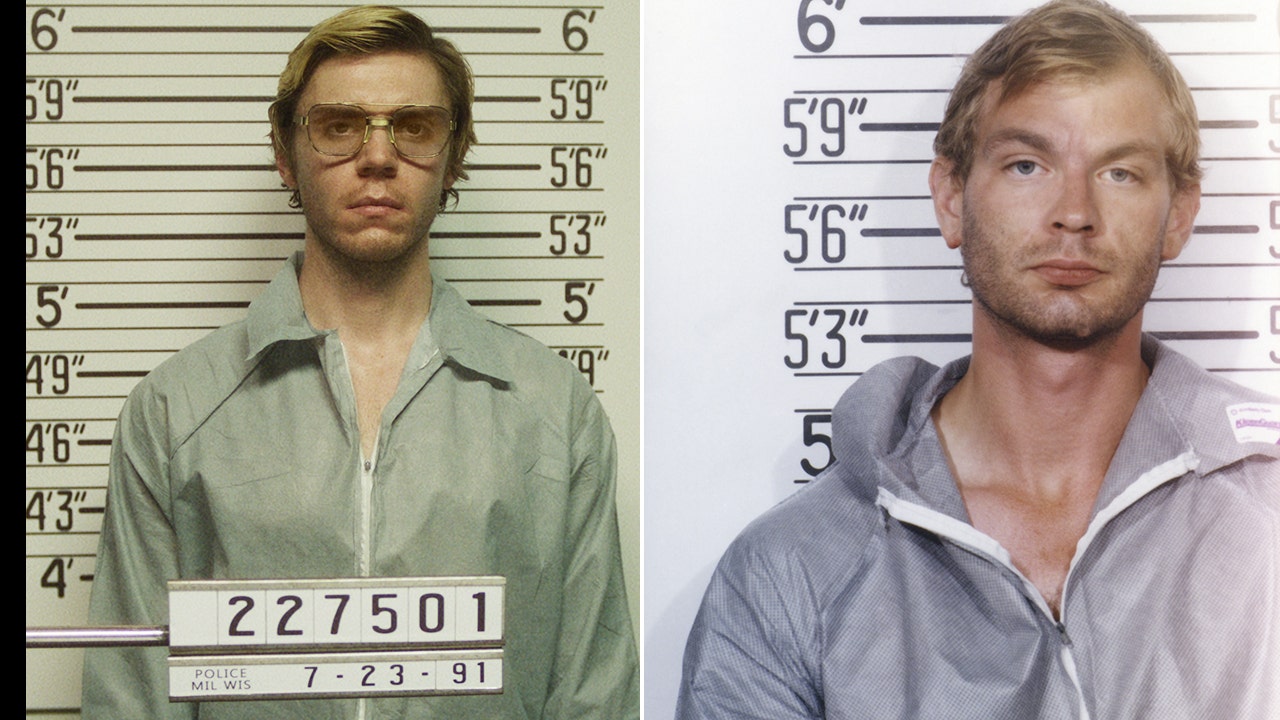
Honestly, it’s hard to talk about Jeffrey Dahmer actor Evan Peters without feeling a little bit uneasy. When Dahmer – Monster: The Jeffrey Dahmer Story dropped on Netflix back in 2022, it didn't just trend; it basically took over the internet in a way that felt kind of gross and fascinating all at once. We’ve seen serial killer biopics before. Plenty of them. But there was something about Peters’ transformation that felt different—and way more disturbing—than your run-of-the-mill true crime dramatization.
He didn't just put on the aviator glasses. He disappeared.
The grueling 10-month descent
Peters didn't just wake up, head to set, and "act" like a killer. The guy went through a process that honestly sounds like a nightmare. He spent four months just preparing before a single camera even rolled. Then came six months of shooting. That’s ten months of living inside the head of a man who committed some of the most stomach-turning crimes in American history.
To nail that specific, stiff way Dahmer walked, Peters actually wore lead weights on his arms. He wanted to minimize his arm swing because the real Dahmer moved with this weird, robotic rigidity. He wore the wardrobe—the jeans, the boots, the glasses—constantly. He even listened to a 45-minute audio composite of Dahmer’s voice every single day just to keep the dialect from slipping.
It wasn’t "Method acting" in the way some people use the term to be pretentious. It was more about survival. Peters has said in interviews that it was incredibly difficult to go in and out of that headspace, so he basically just stayed in it.
Why the performance caused such a firestorm
There’s a massive elephant in the room when we talk about this show. While critics mostly agreed that Peters was a powerhouse, the families of the victims weren't exactly cheering. Shirley Hughes, the mother of victim Tony Hughes, was vocal about how painful it was to see her tragedy turned into a Golden Globe-winning performance.
She basically argued that these shows keep the "fame" of killers alive while the victims' families are left with the trauma.
It's a valid point. Netflix didn't reach out to many of the families before the show aired. Rita Isbell, whose brother Errol Lindsey was murdered by Dahmer, wrote a pretty heartbreaking essay about seeing her own emotional courtroom breakdown recreated on screen without her consent. It raises a tough question: at what point does "prestige television" just become exploitation?
Peters and creator Ryan Murphy maintained the goal was to show how systemic racism and police incompetence allowed Dahmer to get away with murder for over a decade. They wanted to highlight the "systemic failure." But for the people who lived through it, that's a hard pill to swallow when people on TikTok are starting to "stan" the actor in the role.
The toll of playing a monster
Playing someone like that changes you. Peters has been open about the fact that he needed to do "something lighter" after the series wrapped. You can see it in his career choices since. He’s played enough dark roles in American Horror Story to last a lifetime—everything from cult leaders to ghosts.
But Dahmer was the peak of that darkness.
- Physicality: He had to age the character from 17 to 34.
- Psychology: He read books, watched every interview, and poured over psychological profiles.
- The "Rule": Murphy and Peters had a rule that the story would never be told from Dahmer’s point of view to avoid making him a sympathetic protagonist.
Despite that rule, the show still faced "humanization" criticisms. That’s the danger of casting a charismatic actor like Peters. Even when he’s being a monster, the audience is used to rooting for him.
What the awards actually meant
When Peters won the Golden Globe for Best Actor in a Limited Series in 2023, his speech was brief. He thanked the crew and said he hoped "some good came out of it." It felt like he knew how thin the ice was. He didn't mention the victims by name, which sparked even more backlash from people like Shirley Hughes.
The industry saw it as a technical masterpiece of acting. The public saw it as a cultural phenomenon. The victims saw it as a paycheck for Netflix.
Looking ahead: What's next for Peters?
If you're a fan of the actor but you're done with the grim-dark stuff, there's good news. Peters is moving into new territory with upcoming projects like The Beauty, where he’s once again teaming up with Ryan Murphy but in a very different context. He's also been vocal about wanting to do a romantic comedy or something—anything—that doesn't involve a crime scene.
Actionable Insights for True Crime Fans:
- Watch the documentaries too: If the Netflix series left you curious, watch The Jeffrey Dahmer Tapes or actual interviews to see how much of the performance was mimicry vs. dramatization.
- Acknowledge the victims: When discussing the show, remember names like Tony Hughes, Errol Lindsey, and Konerak Sinthasomphone. The "Monster" moniker applies to the crimes, but the tragedy belongs to the families.
- Understand the "Method": Recognize that the "stiffness" you see in the performance was a deliberate choice backed by lead-weight training, not just a stylistic quirk.
The legacy of Jeffrey Dahmer actor Evan Peters is complicated. It’s a career-defining performance that he probably never wants to think about again. It showed us the absolute limit of what an actor can put their body and mind through, but it also forced a much-needed conversation about why we’re so obsessed with the people who do the worst things imaginable.
To understand the full scope of the controversy, you should look into the specific instances of police negligence mentioned in the series, such as the 1991 incident involving Konerak Sinthasomphone, which remains one of the most haunting examples of how the system failed the victims.