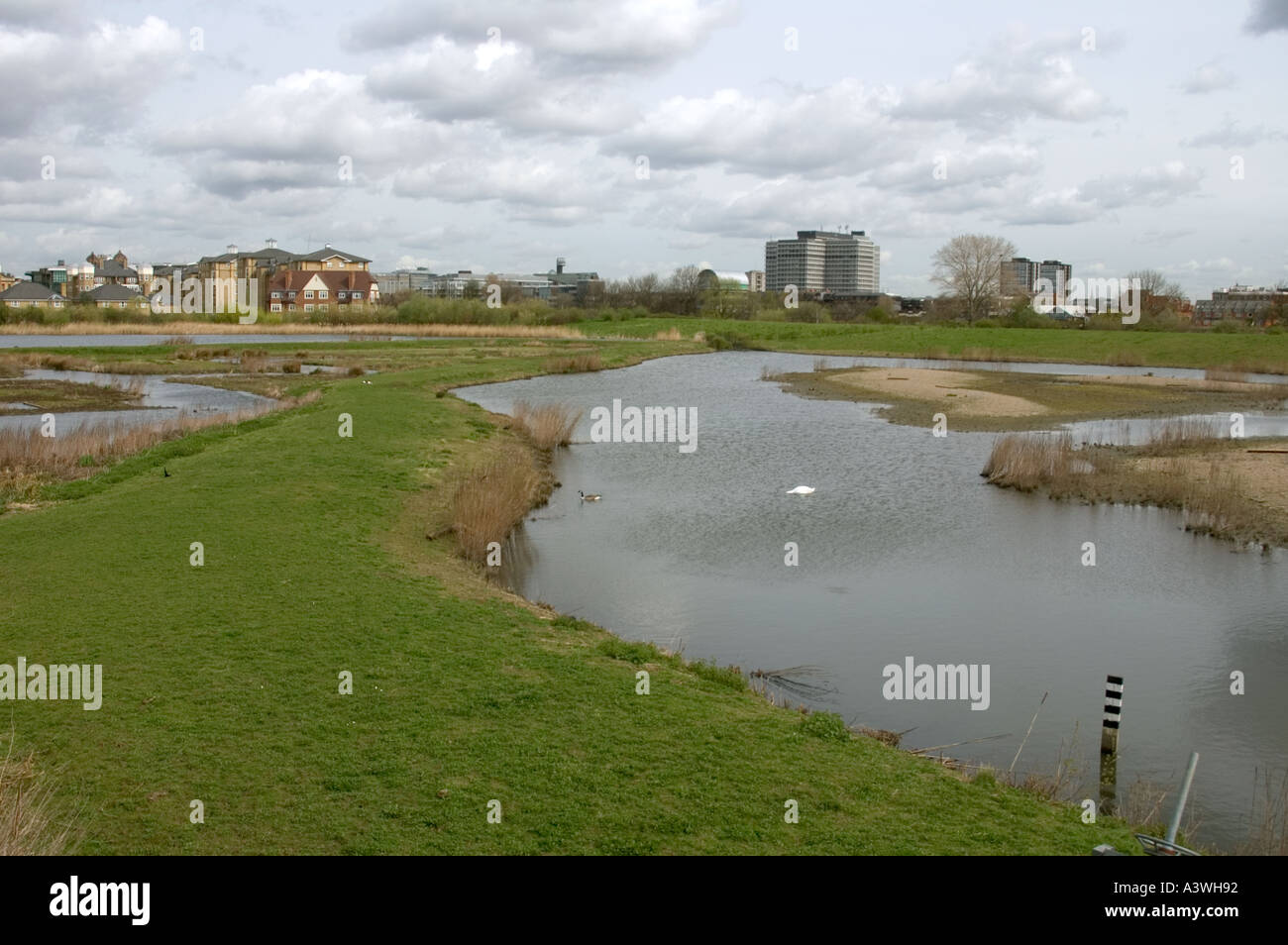
If you’ve lived in London long enough, you start to forget that the city isn't just concrete, overpriced sourdough, and the constant hum of the District Line. Then you find yourself at the London Wetland Centre Barnes, and suddenly, the air smells like damp earth and reeds instead of diesel fumes. It’s weird. Honestly, it’s one of those places that feels like a glitch in the urban matrix.
Most people treat it like a petting zoo or a quick weekend box to tick with the kids. They’re missing the point. This 100-acre site, managed by the Wildfowl & Wetlands Trust (WWT), is actually a massive engineering miracle that repurposed four redundant Victorian reservoirs into a thriving ecosystem. It wasn't just "found" this way. Sir Peter Scott, the founder of the WWT, had a vision for it, and by the time it opened in 2000, it had become a global blueprint for urban conservation.
What actually makes the London Wetland Centre Barnes worth the trek?
It’s the silence. Or rather, the lack of human noise. When you’re standing in the Peacock Hide, looking out over the marshland, the roar of London just... vanishes. You've got Bitterns—these incredibly rare, camouflaged herons—skulking in the reeds, and you realize you're barely six miles from Big Ben.
The biodiversity here isn't a marketing gimmick. It's legitimate. We're talking about a site that attracts over 180 bird species annually. Depending on when you show up, you might see Gadwalls, Shovelers, or the bright flash of a Kingfisher. If you’re lucky, you’ll catch a glimpse of the water voles. They’re basically the "Ratty" from The Wind in the Willows, and they are thriving here because the habitat is so meticulously managed.
Timing is everything (Seriously)
Don’t just rock up at midday on a Saturday and expect a National Geographic experience. If you want the real London Wetland Centre Barnes experience, you need to think about the seasons.
In winter, the place is a haven for migratory ducks and bitterns. The light is low, the frost hangs on the boardwalks, and the atmosphere is moody. Spring brings the madness of the breeding season. Sand martins arrive in droves to nest in the specifically designed artificial nesting bank. It's chaotic. It's loud. It’s brilliant. Summer is for the dragonflies and the wildflowers. Autumn? That's when the waders start dropping in on their way south.
The stuff nobody tells you about the hides
Most visitors walk into a hide, stay for thirty seconds, don't see a flamingo, and leave.
First off, there are no flamingos. This isn't a zoo.
To actually see anything at the London Wetland Centre Barnes, you have to sit still. Shut up. Wait. The Headley Hide is great because it’s got two levels, giving you a wider perspective of the main lake. But if you want the secret spot, head toward the Wildside area. It’s less manicured. It feels "rawer."
You’ll see photographers with lenses the size of bazookas. Don't be intimidated by them. Most of them are happy to tell you what they’re looking at if you ask quietly. They’re tracking things like the Northern Pintail or checking if the Peregrine Falcons from the nearby Charing Cross Hospital are making a guest appearance to hunt.
It's not just for "Birders"
I know. The word "wetland" sounds a bit dry. Maybe even boring. But the site is a masterclass in landscape architecture. They’ve moved over 300,000 cubic meters of soil to create this. They planted 27,000 trees. They put in 300,000 aquatic plants.
The result?
A flood-defense system for London that actually looks beautiful. It's a "sponge" for the city. When the Thames gets high or the rain doesn't stop, sites like this do the heavy lifting that concrete pipes can't handle.
For families, the "Explore" zone is the obvious draw. It’s got the adventure playground and the water play area. But honestly, even if you don't have kids, the otter feeding sessions are worth the price of admission. The Asian short-clawed otters are basically the celebrities of the London Wetland Centre Barnes. They’re loud, they’re fast, and they have more personality than most people you meet on the tube.
Why Barnes?
Location matters. The loop of the Thames at Barnes creates a natural pocket. It’s a green corridor. Birds following the river see this massive expanse of water and reeds and think, "Yeah, that'll do."
It’s also surprisingly easy to get to, which is its biggest blessing and its biggest curse. You can hop on a train to Barnes Bridge and walk, or take the 283 bus from Hammersmith. Because it's so accessible, it gets busy. If you want the "wilderness" vibe, get there when the gates open at 9:30 AM.
The reality of conservation in a city
It’s not all sunshine and rare warblers. Maintaining a man-made wetland in the middle of a metropolis is a constant battle. Invasive species are a nightmare. Water quality has to be monitored constantly to ensure the algae doesn't choke out the life in the ponds.
The WWT staff and a literal army of volunteers spend their days hacking back willow scrub and managing the reed beds. If they didn't, the whole place would turn into a forest in a decade. It’s a delicate, artificial balance that produces a natural-looking result.
Making the most of your visit: A practical checklist
Don't just wander aimlessly. Have a bit of a plan.
- Check the sightings board: Right by the entrance, there’s a chalkboard. Read it. It tells you exactly what has been spotted in the last 24 hours. If someone saw a Bearded Tit at the Sheltered Hide, go there first.
- Bring binoculars: You can rent them at the shop. Do it. Seeing a Speckled Teal from 50 yards away with your naked eye is okay; seeing the iridescent feathers through glass is a different game.
- The Cafe is actually decent: Usually, "attraction food" is a sad sandwich in plastic. The Kingfisher Kitchen is better than that. Plus, the view over the lakes is unbeatable.
- Walk the full loop: Most people stick to the paths near the visitor center. Go further. The "Wildside" walk is longer, but it's where you'll find the peace you probably came here for.
- Dress for the mud: It’s a wetland. The clue is in the name. Even with the boardwalks, if it’s been raining, you’ll want shoes you don't care about.
Is it actually worth the entry fee?
It’s about £15-£20 depending on whether you’re a member or if you opt for the gift aid. In a city where a pint and a burger can easily set you back thirty quid, it’s a steal for a whole day of headspace.
More importantly, that money goes directly into conservation. The WWT doesn't just run the London Wetland Centre Barnes; they use the research gathered here to help restore wetlands across the UK and internationally. Wetlands are some of the most threatened habitats on earth, disappearing three times faster than forests.
Supporting this place isn't just about looking at ducks. It’s about keeping the "lungs" of the planet functioning.
Practical Next Steps for Your Trip
To get the absolute most out of the London Wetland Centre Barnes, don't just show up and wing it.
- Check the Tide Tables: Believe it or not, the Thames tide affects bird movement in the area. High tide on the river often pushes more wading birds into the safety of the lagoons inside the centre.
- Book a Guided Walk: If you're new to birdwatching, the "Warden's Walk" (usually on weekends) is a game-changer. They will point out things you would 100% walk past.
- Download the Merlin Bird ID App: It’s free. It uses your phone's mic to identify birds by their song. It feels like magic and makes the walk way more interactive.
- Visit the South West London waterworks history: If you're a history nerd, take a moment to look at the old Victorian pumping station nearby. It gives you a sense of the sheer scale of the Victorian engineering that preceded the nature reserve.
- Check the weather, then go anyway: The wetlands are actually more atmospheric in "bad" weather. The birds don't mind the rain, and you'll have the hides all to yourself.
Forget the "city break" mindset. Treat a trip to Barnes like a proper expedition. You're entering a space where animals have the right of way, and humans are just quiet observers. It’s a healthy perspective shift that most of us desperately need.