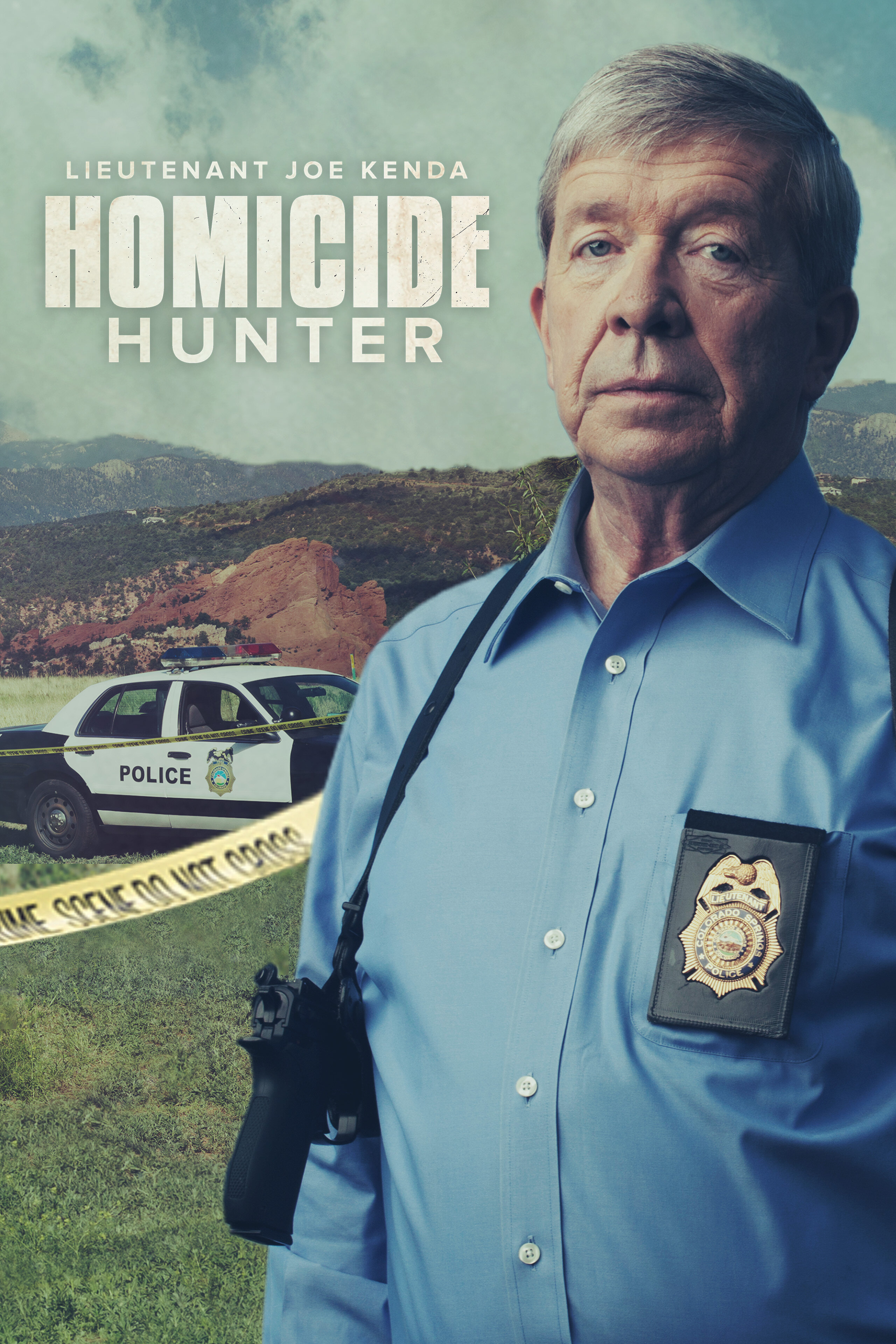
Joe Kenda is a ghost. Well, not literally, but he spends most of his time hanging out with them. If you’ve ever sat through an episode of Homicide Hunter, you know exactly what I’m talking about. The guy has this stare that looks right through the camera and into your living room, usually while he’s describing a crime scene so grim it would make most people lose their lunch.
He doesn’t use a teleprompter. He doesn't even use a script. He just sits in a dark room and talks about the worst days of his life.
The Man Behind the "My, My, My"
Let’s get the numbers out of the way because they’re actually insane. During his 23-year career with the Colorado Springs Police Department, Kenda was involved in 387 homicide cases. He solved 356 of them. That is a 92% solve rate. In a world where the national average for closing murder cases often hovers around 50 or 60 percent, Kenda is basically the statistical equivalent of a unicorn.
He didn't get there because he had some high-tech DNA lab like you see on CSI. Most of his work happened in the 70s, 80s, and early 90s. Back then, "forensics" mostly meant looking for a fingerprint on a beer bottle or hoping a neighbor saw a suspicious car.
Kenda’s secret weapon? He’s a student of human nature. He’s said plenty of times that people are remarkably predictable. They kill for three reasons: money, sex, or revenge. Sometimes it’s a cocktail of all three, but it usually boils down to those base instincts. He’s a guy who can tell when you’re lying by the way your eyelid twitches or how you clear your throat.
Honestly, it’s kinda terrifying.
Homicide Hunter: More Than Just a TV Show
When Homicide Hunter: Lt. Joe Kenda first hit Investigation Discovery in 2011, nobody really knew if it would work. It wasn't your typical true crime documentary. It was basically a long-form monologue intercut with Knoxville-based actors (like the iconic Carl Marino) reenacting the crimes.
But it worked. It worked so well it ran for nine seasons.
Why? Because Kenda is authentic. He’s not a Hollywood version of a cop. He’s a guy who clearly has PTSD and isn't afraid to admit it. He’s spoken openly about how the cases "live in his head" like a library of horrors. He can tell you the name of a victim from 1982, what the weather was like that day, and exactly what the carpet smelled like when he walked into the room.
That kind of memory isn't a gift. It's a burden.
The show ended its primary run in 2020 with an episode appropriately titled "The End," but Kenda didn't exactly retire from our screens. He moved on to American Detective, where he profiles other investigators. He also put out a few theatrical-length specials because, apparently, the public’s appetite for his brand of "deadpan justice" is bottomless.
What the Show Gets Right (And Wrong)
If you're looking for a flashy police procedural, this isn't it. Kenda hates the "48-hour rule" myth. You know the one—where if you don't solve a murder in two days, your chances drop to zero? Kenda thinks that’s garbage. He’s solved cases in ten minutes and he’s solved them in ten years.
- The Interrogations: These aren't the "good cop, bad cop" routines you see on Law & Order. Kenda’s approach is more about being a vacuum. He sits there, stays quiet, and waits for the suspect to fill the silence with a mistake.
- The Victims: This is where Kenda gets emotional, even if he doesn't show it with tears. He views himself as the "voice for the person who can no longer speak." It’s a cliché, sure, but when he says it, you believe him.
- The Humor: It’s dry. Thirst-quenching levels of dry. His catchphrase "Well, my, my, my" usually signals that a suspect just said something incredibly stupid that's about to get them a life sentence.
Life After the Badge
Kenda isn't just a TV star. He’s an author too. His books, like I Will Find You and Killer Triggers, go even deeper into the psychology of the killers he’s encountered. He’s also been incredibly open about his health, including a battle with cancer that he’s handled with the same "get it done" attitude he used on the force.
He’s currently living in Virginia, far away from the Colorado Springs streets he used to patrol. But he’s still active in the community, often consulting on cold cases. In fact, some of his own unsolved cases have recently been closed thanks to modern DNA technology, like the 1987 murder of Darlene Krashoc.
Seeing a case get solved 30 years later? That’s the kind of closure Kenda lives for.
Real-World Takeaways from the Homicide Hunter
If you’re a true crime fan or just someone fascinated by the darker side of the human psyche, there's a lot to learn from Kenda’s career.
- Trust your gut, but follow the facts. Kenda often talks about "detective's intuition," but he never makes an arrest without the paper trail to back it up.
- The "Why" matters as much as the "Who." Understanding the motive—that "trigger"—is often the only way to find the person holding the gun.
- Mental health isn't optional. Kenda’s openness about the toll his career took on his family and his mind is a rare bit of honesty in a genre that usually celebrates the "tough guy" trope.
The legacy of Lt. Joe Kenda isn't just a high solve rate or a hit TV show. It's the reminder that behind every "file" is a human being whose story deserves to be told correctly. Whether he’s narrating a cold case or writing about the "monsters" he’s put away, Kenda remains one of the few voices in true crime that feels 100% real.
To dive deeper into the world of Lieutenant Kenda, start by watching the Season 4 finale "My First Case." It’s a raw look at the investigation that started it all and set the tone for a career that changed the landscape of Colorado law enforcement. You can also pick up his latest book, First Do No Harm, which explores the intersection of the medical world and murder.