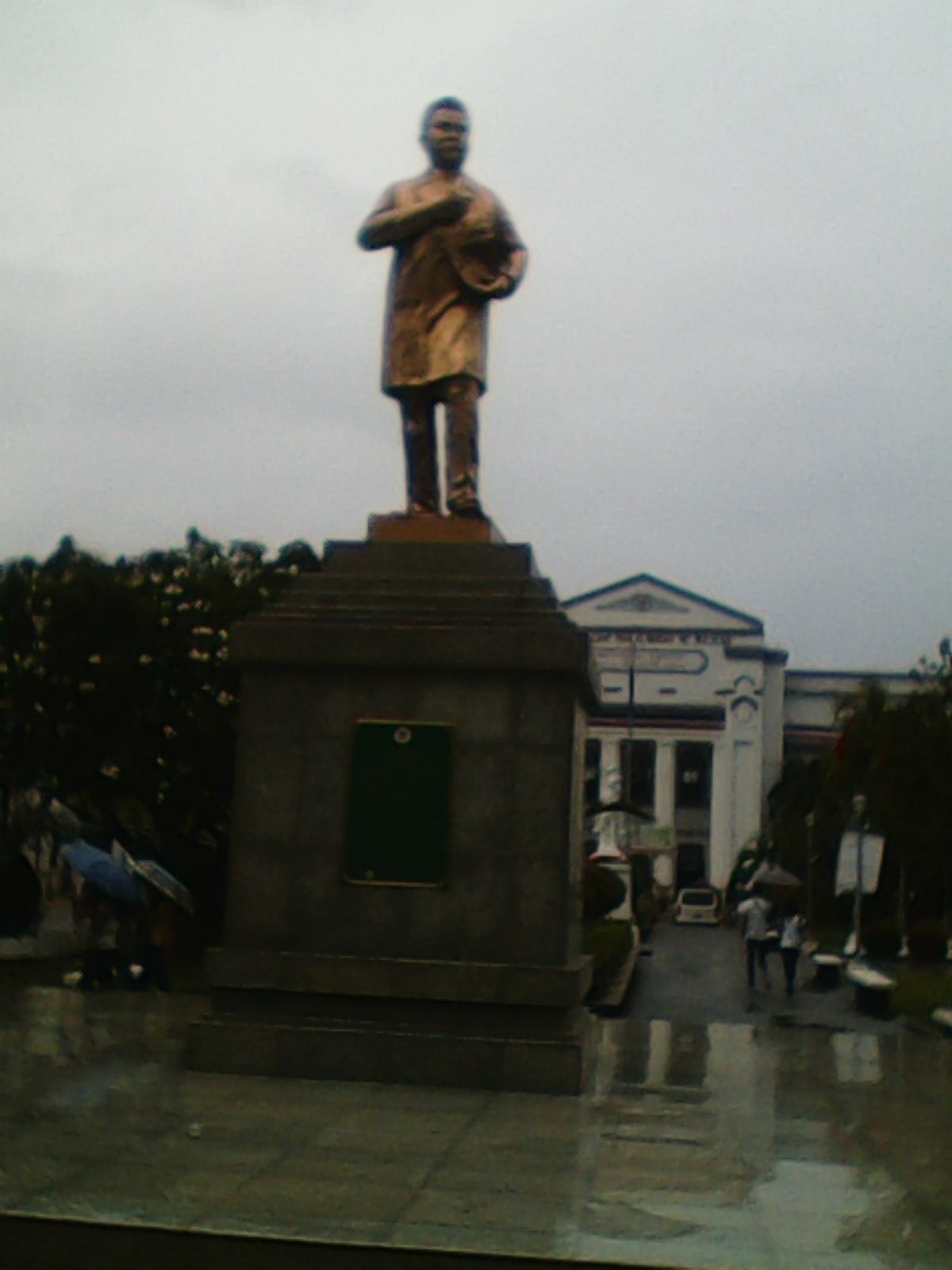
History has a funny way of picking favorites. If you walk into any classroom in the Philippines, Jose Rizal is the star. He’s the "Greatest Filipino," the martyr of Bagumbayan, the man on the one-peso coin (well, when we still used those frequently). But if you asked the Spanish friars in the late 1800s who actually kept them up at night, they wouldn't just say Rizal. They’d point a shaking finger at a gritty, cigar-smoking lawyer from Bulacan named Marcelo H. del Pilar.
You’ve probably heard of him as "Plaridel." Maybe you know he edited La Solidaridad. But honestly? Most of what we learn about him is sterilized. We treat him like a dusty statue. In reality, Marcelo H. del Pilar was the ultimate political "disruptor" before that was even a buzzword. He wasn't just writing high-brow novels in Spanish for European intellectuals. He was down in the cockpits, the town plazas, and the tiendas, speaking Tagalog and making the common folk realize they were being played.
The Man Who Weaponized Sarcasm
While Rizal was busy with the nuance of Noli Me Tangere, del Pilar was busy being a legal nightmare for the friars. He didn't just hate the "frailocracy"—the rule of the monks—he understood how to dismantle it using its own rules.
His most genius (and honestly, hilarious) move was the Dasalan at Tocsohan (Prayers and Mockeries). Imagine a world where the Church is everything. Now imagine a guy printing pamphlets that look exactly like the official prayer books the friars handed out. People would open them thinking they were reciting the "Our Father," but instead, they’d find a stinging parody:
"Our Step-father, who art in the convent, cursed be thy name... Give us this day our daily ration, and forgive us our laughter as we forgive you for friaring us..."
It sounds like a joke, but it was a tactical nuke. By using the familiar cadence of prayer, he made his message stick. You couldn't unhear it. He was essentially the first Filipino to "meme" a revolution into existence.
Why the Friars Wanted Him Dead
Del Pilar wasn't just a writer; he was a master organizer. In 1888, he orchestrated a massive public demonstration in Manila. Hundreds of people marched to the civil governor's office, shouting "Long live Spain! Long live the Queen! Out with the Friars!"
See the trick? He didn't say "Out with Spain." He played the game. He framed the friars as the enemies of both the Filipino people and the Spanish Crown. This kind of "smart" rebellion is exactly why Governor-General Ramon Blanco later called him "the most intelligent of the Filipino politicians." He was a chess player in a room full of people playing checkers.
The Heartbreak of the Propaganda Movement
By late 1888, the heat was too much. Del Pilar had to flee to Spain, leaving behind his wife, Marciana, and his two daughters, Sofia and Anita. This is where the story gets really heavy. We often think of these heroes as selfless icons, but del Pilar’s letters show a man who was absolutely torn apart by his choice.
He spent nearly eight years in Spain, most of them in total poverty. While he was editing La Solidaridad, he was literally starving. There are records of him walking the streets of Madrid, picking up cigarette butts from the sidewalk so he could smoke to dull the hunger pains.
His youngest daughter, Anita, once sent him a single peso for Christmas. He kept that coin like a holy relic. He wrote to his wife about how much it pained him that he couldn't even afford to buy a stamp to write back more often.
The Rizal vs. Del Pilar "Feud"
It’s often glossed over, but there was a major rift between Rizal and del Pilar in 1890. It wasn't about ego—mostly. It was about how to run the movement. Rizal was a perfectionist; he wanted the Filipino colony in Spain to be morally upright, studious, and disciplined.
Del Pilar was a pragmatist. He knew that politics is messy. He was okay with the "Pilaristas" (his supporters) being a bit more flexible if it meant getting results. Eventually, Rizal got frustrated and left for Hong Kong and then the Philippines. Del Pilar stayed behind, grinding away at a newspaper that was slowly running out of money and influence.
From Reform to Revolution
For years, Marcelo H. del Pilar fought for "assimilation." He wanted the Philippines to be a province of Spain, not just a colony. He wanted Filipinos to have seats in the Spanish parliament. He believed in the system.
But by 1895, the system had failed him. La Solidaridad published its last issue in November of that year. Broken, emaciated from tuberculosis, and grieving the fact that he hadn't seen his family in almost a decade, del Pilar finally admitted the truth: Spain would never change.
He told his friend Mariano Ponce that he was ready to head back and start a revolution. He wasn't talking about newspapers anymore; he was talking about "bloodshed."
Sadly, he never made it back. He died in a public hospital in Barcelona on July 4, 1896—just weeks before the Katipunan officially launched the Philippine Revolution. He was buried in a pauper’s grave, a man who had once been a wealthy lawyer but gave every cent to a cause that hadn't yet succeeded.
What Most People Get Wrong About Plaridel
We often separate the "Propaganda Movement" (the writers) from the "Revolution" (the fighters). That’s a mistake. Without del Pilar’s groundwork, there is no Katipunan.
- The Bonifacio Connection: It wasn't just a coincidence that Andres Bonifacio used del Pilar’s letters to recruit members. The Katipunan actually viewed del Pilar as their "spiritual" leader in Europe.
- The Language Barrier: Unlike many of his peers who preferred Spanish, del Pilar’s greatest strength was his mastery of Tagalog. He didn't just want to talk to the Queen; he wanted to talk to the farmer in Bulacan.
- The Father of Masonry: He wasn't just a member; he was the one who pushed for the establishment of Filipino Masonic lodges, which became the secret infrastructure for the revolutionary movement.
Taking Inspiration from Marcelo H. del Pilar Today
If you’re looking for a takeaway from del Pilar’s life, it isn't "go out and be a martyr." It’s about the power of strategic persistence.
- Focus on the "How": Del Pilar didn't just have an idea; he had a method. He studied the law to find the cracks in the system.
- Use Your Voice: Whether it’s through satire, journalism, or public speaking, he proved that words can be more threatening to an empire than bullets.
- Embrace Pragmatism: You don't have to be a "saint" (like the idealized version of Rizal) to be a hero. You just have to be committed.
If you want to honor his legacy, stop thinking of him as a name in a textbook. Read his satires. Look at the sacrifice of a father who died in a foreign land just so his daughters wouldn't have to grow up under a "frailocracy."
Next time you're in Bulakan, Bulacan, or walking past a shrine, remember the man who picked up cigarette butts so he could keep writing the truth. That's the real Plaridel.
To dive deeper into this period of history, you might want to look into the "Women of Malolos"—a group of brave young women del Pilar supported, who defied the friars just to get an education. It’s a perfect example of his "grassroots" influence in action.