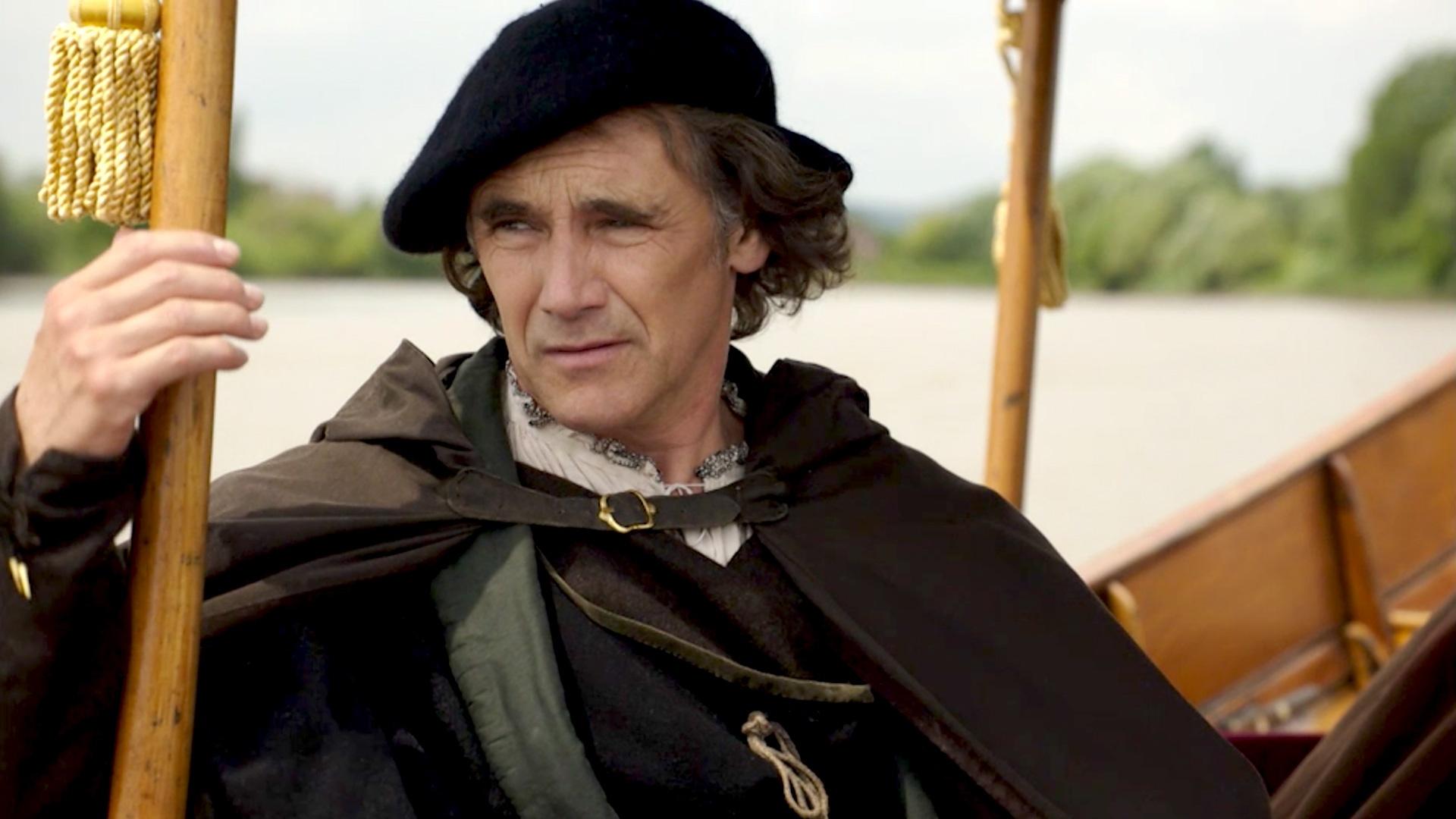
It is the stare. That heavy, unblinking, slightly weary look that seems to see through stone walls and Tudor silk alike. If you’ve spent any time watching the BBC’s masterful adaptation of Hilary Mantel’s novels, you know exactly what I’m talking about. When people ask who played Cromwell in Wolf Hall, the name Mark Rylance usually follows with a certain level of reverence, like we’re talking about a magician who actually pulled a rabbit out of a hat instead of just using a false bottom.
He didn't just play the role. He inhabited the very idea of a man who was simultaneously a blacksmith's son and the most dangerous person in England.
Before the 2015 series, the popular image of Thomas Cromwell was... well, let's be honest, it was pretty one-dimensional. He was the villain. He was the guy who destroyed the monasteries and set up Anne Boleyn to lose her head. He was the "man of business" with no soul. But then Rylance showed up. He brought this stillness. It was a choice that felt risky at the time but ended up defining the entire production.
The Man Who Reimagined a Villain
Mark Rylance took the character of Thomas Cromwell and turned him into a protagonist we could actually root for, even when he was doing objectively terrifying things. It’s a weird trick of the light. You see him sitting in the corner of a room, barely moving, yet you can practically hear his brain whirring.
Critics often point to the "stillness" of his performance. Peter Kosminsky, the director of the series, famously told Rylance to do less. Then less. Then even less than that. The result? A performance where a slight tilt of the head feels like a shouting match.
It’s worth noting that Rylance wasn't the only one to tackle this version of Cromwell. On the stage, Ben Miles took the role for the Royal Shakespeare Company’s adaptations. Miles was brilliant—more muscular, perhaps a bit more overtly aggressive—but for the millions who watched on screen, Rylance became the definitive face of the "man from Putney." He captured that specific Mantel-esque internal monologue without saying a word.
Why Rylance Was the Only Choice
Honestly, casting anyone else would have changed the DNA of the show. Rylance has this quality of being "unreadable" that fits a spy-master perfectly. You never quite know if he’s about to offer you a piece of marchpane or have you sent to the Tower.
Think about the scene where he confronts Harry Percy. Or the quiet moments after his wife and daughters die of the sweating sickness. Most actors would play the grief loudly. Rylance plays it like a man who has had the air knocked out of him and has to keep working anyway. That’s the Cromwell of the books. He’s a survivor. He’s a man who knows that in Henry VIII’s court, showing emotion is basically a death warrant.
The Physicality of the Role
Have you noticed how he walks? In Wolf Hall and the 2024 sequel The Mirror and the Light, Rylance moves with a heavy, grounded gait. He doesn't flit about like the courtiers. He’s solid. He’s a blacksmith’s son.
The costume designer, Joanna Eatwell, played a huge part in this too. The heavy furs and the dark wools make him look like a shadow moving through the brightly colored corridors of Whitehall. When you look at who played Cromwell in Wolf Hall, you’re looking at a collaboration between an actor’s restraint and a production’s historical obsession.
The lighting—mostly candlelight—added to this. Rylance’s face is often half-obscured. It forces you to lean in. It makes you a co-conspirator in his schemes.
A Contrast in Kings
You can’t talk about Rylance without talking about Damian Lewis as Henry VIII. It’s the ultimate "unstoppable force meets immovable object" scenario. Lewis is all fire and ego and height. Rylance is the cool water that tries to keep the fire from burning the whole house down.
There’s a specific chemistry there. Henry needs Cromwell because Cromwell is the only one who doesn't blink when the King throws a tantrum. In The Mirror and the Light, this dynamic gets even darker. We see the toll it takes. We see the aging. We see the way the "stillness" starts to look more like exhaustion.
Breaking the "Tudor Drama" Stereotype
Most historical dramas are... let's say "energetic." Lots of shouting, lots of heaving bosoms, lots of dramatic music. Wolf Hall went the other way. It was quiet. It was claustrophobic.
Rylance was the anchor for that. If he had played it like a standard TV protagonist, the whole thing would have collapsed into melodrama. Instead, he treated it like a noir thriller. Cromwell is basically a private eye in a doublet. He’s investigating the King’s desires and trying to find a way to make them legal.
People sometimes forget that before this, Rylance was primarily known as a "theatre actor’s theatre actor." He was the first Artistic Director of Shakespeare's Globe. He won Tonys and Oliviers like they were participation trophies. But Wolf Hall made him a household name for people who wouldn't know a proscenium arch from a hole in the ground.
The Mirror and the Light: The Final Act
When it was announced that Rylance would return for the final chapter, there was a collective sigh of relief. Recasting would have been a disaster. In the final season, we see the culmination of his performance. The weight of the bodies he’s stepped over to get to the top is finally catching up.
It’s a masterclass in aging a character. Not just with makeup, but with the eyes. The Cromwell of the first series was hungry. The Cromwell of the finale is just... full. He’s seen too much. He’s done too much. And Rylance carries that with a heartbreaking subtlety.
The Accuracy of the Portrayal
Historians have debated Cromwell for centuries. Was he a Protestant hero or a cynical opportunist? Mantel’s books—and Rylance’s performance—argue he was both. And neither.
The performance leans into the ambiguity. You see his loyalty to Cardinal Wolsey (played by the incredible Jonathan Pryce), which feels genuine and deeply moving. You see his love for his son, Gregory. But then you see him systematically dismantle Anne Boleyn’s life. Rylance doesn't try to make Cromwell "likable" in those moments. He makes him efficient.
That efficiency is what’s truly scary.
- The Look: Dark, heavy robes that signal his status as a commoner-turned-statesman.
- The Voice: Low, measured, rarely raised in anger.
- The Eyes: Always observing, always calculating the cost of the next move.
It's a complete transformation.
Beyond the BBC Series
While Mark Rylance is the answer most people are looking for, it’s interesting to see how other actors have approached the man who served Henry.
James Frain played a much more "villainous" Cromwell in The Tudors. He was great, but it was a different vibe—more mustache-twirling, less psychological depth. Leo McKern played him in A Man for All Seasons as a cynical foil to Thomas More’s integrity.
But Rylance’s version is the one that stuck. It’s the one that feels "human." It’s the one that makes you realize that history isn't just dates and battles; it's people in rooms making impossible choices.
Key Takeaways for Fans of the Show
If you’re just getting into the series or re-watching it before the final episodes, pay attention to the silence. Don't look at who's talking; look at Rylance’s face while they're talking. He’s doing more work in the background of a shot than most actors do in a monologue.
Also, if you can, read the books. Mantel’s prose is what Rylance is translating into his performance. He’s literally acting out the "internal" Cromwell that Mantel spent thousands of pages building.
Moving Forward with the Tudor Legacy
The impact of Rylance’s performance extends beyond just one TV show. It has changed how we look at the Tudor period entirely. It moved us away from the "Great Man" theory of history and into the "Competent Man" theory.
Cromwell wasn't a king. He wasn't a noble. He was a guy who was good at his job. Rylance played him as a professional. In our modern world of corporate maneuvering and political spin, that feels incredibly relevant.
To appreciate the full scope of this performance, your next steps should be a bit more than just clicking "next episode."
First, watch the 2015 series and the 2024 sequel back-to-back if you can. The evolution of the character is stunning. Second, look into Rylance's work in Bridge of Spies. You’ll see a similar "quiet man" energy there that won him an Oscar. It’s the same DNA. Finally, if you haven't read The Mirror and the Light, do it. It provides the context for the final, haunting frames of Rylance’s performance.
Understanding who played Cromwell is just the start. Understanding how he played him is how you truly appreciate the art of the story. Mark Rylance didn't just give us a historical figure; he gave us a mirror to look into.
The best way to experience this is to watch for the moments where he says nothing. In the world of Wolf Hall, silence is where the real history happens. Go back and watch the scene where Cromwell first meets Anne Boleyn. Note the lack of bowing. Note the calculation in his eyes. That is the performance in a nutshell. It’s not about the crown; it’s about the person standing just behind it.