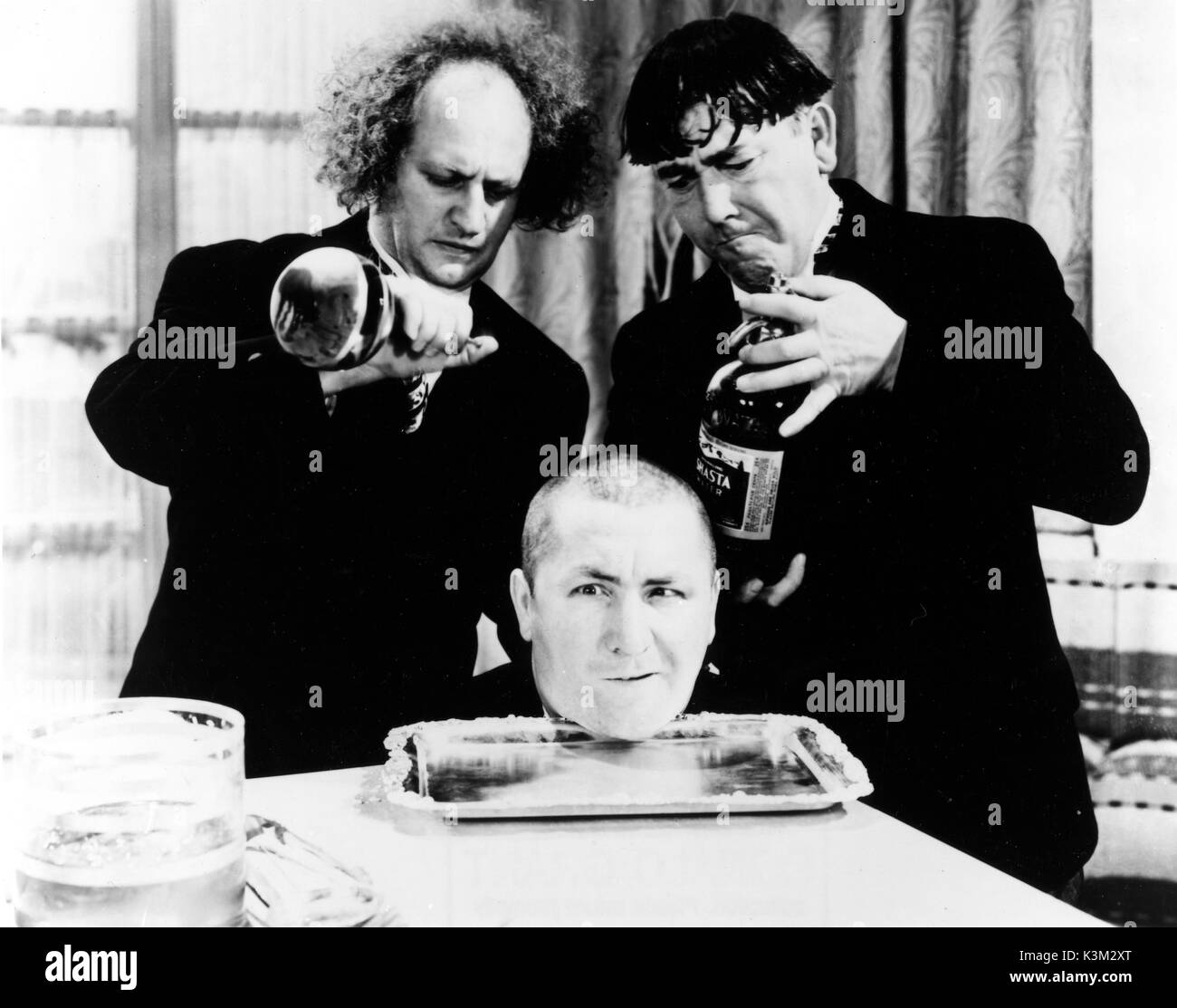
He was the guy with the bowl cut and the short fuse. If you grew up watching Saturday morning TV, you know the sound of his palm hitting a forehead or the "boink" of his fingers poking a pair of eyes. Most people see Moe Howard as the bully of the Three Stooges. They see the aggression. They see a guy who spent fifty years slapping his friends for a paycheck. But honestly? That’s only about ten percent of the story. Without Moe, there is no Three Stooges. There is no legendary comedy franchise that survives for a century.
Moe was the engine. He was the CEO, the booking agent, the treasurer, and the guy who made sure nobody blew their money on horses. While Curly was the natural clown and Larry was the laid-back middleman, Moe was the professional. He was a kid from Brooklyn named Moses Horwitz who figured out very early that if you want to make it in show business, you have to be tougher than the business itself.
The Brooklyn Kid Behind the Bowl Cut
Moe didn't just wake up one day with that haircut. It’s actually a funny story, or maybe a tragic one depending on how you feel about childhood bullying. His mother wanted a girl. She let his hair grow into long, beautiful mahogany curls. By the time he was a young student, he couldn't take the teasing anymore. He went into a backyard shed with a pair of shears and hacked it all off. He used a small bowl as a guide. When he walked back into the house, his mother nearly fainted, but the look stuck. It became a trademark worth millions.
He started out playing hooks from school to hang around the Vitagraph Studios in Brooklyn. He wasn't some refined actor; he was a gopher. He ran errands for stars like Maurice Costello just to see how a set worked. This wasn't some "overnight success" narrative. Moe spent years in "blackface" acts, in riverboat shows, and in crumbling Vaudeville theaters. He learned how to take a punch because he had to.
By the time he teamed up with Ted Healy, the act was raw. It was violent. It was "Ted Healy and His Stooges." Back then, Moe wasn't the leader; he was just one of the guys getting hit by Healy. But Moe was watching. He was learning how contracts worked. He realized Healy was a drunk and a liability. Moe waited for his moment to take the reins, and when he did, he turned a chaotic Vaudeville act into a cinematic institution.
Why the Violence Worked (And Why It Wasn't Mean)
People love to complain about the violence in Stooge shorts. They call it "low-brow." But if you talk to any physical comedian or stunt coordinator today, they’ll tell you that what Moe Howard did was basically high-level choreography. It was ballet with sound effects.
Moe was the "straight man" who was also the aggressor, which is a rare combo in comedy. Usually, the straight man is the victim of the clown's antics (think Bud Abbott). Moe flipped it. He was the victim of his brothers' stupidity, and his reaction was a physical explosion.
The Physics of a Moe Slap
- The Sound: Most of those slaps weren't real. Moe would slap his own hands together or the Foley artists would add the "crack" later.
- The Precision: He could poke Larry in the eyes a thousand times and never actually touch a cornea. Larry would just blink at the exact right millisecond.
- The Timing: If Moe was a fraction of a second off, the joke died. He was a perfectionist. He famously got upset if the "two-finger eye poke" didn't look lethal, even though he was the most protective guy on set.
There’s a misconception that Moe was actually a mean guy in real life because he played the "heavy" so well. Actually, according to his daughter Joan Howard Maurer in her book The Three Stooges Scrapbook, he was the quintessential family man. He grew vegetables. He made ceramics. He was the guy who took care of the neighborhood kids. The "mean" Moe was a character he put on like a coat.
The Curly Tragedy and Moe’s Burden
This is where the story gets heavy. Everyone knows Curly Howard (Jerome) was the breakout star. He was the "Babe Ruth" of comedy. But Curly was a mess. He struggled with his weight, he drank too much, and he had a series of disastrous marriages.
Moe was Curly’s older brother. He wasn't just his co-star. Throughout the 1940s, as Curly’s health began to fail due to a series of strokes, Moe was the one keeping him going. He would slow down the pacing of the scenes so Curly could keep up. He would feed Curly lines when he couldn't remember them.
When Curly finally had a massive stroke on the set of Half-Wits Holiday in 1946, it broke Moe. But Moe had a choice: let the act die and put dozens of people out of work, or keep going. He brought in his older brother Shemp. Then Joe Besser. Then "Curly Joe" DeRita.
Critics hate the later years. They say it wasn't as good without Curly. Sure, maybe. But Moe’s dedication to keeping the brand alive is why we still know who they are today. He refused to let the Three Stooges become a footnote in history.
The Business of Being a Stooge
Columbia Pictures treated the Stooges like garbage. Harry Cohn, the head of the studio, was a notoriously ruthless executive. He kept the Stooges on one-year contracts for over two decades. This meant Moe and the boys never had long-term security. Cohn would lie to them, telling them that the shorts weren't popular anymore, just so they wouldn't ask for a raise.
Moe, being the "brains," eventually caught on. But he was in a bind. The studio owned the rights. The Stooges were making millions for Columbia, but they were being paid like middle-managers.
How Moe Saved the Brand in the 50s
- TV Syndication: When Columbia finally fired them in 1957 (after 24 years!), they thought the Stooges were washed up. Moe didn't quit. He realized that television was the future.
- The Comeback: Columbia released the old shorts to TV, and a whole new generation of kids went nuts for them. Moe saw the opportunity. He formed "Comedy III Productions" to finally take control of their licensing.
- Live Appearances: Moe booked them on the road. They played nightclubs, fairs, and theaters. They became more popular in the 1960s than they were in the 1930s.
It’s honestly incredible. Moe was in his 60s, still taking falls, still doing the bowl cut, and still managing the books. He was a workhorse. He understood that the Stooges weren't just actors; they were an American brand, like Coca-Cola or Ford.
The Final Act
By the 1970s, the Stooges were elder statesmen of comedy. You had guys like Sam Raimi and the Farrelly Brothers growing up and memorizing their bits. Moe spent his final years answering fan mail personally. He would literally sit at his desk and write back to kids who sent him letters.
He died in 1975 while working on his autobiography, Moe Howard and the Three Stooges. He never really retired. He couldn't. He felt a responsibility to the fans and to the memory of his brothers.
Lessons from the Leader of the Stooges
What can we actually learn from a guy who made a living hitting people with pies? A lot, actually. Moe Howard’s life is a masterclass in resilience and "the pivot."
- Total Commitment to the Bit: Moe never "winked" at the camera. He played the anger 100% real. Comedy only works if the stakes feel real to the characters.
- Adapt or Die: When Vaudeville died, he moved to film. When film shorts died, he moved to TV. When TV changed, he moved to live tours. He never waited for the phone to ring; he made the phone ring.
- Separate the Work from the Person: Moe proves you can be "the boss" and "the mean guy" at work while being a decent, kind human being at home.
- Protect Your Own: He took care of Curly when he was sick and Shemp when he was scared. He was the glue.
If you want to dive deeper into the real Moe, stop watching the clips for a second and look at the eyes. Behind the "Why you!" and the threats, there was a man who was meticulously calculating the timing of the next laugh. He wasn't a bully. He was a craftsman.
Next Steps for Fans and Researchers
To truly understand the impact Moe had on comedy, you should look beyond the slapstick. Start by reading "Moe Howard and the Three Stooges," his autobiography. It’s surprisingly candid about the struggles with Columbia Pictures and the personal toll of their hectic filming schedule.
After that, seek out the rare "outtakes" and home movies available through the Three Stooges Fan Club. Seeing Moe out of character—wearing a suit, speaking in a calm, articulate Brooklyn accent, and discussing the technicalities of film editing—completely changes your perspective on the "Eye Poker-in-Chief." Finally, watch the 1959 film Have Rocket, Will Travel. It was their first feature-length film after the "comeback," and it shows Moe’s transition into the elder statesman role that defined his later career.