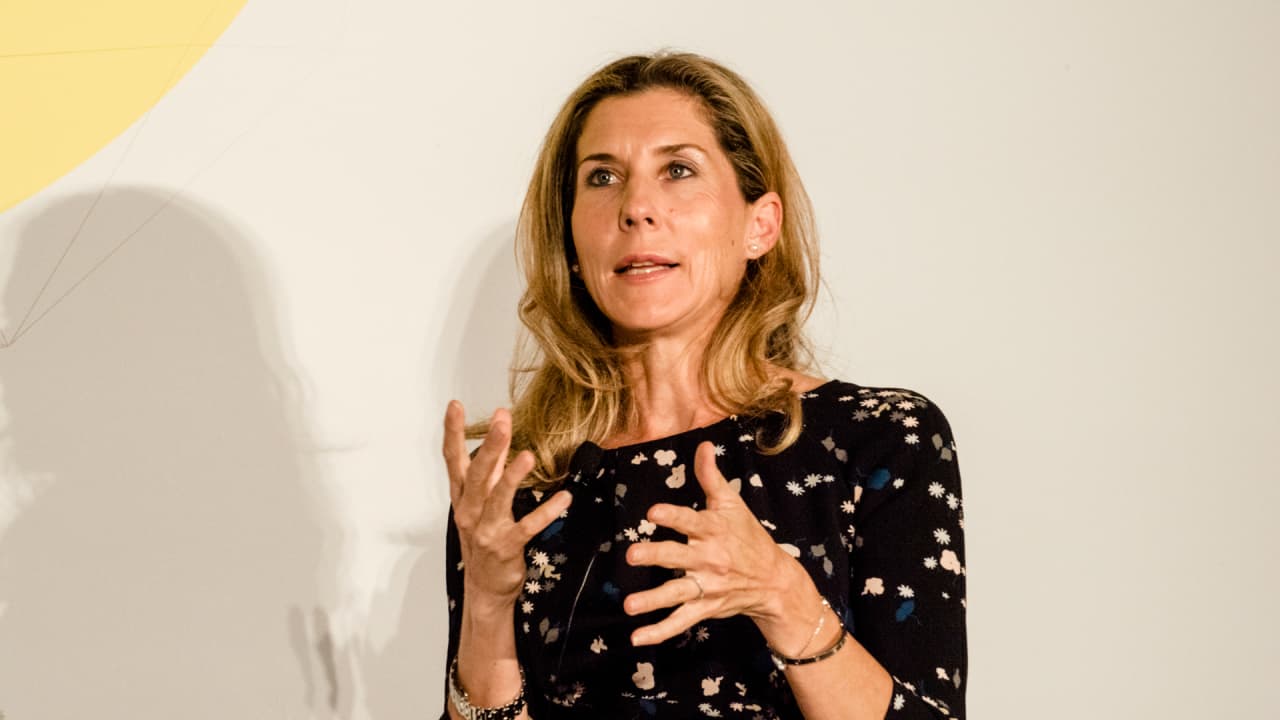
She didn’t just play tennis. She attacked it. If you were watching a match in the early '90s, you weren't seeing a standard baseline exchange; you were witnessing a relentless, two-handed assault from both wings that made the court feel about half its actual size. Honestly, before Monica Seles, women’s tennis was largely a game of grace and tactical slicing, dominated by the elegant Steffi Graf. Then this teenager from Novi Sad showed up with a grunt that sounded like a jackhammer and a return of serve that felt like a personal insult to her opponents.
She was different.
Most pros used one hand for their forehand. Not Monica. Her father, Karolj, was a cartoonist who drew pictures on her tennis balls to keep her interested as a five-year-old. He taught her to grip the racket with both hands for every shot. The result? A level of power and acute angling that the tour simply wasn't prepared for. By the time she turned 16, she had already taken down Graf to win the 1990 French Open. She remains the youngest woman to ever win that title.
The Reign of the Teenage Queen
Between January 1991 and February 1993, Monica Seles was basically a cheat code. She reached the finals in 33 out of 34 tournaments she entered. Think about that for a second. She didn't just show up; she won 22 of those titles. In Grand Slams, she was 55-1. Her only loss in a major during that stretch came in the 1992 Wimbledon final against Graf.
She won the Australian Open three times in a row. She won the French Open three times in a row. She took the US Open twice. By the age of 19, she had eight Grand Slam titles in her trophy case. For context, Serena Williams didn't hit eight majors until she was 25. Seles wasn't just on her way to becoming the greatest of all time; she was already there, holding the World No. 1 ranking for 178 weeks.
The rivalry with Steffi Graf was the sport's heartbeat. It was a clash of cultures: Graf’s icy composure and legendary slice versus Seles’s neon outfits, "hummingbird" speech patterns, and pulverizing depth.
April 30, 1993: Everything Changes
The tragedy in Hamburg is often described as a "freak accident," but that’s not quite right. It was a targeted, premeditated attack. During a quarterfinal match against Magdalena Maleeva, a 38-year-old man named Günter Parche ran from the stands and plunged a 9-inch boning knife into Seles’s back during a changeover.
He didn't want to kill her. He wanted to hurt her enough so that his idol, Steffi Graf, could be No. 1 again.
The physical wound, a two-inch-deep gash between her shoulder blades, healed in weeks. The psychological damage took years. Seles retreated into a dark reclusiveness, struggling with PTSD, depression, and a binge eating disorder that she later detailed in her memoir, Getting a Grip. While she was suffering, the tennis world moved on. In a vote that remains controversial to this day, her fellow players (with the notable exception of Gabriela Sabatini) refused to freeze her No. 1 ranking during her recovery.
Parche never spent a day in prison. He was given a two-year suspended sentence.
The 1995 Comeback and the "What If"
When Seles finally returned to the tour in August 1995, she was a different person. She was still a world-class player, but that raw, invincible aura had softened. She won her first tournament back in Toronto without dropping a set. She even won the 1996 Australian Open, her ninth and final Grand Slam title.
But the edge was gone.
The tour had also changed. Players were hitting harder, inspired by the very style Seles had pioneered. She remained a top-ten fixture for years, winning a bronze medal at the 2000 Sydney Olympics and leading the U.S. Fed Cup team to multiple titles. Yet, fans couldn't help but look at the stats. During her 28-month absence, Graf won six of the ten majors played. It’s the greatest "what if" in the history of sports. If that knife hadn't struck, most experts—including Chris Evert and Martina Navratilova—believe Seles would have ended up with the most Grand Slam titles in history.
Why Monica Seles Still Matters
If you watch Iga Swiatek or Aryna Sabalenka today, you are seeing the DNA of Monica Seles. She shifted the "meta" of tennis toward the aggressive baseline game. She proved that you could be a "giddy teenager" off the court and a "cold-blooded" competitor on it.
She also broke the silence on athlete mental health decades before it became a common talking point. Her openness about her eating disorder and the trauma of the attack made her human in a way few superstars ever allow themselves to be.
What you can learn from her career:
- Innovation Wins: Her two-handed style was mocked early on, but it provided the leverage that redefined the sport's power ceiling.
- Resilience isn't Linear: Her comeback wasn't a perfect upward trajectory. It was messy, painful, and complicated, which is much closer to real life.
- Advocate for Yourself: Seles’s disappointment with how the WTA handled her ranking is a reminder that even at the top, you have to be your own loudest advocate.
To truly understand her impact, watch a clip of the 1992 French Open final. The intensity is suffocating. Seles won that match 10-8 in the third set, saving match points and out-grunting the greatest player in the world. She played like every point was a matter of life and death, long before she knew how literal that would become.
Explore the 1992 French Open final highlights to see the peak of the Seles-Graf rivalry. Then, look into her 2009 International Tennis Hall of Fame induction speech for a lesson in grace and closure.