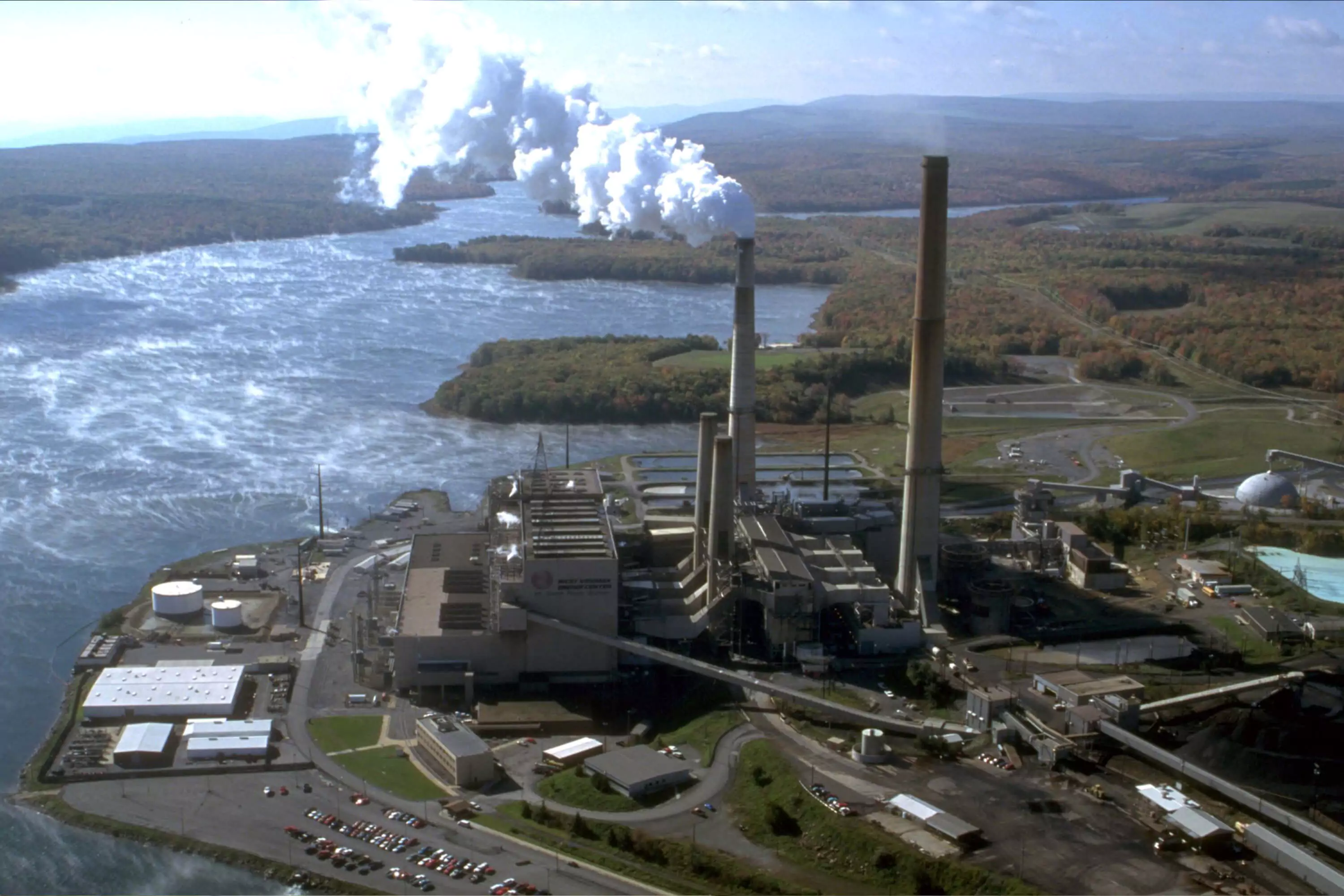
You’ve probably seen it if you've ever driven through the rugged high country of Grant County, West Virginia. It’s hard to miss. The Mount Storm Power Station sits like a massive industrial fortress right on the banks of a 1,200-acre reservoir that shares its name. It’s huge. It’s loud. And for decades, it has been the literal heartbeat of the local economy while pumping massive amounts of electricity into the PJM Interconnection grid.
Honestly, people talk about the "death of coal" like it happened overnight, but Mount Storm is still standing. It’s owned by Dominion Energy. It generates over 1,600 megawatts of power. To put that in perspective, that’s enough juice to keep the lights on in about 400,000 homes. It isn't just a building; it’s a localized weather-maker. Because the station uses the lake to cool its massive steam turbines, the water stays warm year-round. Even in the dead of a West Virginia winter, you’ll see mist rising off the surface while the surrounding mountains are buried in snow.
The Reality of Running a Mountain Giant
Operating a coal plant at 3,200 feet above sea level isn't exactly easy. Most power plants are built in river valleys because they need easy access to water and flat land. Mount Storm is different. It was built high up in the Allegheny Mountains back in the 1960s. Why? Because the coal was right there. They basically built the plant on top of the fuel source to save on transportation costs.
The logistics are kinda wild. The station has three units. Units 1 and 2 started humming in 1965 and 1966, while Unit 3 joined the party in 1973. For a long time, the coal came from nearby mines via a long conveyor belt system. Those local mines are mostly gone now, so today the plant relies on trucks and rail to keep the fires burning. It consumes thousands of tons of coal every single day. If the supply chain hiccups, the grid feels it.
Dominion Energy has poured billions into this place. You can’t just run a 1960s-era plant in 2026 without some serious upgrades. They’ve installed massive "scrubbers"—technically known as Flue Gas Desulfurization (FGD) systems—to stripped out sulfur dioxide. They also use Selective Catalytic Reduction (SCR) to cut down on nitrogen oxides. It’s a constant battle between keeping the plant profitable and meeting the EPA’s ever-tightening air quality standards.
The Lake That Shouldn't Be Warm
Mount Storm Lake is a bit of a local legend. Because the Mount Storm Power Station uses the lake as a cooling pond, the water temperatures can reach into the 90s (Fahrenheit) during the summer. Even in January, the water rarely drops below 50 or 60 degrees near the discharge point.
Scuba divers love it.
Seriously. It’s one of the few places in the Mid-Atlantic where you can do "warm water" diving in the middle of winter without flying to Florida. It’s also a popular spot for boaters and fishermen, though the fish species are limited to those that can handle the artificial heat. Smallmouth bass and hybrid striped bass are the big draws here. It’s a weird, man-made ecosystem that wouldn’t exist if it weren't for the massive boilers burning coal just a few hundred yards away.
But there's a flip side. The "thermal pollution" (as environmental groups call it) changes the biology of the area. You won't find the native brook trout that West Virginia is famous for in this specific lake. The heat is just too much for them. It’s a perfect example of the trade-offs we make for industrial-scale energy production. You get reliable power and a warm swimming hole, but you lose the natural mountain stream ecology.
Why Mount Storm Refuses to Die
You’ve likely heard that coal plants are closing left and right. And they are. Plants like Pleasants Power Station and others across the Appalachian basin have faced bankruptcy or decommissioning. So, why is Mount Storm still here?
- Grid Reliability: The PJM grid, which covers 13 states and D.C., is under immense pressure. As more intermittent renewables like wind and solar come online, the grid needs "baseload" power—stuff that runs 24/7 regardless of whether the sun is shining. Mount Storm provides that.
- Infrastructure Investment: Dominion didn't just build this and walk away. They’ve invested in keeping the units efficient. It’s much cheaper to maintain an existing plant with paid-off construction debt than to build a brand-new nuclear facility or a massive battery storage farm.
- Transmission: The plant is a major hub for high-voltage transmission lines that feed the power-hungry markets of Northern Virginia and the D.C. metro area. You can't just flip a switch and replace that connection point.
However, the clock is ticking. Dominion Energy has set "Net Zero" goals for 2050. While Mount Storm isn't on the immediate chopping block today, its long-term future is definitely up for debate. There have been discussions about converting units to natural gas or potentially using the site for advanced energy storage, but for now, coal remains king in Grant County.
Economic Lifeblood or Environmental Liability?
If you ask a local in Bismarck or Petersburg about the plant, they’ll tell you about the jobs. The Mount Storm Power Station is one of the largest employers in the region. We’re talking about hundreds of high-paying jobs for mechanics, engineers, and operators. Then you have the secondary jobs—the truckers, the contractors, and the local diners that feed the crews during "outages" (planned maintenance periods where thousands of extra workers descend on the site).
On the other hand, the environmental footprint is undeniable. Coal ash—the byproduct of burning coal—has to be managed. Over the years, there have been concerns about heavy metals leaching into groundwater. Dominion uses lined landfills to manage this, but "safe" is a relative term when you're dealing with millions of tons of waste.
There's also the CO2 issue. Coal is the most carbon-intensive way to make electricity. In an era of climate change, a 1.6-gigawatt coal plant is a massive target for regulation. The Supreme Court's 2022 ruling in West Virginia v. EPA gave plants like Mount Storm some breathing room by limiting the EPA's power to force a shift to renewables, but it didn't stop the economic pressure from cheaper natural gas and falling solar prices.
What the Experts Say
Energy analysts at firms like S&P Global or Wood Mackenzie often point to the "capacity market" when explaining Mount Storm's survival. Essentially, the plant gets paid just to exist and be ready to run when demand spikes. During the "Polar Vortex" events we've seen in recent years, when gas pipelines froze and wind turbines iced up, coal plants like Mount Storm were the only things keeping the lights on in the Northeast.
That "reliability premium" is what keeps the fires lit.
Navigating the Future of West Virginia Energy
So, what should you actually do with this information? If you're a resident, an investor, or just someone interested in the grid, you need to watch three things:
- PJM Capacity Auctions: These yearly auctions determine how much money plants like Mount Storm get just for being "on call." If these prices drop, the plant becomes a liability.
- The 2030 Integrated Resource Plan (IRP): Dominion Energy files these plans with state regulators. This is where they officially announce retirement dates. Keep an eye on the 2030-2035 window for Unit 1 and 2.
- Carbon Capture Technology: There is a slim chance Mount Storm could be a candidate for Carbon Capture and Sequestration (CCS), though the geology of the Allegheny Front makes underground storage difficult.
Actionable Insights for the Curious
If you want to see the Mount Storm Power Station for yourself or understand its impact better, here is how you should approach it:
- Visit Mount Storm Lake: It’s open to the public. Go in the late autumn or early spring to see the "steam effect" when the air is cold and the water is warm. It’s a surreal visual of industrial power meeting nature.
- Track the Emissions: You can actually see the real-time or historical emissions data for the plant via the EPA’s Clean Air Markets Program Data (CAMPD) website. It’s eye-opening to see the sheer scale of the output.
- Monitor Local Planning: If you live in the area, follow the Grant County Commission meetings. The tax revenue from this station funds schools and roads; any talk of decommissioning will show up there first in the form of budget anxiety.
- Watch the Transmission Upgrades: Follow news on the "Pathfinder" or other major transmission projects in the PJM region. The more they build out lines to bring offshore wind or Midwest solar to the coast, the less the grid relies on the Mount Storm hub.
Mount Storm isn't just a relic of the past. It’s a massive, complicated, and controversial piece of the American energy puzzle that is still very much in play. Whether you view it as an engineering marvel or a climate hurdle, its role in the 2026 energy landscape remains undeniable.