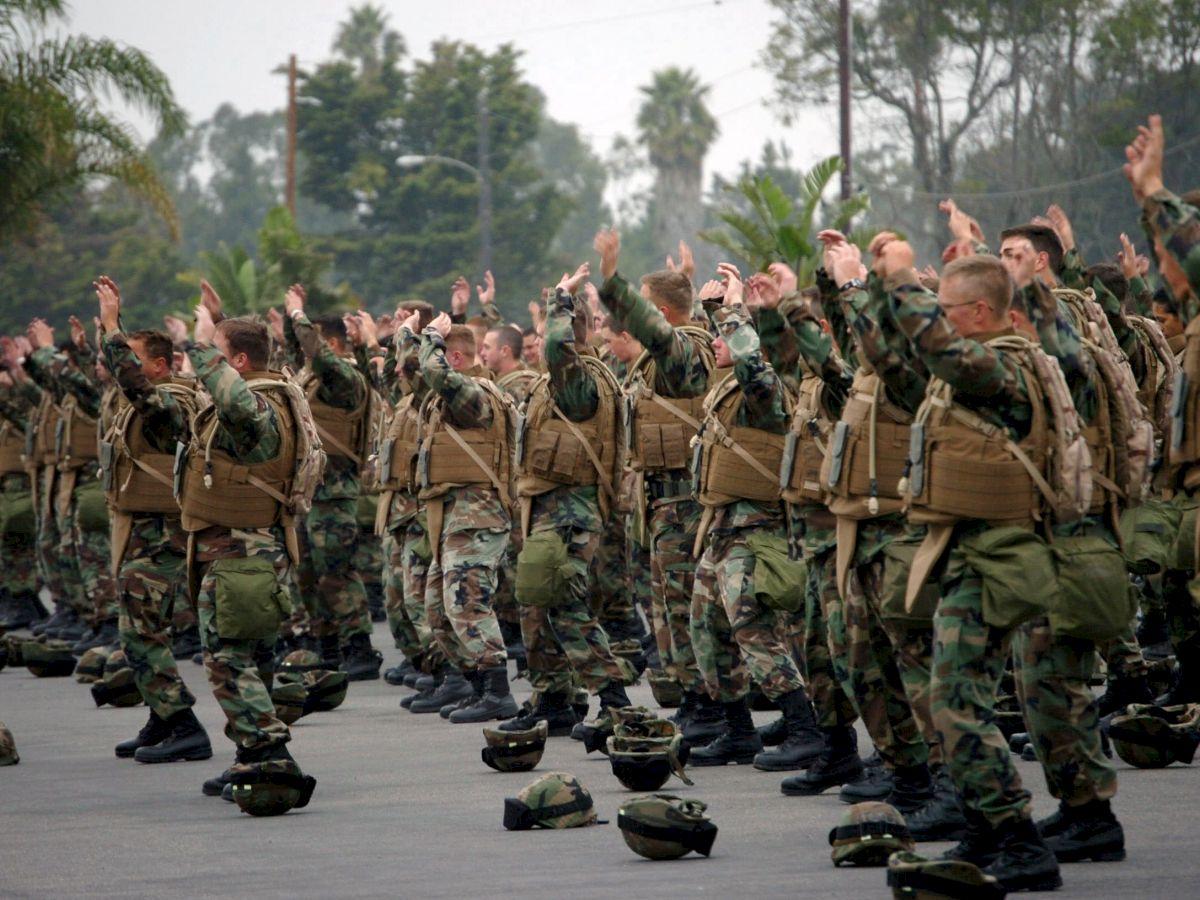
Most people driving up the PCH toward Santa Barbara see the massive cranes and the grey hulls of ships and just think "navy base." That’s it. They keep driving. But the Port Hueneme Navy Base—technically part of the larger Naval Base Ventura County (NBVC) complex—is basically the beating heart of how the U.S. Navy actually functions on a practical, day-to-day level. It’s not just a place where ships park. It is the only deep-water port between Los Angeles and San Francisco, and honestly, without this specific patch of dirt in Ventura County, the Navy’s global logistics would probably fall apart within a week.
The history here is deep.
Construction started right after Pearl Harbor because the military realized they needed a West Coast exit point for the Pacific Theater. Since 1942, Port Hueneme has been the "Home of the Pacific Seabees." If you aren't familiar with Seabees, they are the Navy’s construction battalions. Their motto is Construimus, Batuimus—"We Build, We Fight." They don’t just sail; they build runways, hospitals, and bridges under fire. This base is where that culture lives.
Why the Port Hueneme Navy Base isn't what you expect
When you think of a Navy base, you probably imagine a bunch of aircraft carriers like you'd see down in San Diego. Port Hueneme is different. It’s gritty. It’s functional. It’s a massive industrial engine. It shares its space with the Port of Hueneme, which is one of the busiest commercial ports for automobiles and bananas in the United States. You’ve got military hardware moving on one side of a fence and thousands of brand-new BMWs and crates of Chiquita bananas moving on the other. It’s a weird, fascinating ecosystem where national security and global trade literally share a shoreline.
The base itself is the center for Naval Surface Warfare Center, Port Hueneme Division (NSWC PHD). This is where the big brains live. They test the weapon systems. They fix the radars. If a missile system on a destroyer in the middle of the Indian Ocean breaks, the tech support for that system is usually coming out of Port Hueneme. They call it the "In-Service Engineering Agent." Basically, they are the Navy’s global mechanics and software developers.
The Seabee Museum: A Ventura County Secret
If you are just visiting or if you live in Oxnard and have never been, you’re missing out on the U.S. Navy Seabee Museum. It is technically on the base property but accessible to the public through a specific gate. It’s free.
The museum is packed with weird stuff. You’ll see dioramas of World War II Pacific islands and massive bulldozers that were armored to survive beach landings. You get a real sense of why this base matters. It isn't just about the machines; it’s about the specific type of person who joins the Navy to build things. They have uniforms, tools, and personal letters from the 1940s through the present day. It feels human. It doesn't feel like a sterile government building.
Life on the base and in the community
Living at Port Hueneme Navy Base is a unique experience. Unlike the massive urban sprawl of Norfolk or the high-intensity vibe of San Diego, Hueneme has a bit more of a "surf town" energy. The base is literally on the beach. You can walk from the barracks to the sand in five minutes.
The relationship between the base and the city of Port Hueneme (and neighboring Oxnard) is tight. The military is the largest employer in Ventura County. When the base grows, the local economy booms. When there are rumors of base closures—which happen every few years during BRAC (Base Realignment and Closure) discussions—the whole county gets nervous. But Hueneme is generally considered "safe" because its mission is too specialized to replicate elsewhere. You can't just move a deep-water port and a massive engineering center to the middle of the desert.
- The base supports over 19,000 personnel (military and civilian).
- It pumps billions into the local economy every year.
- It is a "Joint Base," meaning it works closely with Point Mugu (the airfield) nearby.
The weather is almost always 65 degrees and foggy in the morning, clearing to a bright blue by noon. It’s beautiful, but it’s expensive. Military members moving here often face a "sticker shock" when they see the rent prices in Ventura County compared to places like Gulfport, Mississippi, which is the other major Seabee hub.
The Engineering and Technology Side
Let’s talk about the Directed Energy and electric weapons. This is where things get a bit "sci-fi." Port Hueneme is a primary site for testing laser weapon systems. Because they have a clear line of sight to the Pacific Ocean, they can test ship-mounted lasers designed to shoot down drones or missiles.
It’s not just about old-school construction anymore. The base is leaning hard into the future of naval warfare. This includes 3D printing spare parts at sea. NSWC PHD has been experimenting with taking 3D printers onto ships so that if a part breaks, the sailors can just "print" a new one instead of waiting weeks for a supply ship to arrive. This tech is being pioneered and tested right here in Ventura County.
Accessing the base: What you need to know
You can't just wander onto the Port Hueneme Navy Base. Security is tight, especially given the sensitive nature of the engineering work done there.
- Military ID holders: You have standard access, but your guests need to be cleared.
- Contractors: You’ll need a DBIDS (Defense Biometric Identification System) card.
- Public: Your best bet to see the base is visiting the Seabee Museum. You enter via the Sunkist Gate (at Ventura Rd and Sunkist Dr). You don't need a base pass for the museum, but you do need a valid photo ID.
- Special Events: Occasionally, the base holds "Surf Contests" or open houses. Keep an eye on the NBVC Facebook page for those. They are rare but worth it.
If you are a veteran or active duty, the MWR (Morale, Welfare, and Recreation) facilities here are actually decent. The Bard Mansion is a historical landmark on base that used to be the home of Senator Thomas Bard. It’s now used for events and is one of the most beautiful buildings in the county. It feels like a piece of East Coast history dropped into the middle of a California port.
Sustainability and the Environment
One thing people often overlook is the environmental work. The Navy has to manage a lot of coastline here. They deal with protected species like the Western Snowy Plover. There is a constant balance between running a high-tech military port and not destroying the local ecosystem. They actually have a team of biologists who work on-site to make sure that the Navy's operations don't wipe out the local bird populations or the kelp forests offshore. It’s a weird job—being a scientist for the Navy—but it’s a big part of how the base stays compliant with California’s strict environmental laws.
Actionable Steps for Navigating Port Hueneme
If you are moving to the area or just visiting, here is the "real" way to handle the Port Hueneme Navy Base:
For New Arrivals:
Look for housing in North Oxnard or Camarillo if you want more of a suburban feel. If you want to walk to work, the "Silver Strand" neighborhood is right next to the base. It’s a quirky beach community with a lot of history, though it can be a bit cramped. Don't expect "base housing" to be your only option; the BAH (Basic Allowance for Housing) for this zip code is high for a reason.
For History Buffs:
Go to the Seabee Museum. Seriously. It’s one of the best-kept secrets in Southern California. Spend at least two hours there. Look at the "Can Do" exhibits. It explains the entire psychology of the base.
For Techies and Contractors:
Understand that Port Hueneme is a "working" base. It’s not a showcase. Focus your networking on the NSWC PHD departments. They are always looking for civilian engineers, IT specialists, and logistics experts.
For Logistics Nerds:
Take a drive down Hueneme Road. You can see the transition from the agricultural fields of the Oxnard Plain to the industrial shipping containers of the port. It’s a masterclass in how the world’s supply chain actually functions.
Port Hueneme isn't just a collection of buildings. It's a massive, loud, salty, and incredibly complex engine that keeps the Navy's fleet updated and ready. Whether it's the Seabees building a base in a remote corner of the world or a laser being tested on a flight deck, it all starts here.