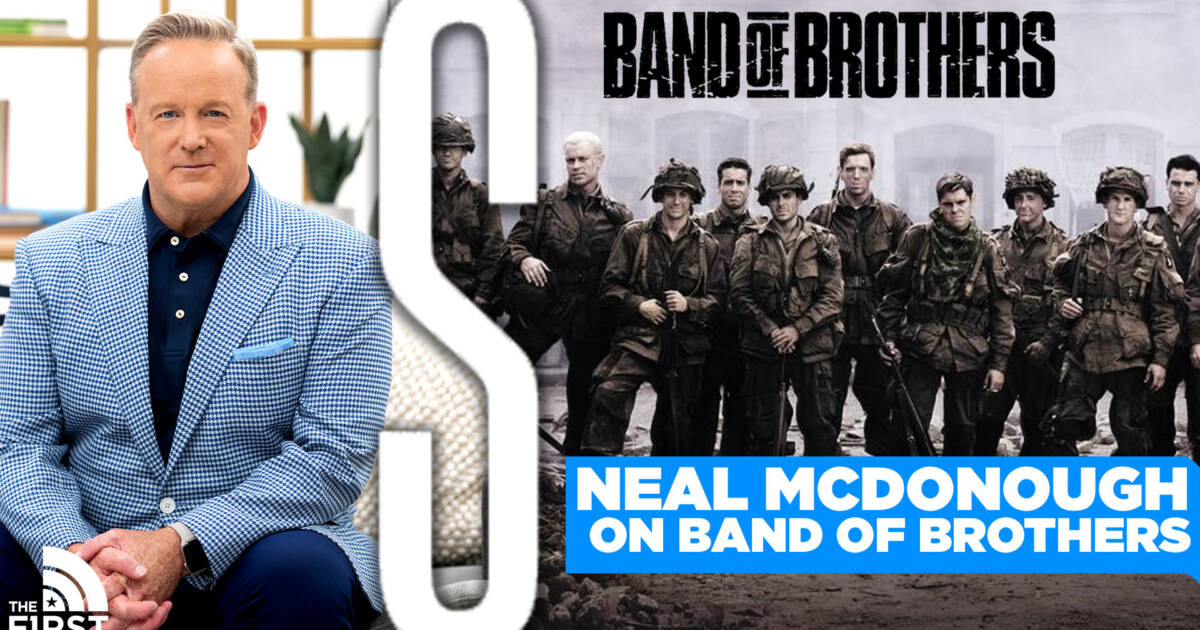
You know the face. Those piercing, icy blue eyes that seem to look right through a camera lens. Most people recognize Neal McDonough as the ultimate "bad guy" in shows like Yellowstone or Justified. But for a huge chunk of us, he will always be First Lieutenant Lynn "Buck" Compton.
Honestly, it's wild to think that we almost never saw him in that role.
Before the cigars and the jump wings, McDonough was a struggling actor in Los Angeles. He’d moved from Boston, had the thick Irish-American roots, and was basically striking out. He was ready to pack it all in. He actually decided to quit acting entirely because the phone just wasn't ringing enough to make a living.
Then, three days later, the call for Band of Brothers came in.
The Buck Compton Connection
Playing Buck Compton wasn't just another gig for him. It was the break of a lifetime, but it also became something way more personal. Buck was a real-life legend: a UCLA baseball star who played in the Rose Bowl, an LAPD detective, and the guy who eventually prosecuted Sirhan Sirhan.
McDonough didn't just play him; he lived in his skin.
During the "boot camp" lead-up to filming, things got grim. The actors were exhausted. They were cold. Some of the British actors were starting to question why they were putting themselves through this misery for a TV show.
Then Tom Hanks showed up.
He didn't come in a limo. He flew in from Hawaii with his Cast Away beard still intact, jumped out of a helicopter, and gave them a speech that changed everything. He told them they didn't just owe it to the production—they owed it to the men of Easy Company who actually died in those woods. McDonough has talked about this moment a lot, saying that after that speech, every man on set was ready to "tear it up."
The "No-Kiss" Rule That Nearly Cost Him Everything
If you've followed his career since the early 2000s, you might have noticed something. He doesn't do sex scenes. He doesn't even do kissing scenes.
It’s not a gimmick.
McDonough is a devout Catholic, and he made a promise to his wife, Ruvé (whom he met while filming Band of Brothers in London, by the way), that his lips would only ever touch hers.
For a while, Hollywood respected it. But in 2010, while working on the ABC series Scoundrels, he was fired for refusing to do on-screen "lovey-dovey" stuff. The fallout was brutal.
He was essentially blacklisted.
He went from being the star of Band of Brothers and Minority Report to being completely unhireable for two years. He lost his house. He lost his cars. He’s been very open about how he spiraled into a "massive drinking problem" during that time, trying to cope with the fact that his career seemed dead because he wouldn't compromise his values.
Making the Villain Pivot
How do you survive in Hollywood when you won't kiss the leading lady? You become the villain.
Bad guys don't usually have romantic subplots. When he finally got a chance to come back, he leaned hard into the "man you love to hate" archetype. This led to his iconic run as Robert Quarles in Justified and Damien Darhk in the Arrowverse.
Lately, he’s been taking even more control. As of January 2026, he’s heavily involved with Angel Studios—the folks behind The Chosen. He just signed a massive first-look deal with them through his own production company.
He isn’t just waiting for the phone to ring anymore. He’s making the movies he wants to see. Projects like The Last Rodeo and the upcoming 2026 thriller Twisted show he's still got that same "Buck Compton" grit, even decades later.
What You Can Learn from the Neal McDonough Journey
If you’re looking for a takeaway from his career path, it’s basically about holding the line. McDonough’s story is a weirdly perfect mirror of the paratroopers he portrayed: digging in and refusing to move.
- Values over Volume: He was willing to go bankrupt rather than break a promise to his wife. Most people talk about "integrity," but very few actually pay the bill for it.
- Adaptability is King: When the industry told him he couldn't be a leading man under his rules, he became the best character actor in the business.
- Ownership: By 2026, he’s moved into producing and writing. If the system doesn't fit you, you build your own system.
If you haven't re-watched Band of Brothers lately, go back and look at the "Bastogne" episode. Look at the scene where Buck Compton sees his friends get hit and finally breaks. That isn't just "acting." That's the depth of a guy who actually gives a damn about the story he’s telling.
Next Step for You: Go watch the 2022 documentary or any of his recent interviews where he discusses the 101st Airborne reunions. It gives a whole new perspective on how much that 2001 miniseries still means to the actors today.