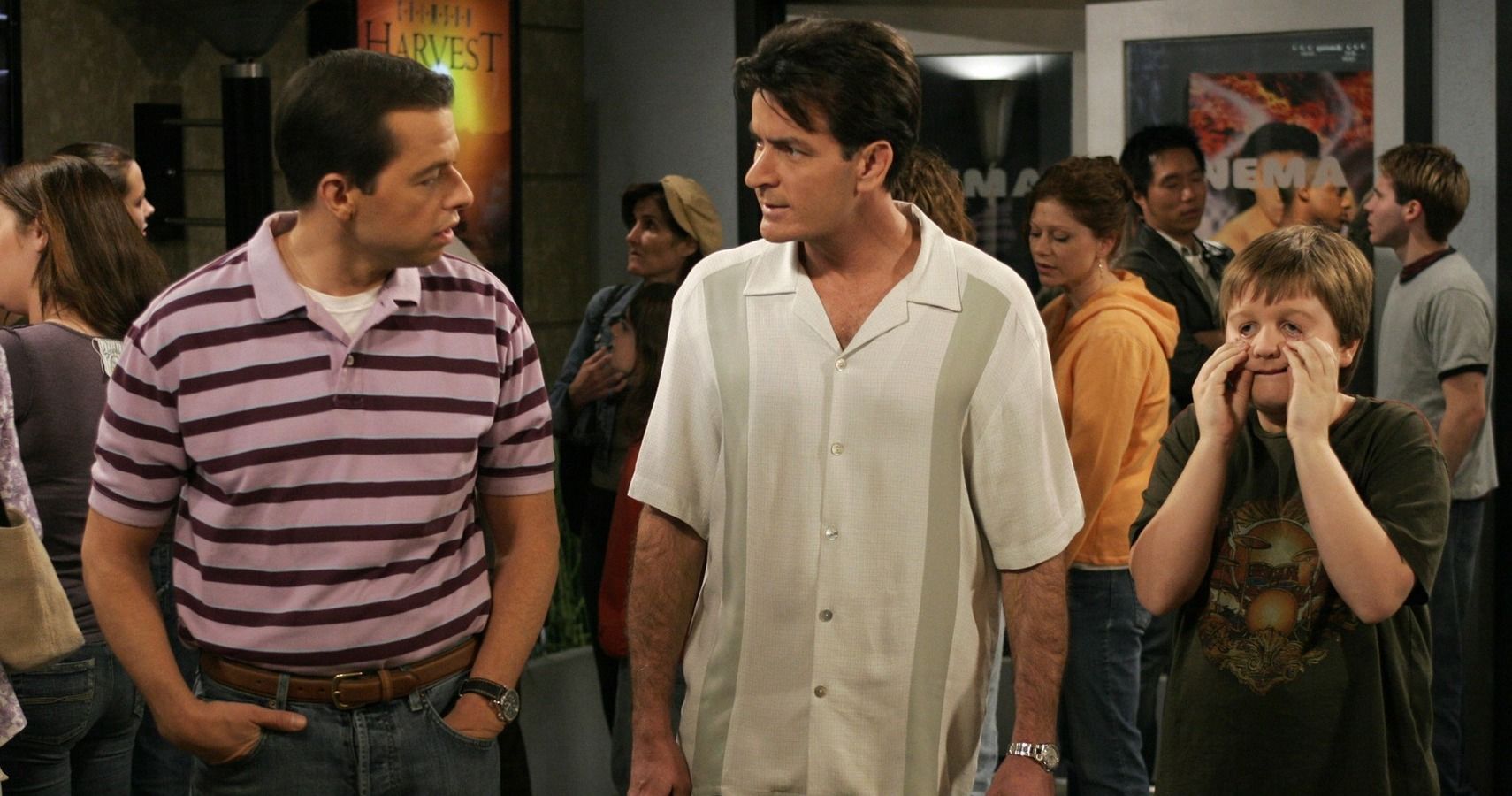
It was February 19, 2015. After twelve seasons, a massive public meltdown by its original star, and a transition to Ashton Kutcher that many fans never quite accepted, the last Two and a Half Men episode finally aired. It was called "Of Course He's Dead."
Honestly? It was less of a series finale and more of a forty-minute middle finger from creator Chuck Lorre to Charlie Sheen. It was weird. It was meta. It was, in many ways, completely exhausting.
Most sitcoms try to wrap things up with a nice little bow. They want you to feel nostalgic. They want you to cry a little bit when the characters walk out of the empty apartment for the last time. Two and a Half Men didn't do that. Instead, it spent almost an hour making inside jokes about its own ratings, Sheen’s drug use, and the absurdity of the show's premise. It was a finale that broke the fourth wall so many times there wasn't even a wall left by the end of the night.
The Setup: Is Charlie Harper Actually Alive?
The big hook for the last Two and a Half Men episode was the mystery of Charlie Harper. Remember, the character was "killed off" between seasons 8 and 9 when a train supposedly hit him in Paris. Rose told everyone he blew up like a balloon full of meat. It was grim.
But in the finale, we find out Rose was lying. She had been keeping Charlie in a pit in her basement—Silence of the Lambs style—for four years. He escapes. Suddenly, the episode turns into a frantic search as Charlie starts sending threatening messages to Alan and Walden. He sends them money. He sends them cigars. He sends them a terrifying "I’m coming for you" vibe that feels more like a horror movie than a multi-cam sitcom.
Chuck Lorre leaned hard into the meta-humor here. Characters literally look at the camera. At one point, Arnold Schwarzenegger shows up as a police detective to recap the entire history of the show. He basically lists all the crazy stuff that happened over twelve years and asks how any of it was possible. It’s the writers acknowledging that the show had stayed on the air way past its expiration date.
Why Charlie Sheen Didn't Show Up
This is what everyone wanted to know back in 2015. Would he come back? Could they bury the hatchet for twenty minutes of television?
The answer was a resounding no.
According to Lorre’s "vanity card" shown at the very end of the episode, Sheen was offered a role. The plan was for him to walk up to the door, deliver a rant about the dangers of drug abuse, and then get hit by a piano. Lorre thought it was funny. Sheen, apparently, wanted a scene that set up a new spin-off called The Harpers. They couldn't agree. So, instead of a real Charlie Sheen, we got a body double from the back and an animated sequence.
It felt cheap to some. To others, it was the only way it could have ended. The tension between the show's creator and its former star was the fuel for the entire finale. If you were looking for a heartfelt reunion, you were watching the wrong show. This was a scorched-earth policy.
Breaking the Fourth Wall Until It Bleeds
One of the strangest moments in the last Two and a Half Men episode is when Walden and Alan receive a letter from Charlie. They start talking about how he’s been gone a long time and how much money he’s made. Then, they basically look at the audience and talk about how they’ve stayed around despite everyone thinking they should have been canceled years ago.
It’s meta-commentary on steroids.
The episode features cameos from almost everyone. John Amos. Christian Slater. Jon Lovitz. Even Angus T. Jones, the original "half man," came back for a brief moment as Jake. He looks completely different, sports a massive beard, and tells them he’s married with kids in Japan. It was the only moment of genuine "closure" in the whole episode, and it lasted about ninety seconds.
The rest of the time was spent mocking the audience for watching and mocking the actors for being there. It’s a cynical piece of television. Most finales are love letters to the fans. This was a legal brief disguised as a comedy.
That Infamous Ending: The Piano
The final shot is etched into the brains of anyone who watched it live. A fake Charlie Harper, seen only from behind, walks up to the beach house door. He rings the bell.
Suddenly, a grand piano falls from the sky and crushes him instantly.
The camera pulls back to reveal the entire set of the show. Chuck Lorre is sitting in a director’s chair. He turns to the camera, says "Winning," and then a second piano falls and crushes him.
Blackout.
It was a bold move. You have to give Lorre credit for having the guts to end a massive, billion-dollar franchise with a literal "screw you" to himself and his lead actor. But did it work as a story? Not really. It wasn't about the characters anymore. Alan Harper, the man who spent twelve years being a parasite, didn't get an ending. Walden Schmidt didn't get an ending. They were just props in a long-standing feud between two very wealthy, very angry men.
What Most People Get Wrong About the Finale
People often remember the last Two and a Half Men episode as being "bad." But that’s a bit of an oversimplification. It wasn't poorly written in the traditional sense; it was intentionally abrasive.
Many viewers expected a "Very Special Episode." They wanted to see Alan finally move out. They wanted to see Charlie and Alan hug. But Two and a Half Men was never that kind of show. It was a show about mean people doing mean things to each other for laughs. In that context, ending the series with a murder and a piano-drop is actually the most honest thing they could have done.
Another misconception is that the ratings were low. In reality, about 13.5 million people tuned in. That’s a huge number by today’s standards. Even though the Kutcher years were polarizing, the show remained a juggernaut until the very last second. People weren't watching because they loved the characters anymore; they were watching to see how the train wreck ended.
The Legacy of "Of Course He's Dead"
Looking back from 2026, the finale feels like a time capsule of a specific era of Hollywood ego. It represents the peak of the "Showrunner vs. Star" dynamic.
We don't really see finales like this anymore. Nowadays, shows are too worried about their "brand" or setting up a future reboot to alienate the audience this much. Lorre didn't care. He had enough money to buy several small islands, and he used his platform to air his grievances one last time.
The episode also serves as a reminder of how much the television landscape has shifted. A show like Two and a Half Men—a traditional, laugh-track-heavy sitcom—dominated the culture for over a decade. The finale was the death knell for that specific kind of massive, monoculture comedy.
Actionable Insights for Fans and Rewatchers
If you’re planning on revisiting the last Two and a Half Men episode, or the series as a whole, here’s the best way to approach it so you don't end up throwing your remote at the wall:
- Watch the Vanity Cards: Chuck Lorre’s "vanity cards" (the blocks of text that appear for a split second after the credits) contain the real story of the finale. Find them online. They explain the failed negotiations with Sheen and Lorre’s mindset during production.
- Don't Look for Continuity: The finale actively ignores the logic of the previous 261 episodes. If you try to make the timeline of Charlie’s "imprisonment" make sense, your head will hurt. Just lean into the chaos.
- Context is Everything: Before watching the finale, go back and watch some of Charlie Sheen’s 2011 interviews (the "Tiger Blood" era). The episode makes a lot more sense when you remember how toxic that public meltdown actually was.
- Appreciate Jon Cryer: Through all the insanity, Jon Cryer’s performance as Alan remains incredibly consistent. He is the only reason the show survived the transition to Kutcher, and his comedic timing in the finale—even when he’s just a punching bag—is masterclass level.
- Skip the Expectations: If you go in expecting Cheers or MASH, you’ll be miserable. Treat it like a roast. It’s a forty-minute roast of a show that stayed at the party too long.
The last Two and a Half Men episode didn't provide a happy ending, but it provided a definitive one. It reminded us that in the world of sitcoms, the house always wins—and sometimes, the house drops a piano on you just to prove a point.
Check out the official CBS archives or streaming platforms like Peacock to see the full credits and vanity cards for yourself. Seeing the actual text Lorre wrote provides the final piece of the puzzle for why this show ended the way it did.