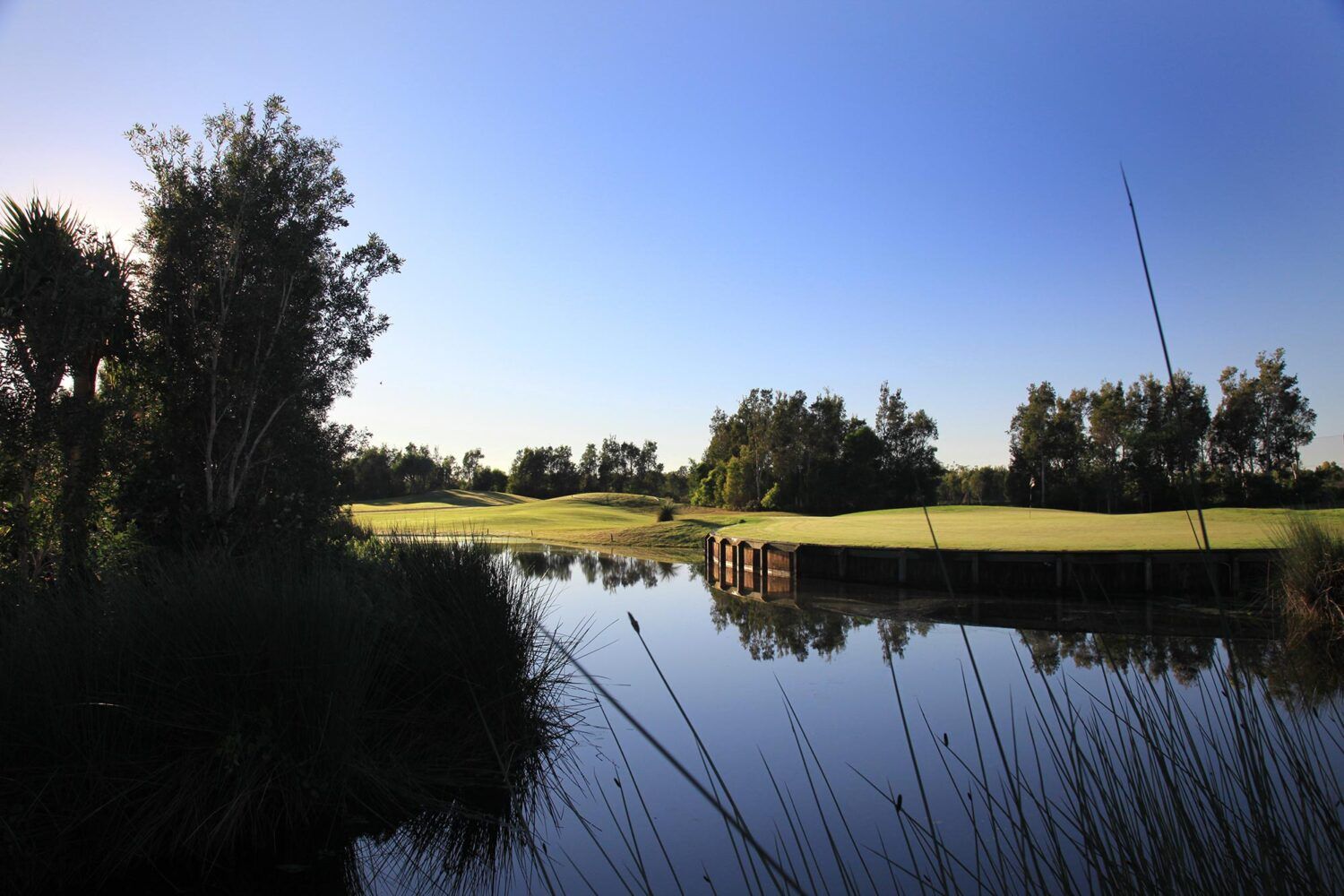
You’re driving through Palm Coast, Florida, and honestly, if you blink, you might miss the turn for one of the most storied municipal tracks in the state. Palm Harbor Golf Club isn’t just another place to whack a ball into a pond. It’s actually the first golf course built in Palm Coast. That matters. It gives the place a kind of "old Florida" soul that the newer, flashier resort courses just can't manufacture with a bulldozer and some sod.
People often get confused about where it sits in the hierarchy of Florida golf. Is it a high-end resort? No. Is it a goat track? Absolutely not. It occupies that sweet spot—a "muni" that plays like a private club on its best days. Since its major renovation back in 2009 by the Clifton, Ezell & Clifton design team, it has maintained a reputation for being challenging but strangely fair.
The Layout Nobody Tells You About
Most people show up thinking a municipal course will be flat and boring. Palm Harbor flips that script. Because it was carved out of the natural terrain back when developers weren't trying to squeeze a thousand houses onto every fairway, the corridors are tight. Real tight. You’ve got these massive, ancient oaks draped in Spanish moss that seem to reach out and swat your ball if you’re even five yards off-line.
The par-72 layout isn't exceptionally long by modern standards—it tops out around 6,500 yards from the back tees—but don't let that fool you. If you go out there trying to overpower the course with a driver on every hole, you're going to lose a dozen balls by the turn. It’s a "placement" course. You have to think.
Take the par-4 14th hole. It’s a beast. You’re looking at a narrow window off the tee with water lurking. If you aren't precise, your scorecard is basically toast. Most locals suggest leaving the big stick in the bag more often than you'd think. It's about angles, not just raw distance.
What Makes Palm Harbor Golf Club Different From the Neighbors?
If you’re in the area, you've probably looked at the Ocean Course at Hammock Beach or maybe Cypress Knoll. Those are great, but Palm Harbor feels different because of the community vibe. You’ll see guys who have played this exact loop three times a week for thirty years. They know every break in the greens, and honestly, you should probably listen to them if they offer a tip.
The bunkers here are surprisingly well-maintained for a city-owned facility. They use a specific type of white sand that stays relatively consistent even after those nasty Florida afternoon thunderstorms. Speaking of storms, the drainage at Palm Harbor is actually quite impressive. While other courses in Flagler County might turn into a marsh after a heavy downpour, Palm Harbor tends to dry out remarkably fast. This is likely due to the original routing taking advantage of the natural elevation changes—slight as they may be for Florida.
The "Hidden" Practice Facility
Everyone knows about the course, but the practice area is where the real work happens. It’s not just a flat range. They’ve got a dedicated chipping green and a bunker area that actually mimics the conditions you’ll find out on the course. It’s one of the few places in Palm Coast where you can spend two hours working on your short game without feeling rushed by a line of people waiting behind you.
Many golfers overlook the value of the "Loop." Because of how the course is designed, you can sometimes squeeze in a quick nine late in the afternoon when the Florida sun starts to dip. The shadows through the oaks at 5:00 PM are, frankly, stunning.
The Reality of Public Golf Maintenance
Let’s be real for a second. Maintaining a golf course in Florida is a nightmare. You’re fighting humidity, mole crickets, and invasive weeds 24/7. Palm Harbor Golf Club is managed by KemperSports, a heavy hitter in the golf industry. This is a double-edged sword. On one hand, you get professional-grade management and a certain level of polish. On the other hand, it can feel a bit more "corporate" than a tiny family-owned operation.
The greens are typically TifEagle Bermudagrass. If you haven't played on TifEagle, it’s fast. Like, "scary fast" if the superintendent decides to be mean that day. But it's also grainy. If you’re putting toward the water or into the grain, your ball will basically stop dead. If you’re putting with the grain, it’s like putting on a marble kitchen floor. Understanding that grain is the difference between a 79 and an 89 here.
Pricing and Accessibility: The No-Nonsense Breakdown
You don't need a $50,000 initiation fee to play here. That's the beauty of it.
- Morning Rates: Usually the highest, especially in the winter months when "Snowbirds" flock to Flagler County.
- Twilight Rates: This is the pro move. If you can handle the heat or the occasional mosquito, you can play for a fraction of the morning cost.
- Local Discounts: If you're a Palm Coast resident, you get a break on the greens fees. Make sure you have your ID ready; they actually check.
Wait times can be an issue. Because it’s popular and affordable, four-hour rounds are rare during peak season. You’re looking at four and a half, maybe five if you get stuck behind a group that thinks they’re on the PGA Tour. It’s just part of the experience. Bring some extra water and enjoy the scenery.
Common Misconceptions About Palm Harbor
A lot of people think that because it's a "city course," the amenities are going to be subpar. That’s just wrong. The clubhouse, known as Canfield’s at Palm Harbor, is actually a legit spot for a meal. It’s named after the late Bill Canfield, a local legend who did a lot for the area. You’ll see people there who aren't even playing golf—they just show up for the food. The outdoor seating area overlooks the course and it's one of the better "vibe" spots in the city.
Another myth? That it's an "easy" course. People see the lack of 7,000 yards and think they’re going to tear it up. Then they hit the back nine. The back nine is arguably much tougher than the front. It requires more discipline. The par-3s are particularly deceptive. They aren't long, but the green complexes are guarded well. If you miss the green, you’re often left with a delicate flop shot off a tight lie—the kind of shot that makes even low handicappers sweat.
The Environmental Angle
Palm Harbor is an Audubon Cooperative Sanctuary. This isn't just a fancy title. It means they actually manage the land to protect the local wildlife. You will see gators. Big ones. You’ll see Ospreys, Bald Eagles, and maybe even a bobcat if you’re out early enough. This environmental focus affects how they maintain the turf. They can't just dump unlimited chemicals everywhere; they have to be surgical. This leads to a more "natural" look, which some golfers mistake for lack of maintenance, but it's actually intentional. It's a healthier ecosystem.
Actionable Tips for Your First Round
If you’re planning a trip to Palm Harbor Golf Club, don't just show up and wing it.
- Book early. In the winter, tee times disappear weeks in advance. The online booking system is your friend.
- Watch the wind. Being so close to the Intracoastal Waterway, the wind can swirl. A 150-yard shot can suddenly play like 170 if the breeze kicks up off the water.
- Target the center of the greens. The pin positions can be tucked behind bunkers or on slopes. Don't be a hero. Take your two-putt and move on.
- Bring bug spray. It’s Florida. Between the oaks and the water, the "no-see-ums" can be brutal at dawn and dusk.
- Check the aeration schedule. Like all Florida courses, they punch the greens a few times a year. If you play the week after they’ve aerated, you’re going to be frustrated. Call the pro shop and ask for the "conditions update."
Palm Harbor is a survivor. It has lived through economic downturns, ownership changes, and the literal building of a city around it. It remains the "people's course" of Palm Coast. Whether you're a scratch golfer looking for a challenge or a beginner just trying to keep the ball in the park, it offers a level of character that you simply won't find at the cookie-cutter resort courses further down the coast.
Next time you're in town, skip the flashy private gates for a day. Head over to Casper Drive. Grab a bucket of balls. Take a second to look at those oaks. There’s a reason this place has been the heart of Palm Coast golf for decades. It's not about the luxury; it's about the game.
How to Get the Most Out of Your Visit
To truly enjoy the course, consider walking if you’re physically up for it. While most people use carts, the course is relatively compact, and walking allows you to appreciate the subtle elevation changes and the wildlife that you’d normally zip right past.
Also, keep an eye on the event calendar. The club hosts several local tournaments and charity events throughout the year. These can be a great way to meet the local golfing community, though they do shut down the course for general play. If you're a solo traveler, don't be afraid to ask to be paired up. The "regulars" at Palm Harbor are generally welcoming and can provide the "local knowledge" that helps you navigate those tricky back-nine water hazards.
Finally, stop by the pro shop for more than just a sleeve of balls. The staff there usually has the inside track on which holes are playing particularly tough that day or if there’s a specific area of the course that’s playing slower than usual. That kind of intel is worth more than a new driver.
Enjoy the round. It's a special piece of Florida history that’s still very much alive and kicking.