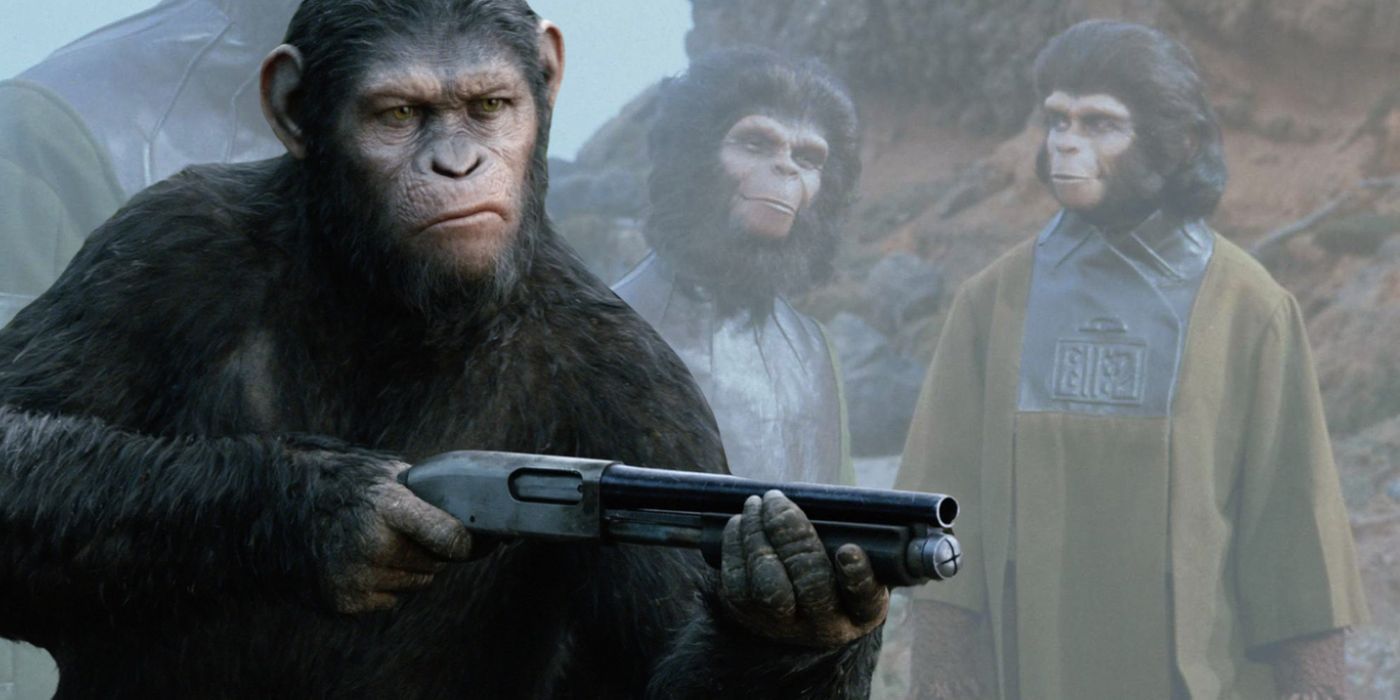
Ever tried to keep track of every chimp, gorilla, and orangutan in this franchise? It’s a lot. If you go back to the 1968 original, you’ve got names rooted in Latin or pseudo-biblical sounds. Fast forward to the modern Caesar trilogy, and things get way more grounded, almost human. Honestly, planet of the apes characters names tell a story of their own about how the writers wanted us to view these animals—first as weird, alien-like masters of a future Earth, and later as soulful, tragic revolutionaries.
It's confusing. You have a "Caesar" in the 70s and a "Caesar" in the 2010s. They aren't the same guy. One is the son of time-travelers, and the other is a lab experiment gone right (or wrong, depending on your perspective). If you’re just looking for a list, you’re missing the point of how these names actually function in the lore.
The Names that Started it All: The 1968 Classics
When Pierre Boulle wrote the original novel, he wasn't thinking about a ten-movie franchise. He was thinking about satire. When the movies took over, the names had to sound ancient yet futuristic.
Zira and Cornelius. These are the big ones. Zira, the psychologist, and Cornelius, the archaeologist. They sound like old-world intellectuals. Kim Hunter and Roddy McDowall brought these characters to life under layers of prosthetic makeup that still, frankly, looks better than some modern CGI. Then you have Dr. Zaius. That name just drips with authority, doesn't it? He’s the Minister of Science and Chief Defender of the Faith. The name "Zaius" feels heavy, like a judge's gavel. It’s supposed to intimidate you.
And let's not forget the humans. George Taylor, played by Charlton Heston. Taylor is a hard, cynical name. It’s a worker’s name. In later films, we get Brent and Nova. Nova is particularly interesting. It means "new," symbolizing her status as a new kind of human—one without speech, a blank slate in a world where apes hold the pen.
The Original Continuity’s Second Wave
As the sequels got weirder (and they got really weird), the names followed suit. We meet Milo, who later takes the name Caesar. This is where the franchise gets its most famous name. Why Caesar? It’s the ultimate name for a conqueror. It implies a fall from grace and a rise to power. It’s Shakespearean. In Conquest of the Planet of the Apes, Caesar leads a slave revolt. His name isn't just a label; it’s a manifesto.
Then there’s Aldo. You might remember him as the first ape to break the "Ape shall never kill ape" rule. Aldo is a blunt, short name. It feels like a punch. Contrast that with Virgil, the genius orangutan from Battle for the Planet of the Apes. Virgil is named after the Roman poet, the guide through the underworld. The writers weren't being subtle here. They wanted you to know these apes were the new Romans.
The Modern Reboot: A Different Kind of Naming
When Rise of the Planet of the Apes hit in 2011, the vibe shifted. These weren't just guys in suits; they were performance-capture characters that needed to feel "real."
Caesar returns, but this time, he's named by Will Rodman (James Franco). It’s a nod to the original, but it feels more like a pet name that a chimp eventually grows into—and then outgrows. Andy Serkis’s Caesar is the heart of the modern trilogy. But the supporting cast is where the planet of the apes characters names get really interesting.
- Maurice: The Bornean orangutan. He’s named after Maurice Evans, the actor who played Dr. Zaius in the 1968 film. It’s a meta-tribute.
- Rocket: The bully who becomes Caesar’s loyal lieutenant. The name is fast, aggressive, and simple.
- Buck: The silverback gorilla who sacrifices himself. It’s a strong, sturdy name.
Then there’s Koba. If you know your history, that name is chilling. "Koba" was the nickname of Joseph Stalin. By naming the series' greatest villain Koba, the filmmakers were signaling exactly what kind of leader he was: a paranoid, vengeful revolutionary who would eventually become a tyrant. It’s a brilliant bit of naming that most people totally miss.
Why Kingdom of the Planet of the Apes Changed the Game
In the 2024 film Kingdom of the Planet of the Apes, we jump hundreds of years into the future. Caesar is a legend now. He’s basically a god. This creates a new naming convention: the "Caesar-centric" names and the "New Era" names.
Noa is our new protagonist. It sounds like Noah, the biblical figure who survived the flood. Considering the state of the world in this film, that’s pretty on the nose. He’s navigating a world that has been "washed clean" of the old ways. Then you have Proximus Caesar. He isn't actually Caesar, obviously. He’s a bonobo who hijacked the name to gain power. "Proximus" implies he is "next" or "close to" the original, but he’s a perversion of it.
Raka is another standout. An orangutan who actually remembers the true teachings of Caesar. His name feels earthy and ancient. And let's talk about Mae. The human character. Just Mae. Short, simple, and slightly mysterious. In a world of grand simian titles, the human name feels small and fragile.
The Significance of "Ape Shall Never Kill Ape"
Names in this franchise are often tied to the "Law." The Lawgiver is the shadowy figure from the original films (and the reboot's mythology) who established the rules. When an ape is named, they are brought into this society.
Look at Blue Eyes, Caesar’s son. It’s a descriptive name, almost like a tribal name. It shows a departure from the "human-given" names like Caesar or Maurice. It shows the apes are starting to form their own culture, independent of the humans who created them. When Blue Eyes dies, it’s the death of that specific future Caesar envisioned.
A Quick Sidebar on the 2001 Tim Burton Flop
We don't talk about the Mark Wahlberg version much, but it did have some unique names. Thade. Ari. Attar. These names felt more alien. They didn't have the Latin or English roots that the other films used. While the movie was a mess, the naming convention was actually quite cool—it suggested a culture that had diverged so far from Earth that even our linguistic roots were gone. General Thade (Tim Roth) sounds like something you’d find in a dark fantasy novel. It’s sharp and unpleasant to say.
How to Keep the Caesars Straight
This is the number one thing that trips people up. If you're looking at planet of the apes characters names, you have to know which timeline you're in.
- Caesar (Original Timeline): Son of Cornelius and Zira. Born in the 1970s after his parents traveled back in time. He leads the revolt in a futuristic (for the time) 1991.
- Caesar (Reboot Timeline): Born in a lab, raised by a scientist, leads the apes into the woods of Muir Woods. He dies as an old leader, a Moses figure for his people.
- Proximus Caesar: A pretender. He uses the name as a title, not a birth name.
It’s a legacy name. In the same way "Caesar" became "Kaiser" and "Tsar" in our world, in their world, it became the definition of a king.
The Evolution of Human Names
In the beginning, humans had jobs and last names. Taylor. Dodge. Landon. By the time we get to Beneath the Planet of the Apes, we have the mutants with names like Mendez.
But as the apes rise, the human names shrink. In the reboot, we have Will, Caroline, and Malcolm. Then, by War for the Planet of the Apes, we have Nova (a tribute to the original) and the Colonel. The Colonel doesn't even get a real name for most of the movie. He’s just a title. It shows the dehumanization of the species. By Kingdom, names like Mae are all that’s left of the human legacy.
Actionable Tips for Navigating the Lore
If you're trying to master the character list for a trivia night or just to understand the movies better, here is how you should categorize them in your head:
- Look for the Latin roots: If a name sounds like it belongs in a history book (Cornelius, Lucius, Caesar, Aurelia), they are likely from the intellectual or ruling class of apes.
- Identify the "Ape Culture" names: Names like Rocket, Buck, or Blue Eyes are usually given by other apes or reflect their physical traits. They represent the "wild" or "free" apes.
- Watch for the Meta-Nods: Many names in the reboots (like Maurice or Nova) are direct Easter eggs for fans of the 1968 film.
- The Villain Pattern: Villains often have "hard" sounds. Koba. Thade. Zaius. Proximus. These names are designed to sound aggressive or rigid.
The naming conventions in this series aren't accidental. They reflect the power struggle between two species. When humans name apes, it’s an act of ownership. When apes name themselves, it’s an act of revolution. Next time you watch, pay attention to when a character is first called by their name. It usually marks the moment they truly become a "person" in the eyes of the story.
Whether you're a fan of the campy 70s sequels or the gritty modern masterpieces, the names are the glue that holds these timelines together. They turn animals into icons.
To dig deeper into the specific lineages, start by re-watching Escape from the Planet of the Apes and Rise of the Planet of the Apes back-to-back. You’ll see exactly how the name "Caesar" shifted from a tragic inheritance to a symbol of biological destiny. It’s the best way to see the linguistic evolution of the franchise in action.