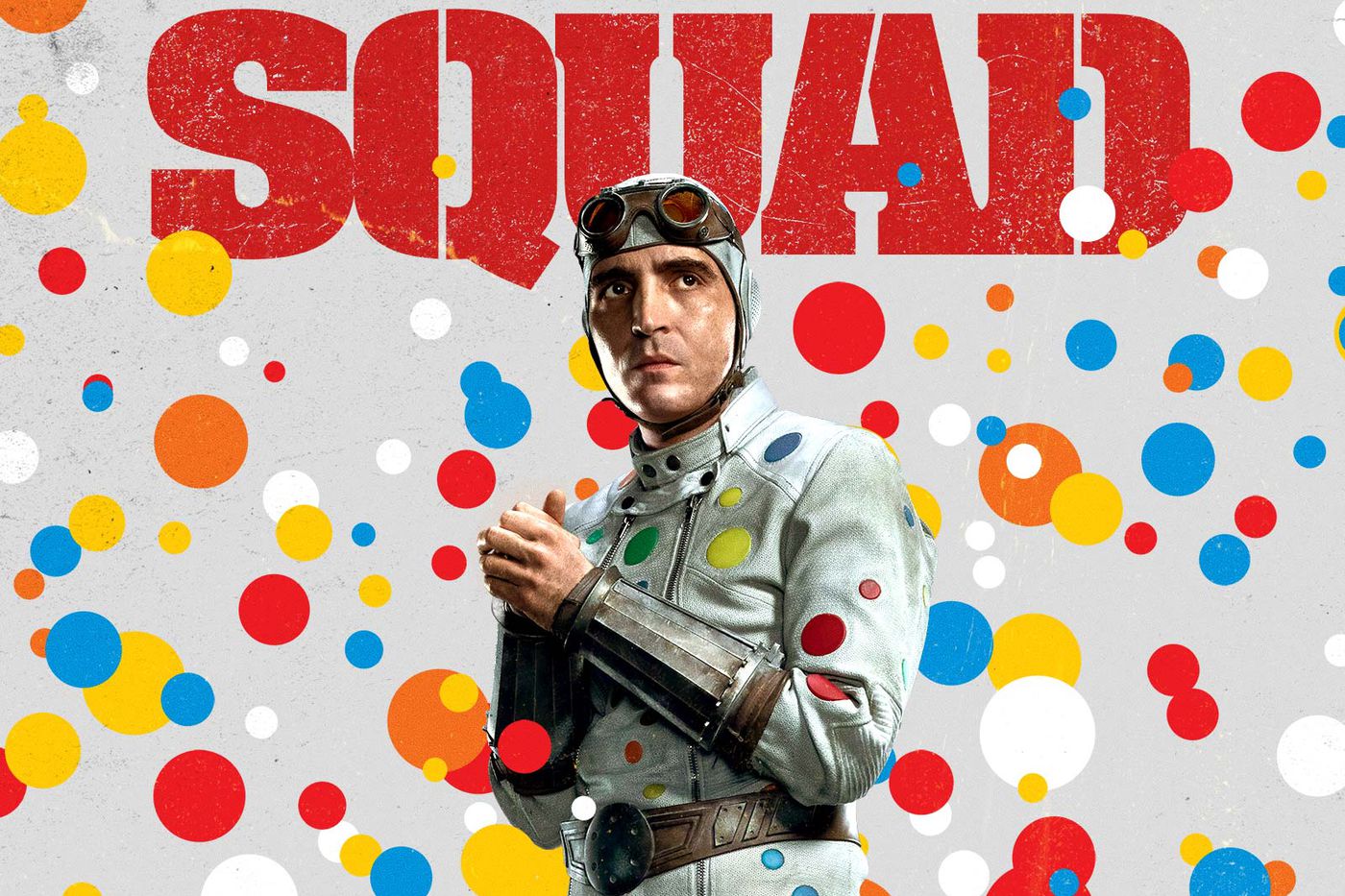
He’s a joke. Honestly, for decades, that was the only way to describe Abner Krill. If you grew up reading Silver Age comics or browsing those "Top 10 Lame Villains" lists on the early internet, you’ve seen him. A guy wearing a white suit covered in multicolored spots. It’s ridiculous. It's the kind of character that makes people think 1960s comic book writers were just throwing darts at a wall of random nouns to meet a deadline.
But then James Gunn happened.
The 2021 release of The Suicide Squad changed everything for Polka-Dot Man. David Dastmalchian took a character who was basically a footnote in Batman’s history and turned him into a tragic, body-horror icon. It wasn't just about the spots anymore. It was about trauma. It was about interdimensional viruses. It was about a guy who sees his mother everywhere he looks. Suddenly, the guy with the dots wasn't just a punchline—il was a highlight of one of the biggest superhero movies of the decade.
The Weird, Low-Stakes Origins of Abner Krill
Let’s go back to Detective Comics #300. The year was 1962. Bill Finger and Sheldon Moldoff—legends in the industry—introduced Abner Krill. At the time, he wasn't some tortured soul. He was just a guy who thought he could outsmart the Caped Crusader by using "advanced technology" hidden in the dots on his suit.
Think about that for a second.
In his first appearance, these dots could turn into buzzsaws, gliders, and even sun-flares. It was gadget-based crime, which was the bread and butter of Gotham City back then. He called himself "Mister Polka-Dot." He wasn't trying to destroy the world; he was just trying to rob a bank and maybe make a name for himself. He failed. Miserably. Batman and Robin caught him, and for the next several decades, he became a recurring gag. He’d show up in the background of a villain bar or get beaten up in a single panel to show how tough a new anti-hero was.
He was the definition of a "D-list" villain.
There’s a specific kind of cruelty in how comic book history treats characters like Krill. He lived in the shadow of giants. While Joker was busy poisoning the reservoir and Bane was breaking backs, Abner was probably at home wondering if his polka-dot theme was too niche. It was. It definitely was. But that obscurity is exactly what made him the perfect candidate for a modern reinvention.
Why the DCEU Version Changed the Game
When James Gunn signed on for The Suicide Squad, he went looking for the "dumbest" characters he could find. He wanted the rejects. He found Abner Krill.
But Gunn didn't just keep the 1960s gimmick. He added a layer of science fiction and psychological horror that felt grounded—or at least as grounded as a guy shooting lethal dots can be. In the film, Krill’s powers are the result of his mother’s obsession with turning her children into superheroes. She exposed him to an interdimensional virus. Now, he literally has to "expel" these dots twice a day, or they’ll eat him from the inside out.
That’s a dark pivot.
Suddenly, the colorful suit isn't a fashion choice; it's a medical necessity. The movie treats his condition like a terminal illness that also happens to let him disintegrate things. David Dastmalchian’s performance is what really sells it, though. He plays Krill with this deep-seated melancholy and social anxiety that makes you forget how silly the concept is. When he looks at a kaiju-sized starfish and sees his mother, it’s hilarious, but it’s also heartbreaking. It’s a masterclass in taking "camp" and turning it into character development.
The Science (Sorta) Behind the Dots
In the comics, the dots were just tech. In the movie, they are "interdimensional."
What does that even mean?
If we look at the lore established in the film, Krill’s dots are essentially portals or projections from another dimension that possess high kinetic energy. They don't just "hit" things; they bypass the molecular structure of our reality. That’s why he’s so dangerous. You can’t really "block" a polka-dot if it’s literally erasing the space it occupies. This puts him on a power level far above most Gotham street thugs. If Krill had been mentally stable and actually wanted to be a top-tier villain, he probably could have taken down half the Justice League before they knew what was happening.
But he didn't want to be a villain. He just wanted the pain to stop.
This distinction is important. Most Batman villains are driven by ego, greed, or madness. Polka-Dot Man is driven by a desperate need to manage a condition he never asked for. He is a victim of "superhero experimentation," which is a recurring theme in DC lore but rarely explored through such a pathetic (and I mean that in the Greek pathos sense) lens.
Polka-Dot Man in Modern Media and Gaming
You’ve probably seen him outside of the movies too. He’s popped up in The LEGO Batman Movie and has been a playable character in various LEGO DC games. Usually, in gaming, he’s used as a "technical" character. His dots allow for unique puzzle-solving mechanics—one dot becomes a platform, another an explosive.
It’s interesting to see how developers handle him. They usually lean into the absurdity. In Injustice 2 (the mobile version), he’s more of a gimmick. But his inclusion in these titles proves that he has staying power. He’s a visual icon. Even if you don’t know his name, you know "the dot guy."
There is a lesson here for creators: no idea is too stupid if you find the right angle.
Common Misconceptions About Abner Krill
People often think he’s just a rip-off of other gadget villains. He isn't. While characters like Trapster (from Marvel) use adhesives or specialized tools, Krill’s original 1960s run was actually fairly inventive with how he used geometry and patterns.
Another misconception? That he’s always been a "sad sack."
In the early comics, he was actually quite arrogant. He thought he was a genius. The "loser" persona is a later addition by writers who realized that a man dressed in dots can’t realistically be a cool, confident mastermind. They leaned into the failure, and that’s where the character finally found his voice.
Also, despite what the movie suggests, he isn't always killed off. In many comic iterations, he just goes back to Arkham or disappears into the background of a crowd scene. His death in The Suicide Squad was a narrative choice to give him a "hero’s end," finally being recognized for something other than his freakishness.
How to Appreciate the "Lame" Side of DC
If you’re looking to dive deeper into the world of Polka-Dot Man, don't just stop at the movie. There are a few key things to look for:
- Detective Comics #300: Read it for the historical context. It’s pure 60s cheese, and it’s glorious.
- Injustice 2 (Comics): He makes a brief, tragic appearance here that foreshadows some of the "loser" vibes seen in the films.
- Batman: The Brave and the Bold: The animated series features him in a way that honors the Silver Age aesthetic while acknowledging how weird he is.
Why We Care About Abner Krill in 2026
The reason Polka-Dot Man resonates now isn't because we suddenly think polka dots are cool. It’s because we’ve moved past the era of "perfect" superheroes. We’re in the era of the underdog, the broken, and the weird. We relate to Abner because he’s someone who was dealt a bad hand and is just trying to navigate a world that thinks he’s a joke.
He represents the "misfit" energy that defines the best parts of the DC Universe. He’s proof that there are no bad characters, only writers who haven’t found the right story yet.
Next time you see a character in a comic book that looks ridiculous, don't write them off. They might be one good movie away from becoming your new favorite. If you want to explore more "forgotten" villains, look into characters like Condiment King or Kite-Man. They’ve both had similar "glow-ups" in recent years because creators realized that the funniest characters often have the most human stories.
To really get the most out of this character's history, track down the trade paperback of The Suicide Squad: Get Joker! or watch the behind-the-scenes features on the 2021 film. Seeing David Dastmalchian talk about his personal connection to the character’s struggle with "being different" adds a whole new layer of meaning to every spot on that suit.