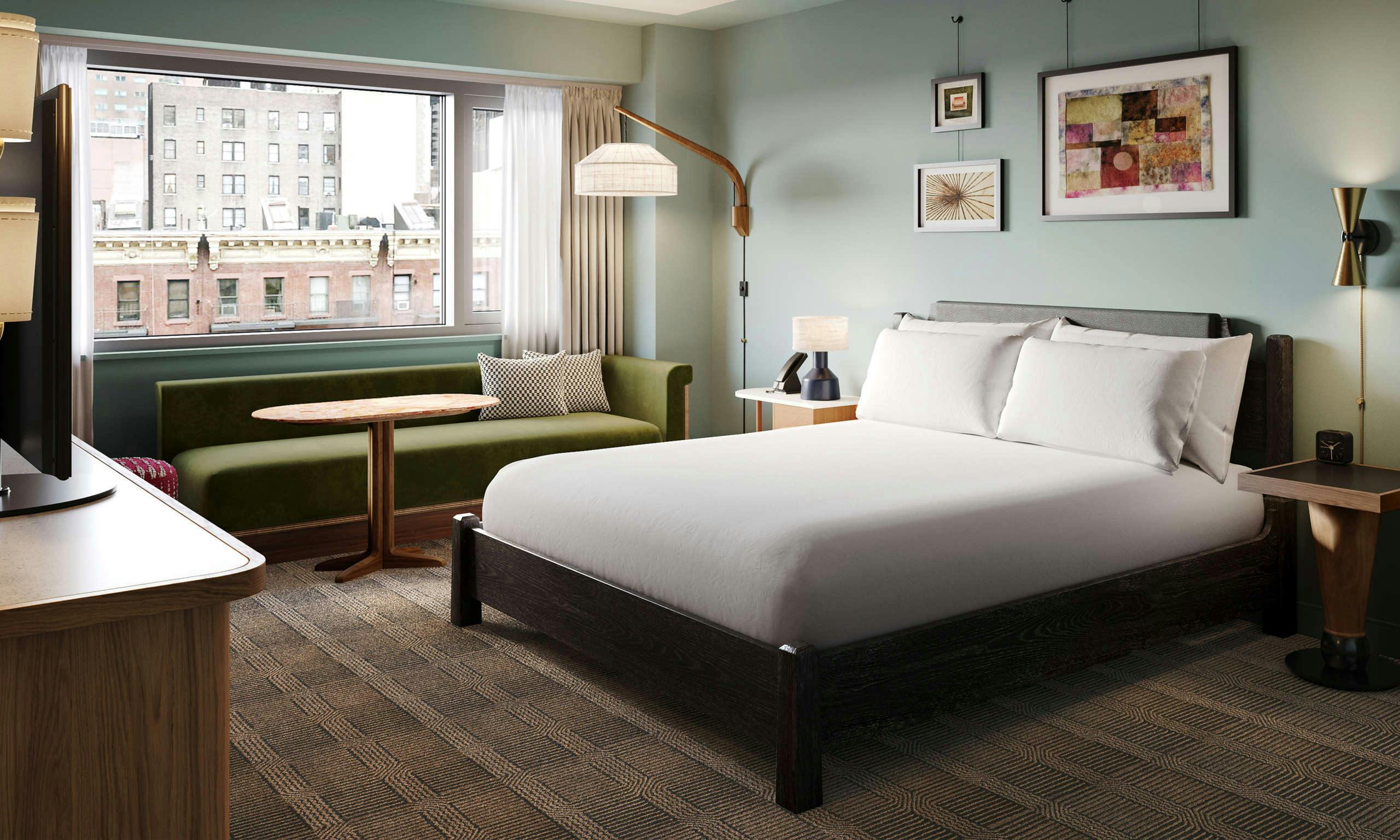
New York City hotels are usually a trap. You either end up in a sterile glass box in Midtown that smells like industrial carpet cleaner, or you’re cramped into a "micro-room" where you can brush your teeth while lying in bed. It sucks. But Romer Hell’s Kitchen is doing something weirdly different. It’s not trying to be a "luxury lifestyle brand" with $30 cocktails and a velvet rope. It’s just... a neighborhood spot.
I’ve spent enough time trekking between the Port Authority and the theater district to know that finding a place that feels human in this zip code is nearly impossible. Hell’s Kitchen has a reputation for being gritty, loud, and unpretentious. Most hotels try to mask that. Romer leans into it.
What Romer Hell’s Kitchen Gets Right About the West Side
The first thing you notice isn't a grand chandelier or a marble lobby. It’s the vibe. It feels like a living room. Honestly, the "lobby" is more of a public square. They call it the Corner Store, and it’s stocked with stuff from local makers instead of overpriced Snickers bars from a generic wholesaler.
Most people stay in this part of Manhattan because they have to. Maybe you’re seeing a Broadway show, or you have a meeting at the Javits Center. Usually, that means sacrificing soul for convenience. But staying at Romer Hell’s Kitchen feels like you’ve actually moved into the neighborhood, even if it’s just for forty-eight hours.
The building itself has history. It used to be the Kimpton Muse, but it underwent a massive transformation to become what it is today. They didn't just paint the walls and call it a day. They rethought the whole philosophy of what a "tourist" hotel should be. Instead of keeping guests trapped inside a high-priced ecosystem, they practically push you out the door to explore the bodegas and jazz clubs nearby.
The Rooms Aren’t Just Closets
Let's talk about the space. In NYC, space is the ultimate luxury. Romer Hell’s Kitchen rooms are surprisingly large for the area. We’re talking 250 to 300 square feet for standard kings, which is basically a mansion compared to some of the "boutique" spots in SoHo.
They used a lot of wood tones and soft fabrics. It doesn't feel like a hospital room. The windows actually let in light, which is a miracle in a city where your view is usually a brick wall or someone else's office. You’ve got these massive windows that overlook the chaos of 8th Avenue or 49th Street. It’s loud out there—it's New York—but the soundproofing is legit. You see the yellow cabs screaming by, but you don't necessarily hear every single honk.
The Backyard and Beyond
One of the best parts is Soogil, the Korean-French restaurant that shares a connection here. Chef Soogil Lim is a legend who spent years at Daniel, and bringing that level of culinary technicality to a neighborhood hotel is a flex. It’s not "hotel food." It’s destination dining.
Then there’s the Medley. It’s their piano bar. You’ll find locals there. Real people who live in the apartments upstairs or down the block. That’s the secret sauce. If a hotel bar is only full of tourists, it’s a failure. Romer manages to pull in the neighborhood crowd because it doesn't feel like it's trying too hard to be "cool." It’s just comfortable.
Why Location Matters More Than You Think
Hell’s Kitchen is a specific beast. You’re minutes from the Theater District, but you’re also right next to some of the best cheap eats in the city on 9th Avenue.
- Proximity: You can walk to the Richard Rodgers Theatre in five minutes.
- The Food: Don't eat at the hotel every night. Go to Totto Ramen or Los Tacos No. 1.
- The Park: You’re a brisk walk from the Hudson River Park, which is way better for a morning run than a treadmill in a windowless basement gym.
Most people get Hell’s Kitchen wrong. They think it’s just a pass-through to get to Times Square. It isn't. It’s the heart of the city’s creative class. Actors, dancers, and stagehands live here. Romer Hell’s Kitchen reflects that. The art on the walls isn't generic "cityscape" photography from a stock image site. It’s curated. It’s intentional.
The Reality Check: Is it for Everyone?
Look, if you want a white-glove experience where someone carries your bags and bows every time you walk past, go to the St. Regis. Romer is self-sufficient. It’s built for the modern traveler who knows how to use an app and prefers a good cup of local coffee over a silver tea service.
The elevators can be a bit slow during checkout. It’s a busy building. And because it’s in the middle of everything, the sidewalk outside is always a gauntlet of commuters and tourists. If you hate crowds, you shouldn't be in Hell’s Kitchen anyway.
But for the price point? It’s hard to beat. You’re getting a high-design experience without the "design hotel" pretension. It’s approachable.
Actionable Tips for Your Stay
- Request a High Floor: If you’re a light sleeper, ask for something above the 10th floor. The street noise is part of the charm, but only to a point.
- Use the "Corner Store": Skip the Starbucks. The local snacks and coffee in the lobby are actually worth the money and support small NYC businesses.
- Explore 9th Avenue: Walk one block west. That’s where the real Hell’s Kitchen lives. Every cuisine on earth is represented within a ten-block radius.
- Check the Piano Schedule: The live music at Medley is one of the better "free" things to do in the city. Grab a drink and just listen.
- Book Direct: Sometimes they have neighborhood perks or breakfast credits that don't show up on the big booking sites.
Staying at Romer Hell’s Kitchen is about being part of the city, not just observing it from behind a pane of glass. It’s a place to recharge between the chaos of Broadway and the late-night energy of the West Side. It feels like a genuine slice of Manhattan, which is a rare thing to find in a hotel these days.
Next Steps for Your NYC Trip
- Check Availability: Prices fluctuate wildly based on the Broadway calendar, so look for Sunday or Monday nights for the best rates.
- Map Your Meals: Create a "Want to Go" list on Google Maps for 9th Avenue restaurants before you arrive so you aren't overwhelmed by choices.
- Review the Broadway Schedule: If you're staying at Romer, you're in the perfect spot for "rush" tickets—head to the box offices early in the morning to snag $40 seats for that night's show.