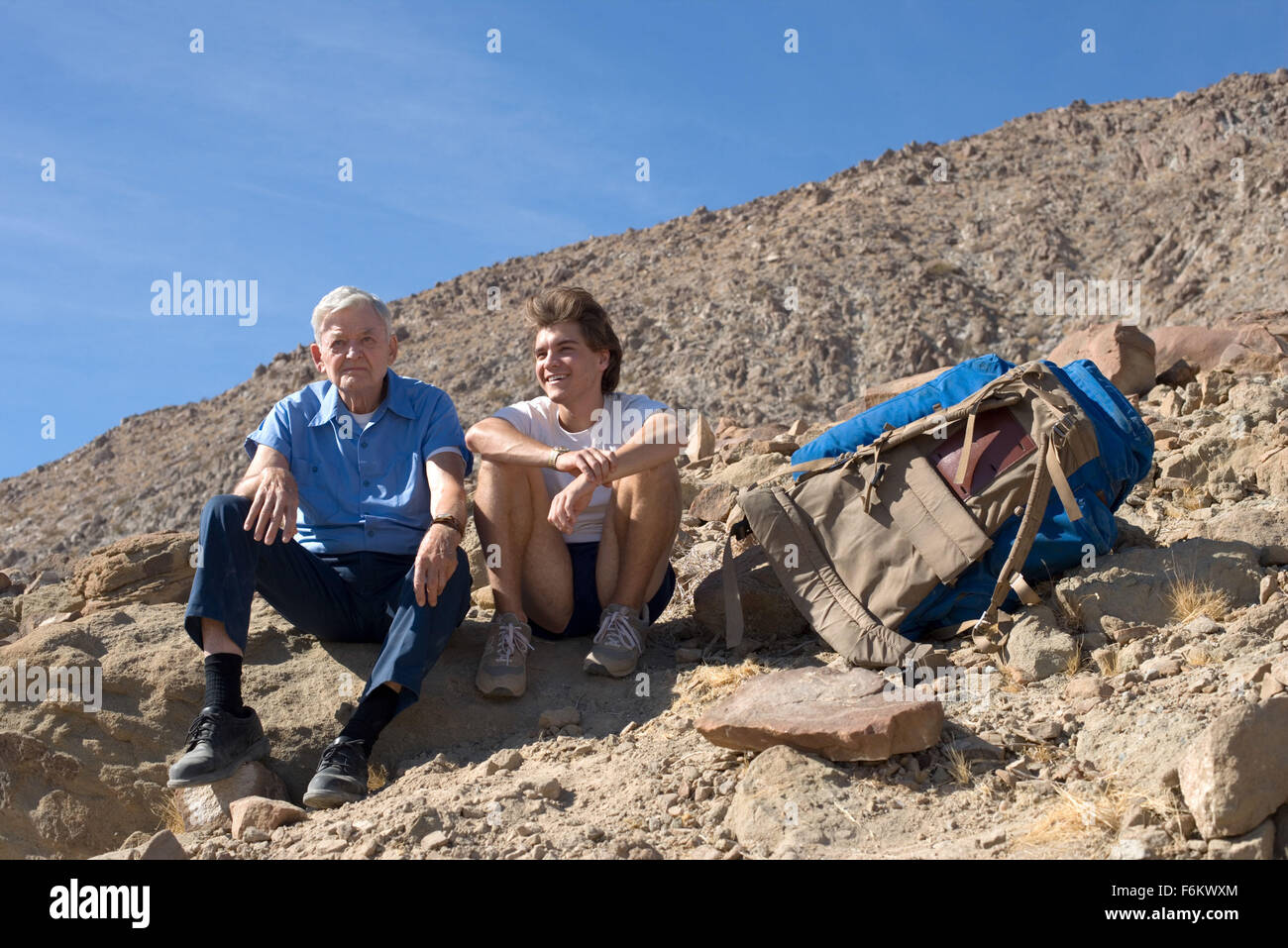
When we talk about Into the Wild, the conversation usually orbits around Chris McCandless. Was he a visionary? Was he just a kid with a death wish and a copy of Tolstoy? People argue about his bus, his berries, and his belt. But for many, the most gut-wrenching part of the whole saga isn't the starvation in the Alaskan bush. It's the story of an eighty-year-old man in the California desert who offered his heart to a stranger and got it handed back to him in pieces.
Ron Franz—whose real name was actually Russel Fritz—is the emotional anchor of Chapter 6 in Jon Krakauer’s book. He represents the "collateral damage" of Chris’s radical pursuit of truth.
Honestly, it’s a hard chapter to read.
Who Was the Real Ron Franz?
By the time Ron met Chris (who was going by "Alex" at the time) in January 1992, he had already lived several lifetimes of grief. He was a devout Christian, a veteran, and a leatherworker. Decades earlier, in 1957, his wife and only son were killed by a drunk driver while Ron was stationed in Okinawa.
That kind of loss doesn't just go away. It tunnels into you.
He spent years struggling with alcoholism before getting sober, eventually channeling his paternal energy into helping Okinawan orphans. But when he picked up a young hitchhiker near Salton City, California, those "long-dormant paternal impulses" flared up again.
He didn't just see a traveler. He saw a grandson.
The Relationship That Changed Everything
Ron and Chris spent several weeks together. It was a strange, lopsided friendship. You’ve got this eighty-year-old man, set in his ways, teaching a twenty-four-year-old how to tool leather. Chris actually made a pretty famous belt during this time, carving symbols of his life into the leather: a skull and crossbones, his initials, and the "N" for North.
But there was a tension there. Ron wanted to save Chris. Chris wanted to "save" Ron from what he saw as a boring, sedentary life.
At one point, Ron made a request that most people find absolutely devastating. He asked Chris if he could officially adopt him. He told Chris he was the "end of the line" for his family.
Chris dodged the question.
He wasn't looking for a family; he was running away from one. He told Ron they’d talk about it when he got back from Alaska. We all know how that turned out.
The Letter from Carthage
In April 1992, Chris sent Ron a long, intense letter from South Dakota. It’s basically a manifesto. He told Ron to get out of Salton City, put a camper on his truck, and start living a "nomadic" life.
"You are wrong if you think Joy emanates entirely only or principally from human relationships. God has placed it all around us."
That’s a heavy thing to say to a man who lost his wife and child.
But the crazy part? Ron actually did it. He took the advice of a kid sixty years younger than him. He put his furniture in storage, bought a GMC Duravan, and moved onto Chris’s old campsite in the desert. He waited there for his "grandson" to return.
What Really Happened After Chris Died?
The ending of Ron Franz's story in Into the Wild is where the "adventure" turns into a tragedy. In late 1992, Ron picked up two hitchhikers while driving into town for his mail. He started telling them about his friend "Alex" who was up in Alaska.
One of the hitchhikers looked at him and said, "Was his name McCandless?"
They had read the article in Outside magazine. They told Ron his friend was dead.
The impact was immediate and total. According to Krakauer, Ron Franz:
- Renounced his faith: He told Krakauer he couldn't believe in a God who would let a boy like Alex die.
- Broke his sobriety: He went to a liquor store, bought a bottle of whiskey, and drank it in hopes that it would kill him.
- Became an atheist: He decided that if God existed, He was cruel.
He didn't die that night, but the light went out. He lived until 1999, eventually passing away at the age of 74 (some records suggest he was slightly younger than the book claimed, but the grief was the same).
Why the Story of Ron Franz Still Matters
We often romanticize Chris McCandless as this lone wolf, but Ron Franz reminds us that no one is truly alone. Our choices have echoes. Chris wanted to prove he didn't need anyone, but in the process, he became the center of an old man's universe and then vanished.
If you’re looking for "actionable insights" from Ron’s story, it’s probably this: Connection is a risk. Ron took the risk. He changed his entire life because he believed in a young man’s vision. While the ending was tragic, the fact that an eighty-year-old was willing to "revolutionize his life" (Chris's words) is actually pretty incredible. It shows that it’s never too late to change, even if the catalyst for that change is a person who can't stay.
Your next steps for exploring the story:
If you want to see the "Ron Franz" landscape for yourself, look up the Anza-Borrego Desert State Park or the Salton Sea in California. Much of it looks exactly the same as it did in 1992. You can also read the full text of Chris's letter to Ron in Chapter 6 of Krakauer's book; it’s widely considered one of the best pieces of "travel philosophy" ever written, even if it comes from a place of youthful arrogance.
Finally, if you’ve only seen the movie, go back and read the book. Hal Holbrook's performance as Ron was Oscar-nominated for a reason, but the prose details about Ron's atheism and his final years provide a much grittier, more human perspective on what happens when the "wild" takes someone you love.